


BELGRADE: Kosovo and Serbia continued to sling allegations at each other on Sunday, just days after an explosion targeting a strategic canal in Kosovo sent tensions soaring between the long-time rivals.
During a press conference, Kosovo Prime Minister Albin Kurti accused Serbia of “copying Russian methods to threaten Kosovo and our region in general” after the explosion on Friday on the waterway near Zubin Potok, an area of Kosovo’s volatile north dominated by ethnic Serbs.
“Despite this, the effort is also destined to fail, as Kosovo is based on Western democratic values,” added Kurti.
The blast damaged a canal supplying water to hundreds of thousands of people and cooling systems at two coal-fired power plants that generate most of Kosovo’s electricity.
Kurti’s comments came just hours after Serbian President Aleksandar Vucic slammed the stream of accusations from Pristina during a live address to the country.
Vucic said the explosion and Kosovo’s accusations were “an attempt at a large and ferocious hybrid attack” on Serbia.
Belgrade’s Kosovo office said the strike gave the Pristina government an excuse to crack down on ethnic Serbs in Kosovo.
“We have no connection with it,” Vucic said of the attack.
He stopped short of directly accusing any individual or state of orchestrating the blast and said Serbian authorities had opened their own investigation.
Animosity between Serbia and Kosovo, which has an ethnic Albanian majority, has persisted since the end of a war in the late 1990s between Belgrade’s forces and ethnic Albanian separatists in what was then a province of Serbia.
Serbia has never recognized Kosovo’s 2008 declaration of independence.
The Kosovo prime minister said in Pristina that the attack would have had “enormous” consequences if it had been successful.
According to the premier, the attack had the potential to unleash major disruptions to Kosovo’s power and water supply for weeks.
“The goal was for most of our country in December to remain without water, in the dark, in the cold and without communication,” said Kurti.
A “temporary” repair had saved the water supply and there had been no impact on the electricity supply.
Serbian officials have fired back, saying that the accusations from Kosovo have ulterior motives.
Petar Petkovic, director of the Serbian government’s Kosovo office, said the incident had provided Kurti with a pretext to try to expel ethnic Serbs from northern Kosovo.
“What happened in the village of Varage gave Kurti an alibi to continue the attacks in the north of Kosovo... and to continue the policy of expulsion of the Serb people,” Petkovic told public broadcaster RTS.
The United States has condemned the canal attack.
“We will support efforts to find and punish those responsible and appreciate all offers of support to that effort,” State Department spokesman Matthew Miller posted on X.
Earlier on Sunday, Vucic vowed to cooperate with international bodies in the blast’s wake.
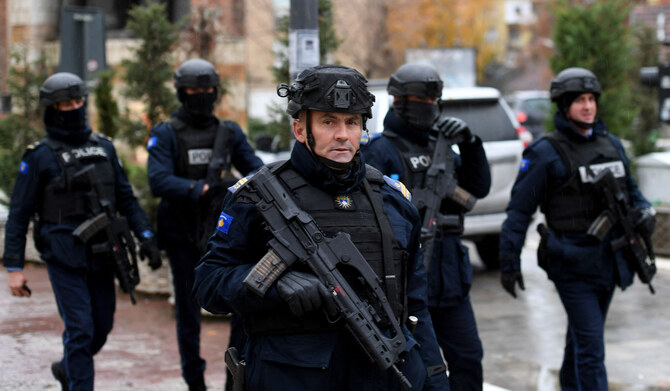
The Kosovo government on Sunday also announced measures to better protect critical infrastructure, including bridges, power stations and lakes, with police and security forces conducting patrols.
It was also stepping up cooperation between governing departments and international bodies “to prevent similar attacks in future,” it said.
Kosovo authorities arrested several suspects on Saturday.
Kosovo police chief Gazmend Hoxha said “200 military uniforms, six grenade launchers, two rifles, a pistol, masks and knives” had been seized in the operation.
Fuelling tensions, Kurti’s government has for months sought to dismantle a parallel system, backed by Belgrade, that provides social services and political offices for Kosovo’s ethnic Serb minority.
Friday’s attack followed violent incidents in northern Kosovo, including one in which hand grenades were hurled at a local council building and a police station this week.
Kosovo is to hold parliamentary elections on February 9.


