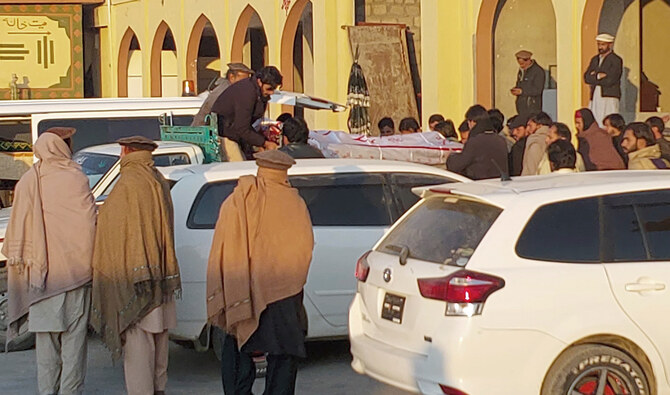
PESHAWAR: Sectarian feuding in northwest Pakistan killed 13 more people, a local government official said Saturday, as warring Sunnis and Shiites defied repeated ceasefire orders in recent conflict claiming 124 lives.
Pakistan is a Sunni-majority country, but Kurram district — in Khyber Pakhtunkhwa province, near the border with Afghanistan — has a large Shiite population and the communities have clashed for decades.
Fresh fighting broke out last Thursday when two separate convoys of Shiite Muslims traveling under police escort were ambushed, killing more than 40.
Since then, 10 days of fighting with light and heavy weapons has brought the region to a standstill, with major roads closed and mobile phone services cut as the death toll surged.
A Kurram local government official put the death toll at 124 on Saturday after 13 more people were killed in the past two days.
Two were Sunni and 11 Shiite, he said, whilst more than 50 people have been wounded in fresh fighting which continued Saturday morning.
“There is a severe lack of trust between the two sides, and neither tribe is willing to comply with government orders to cease hostilities,” he told AFP, speaking on condition of anonymity.
“Police report that many people want to flee the area due to the violence, but the deteriorating security situation makes it impossible,” he added.
A seven-day ceasefire deal was announced by the provincial government last weekend but failed to hold. Another 10-day truce was brokered Wednesday but it also failed to stymie the fighting.
A senior security official in the provincial capital of Peshawar, also speaking anonymously, confirmed the total death toll of 124.
“There is a fear of more fatalities,” he said. “None of the provincial government’s initiated measures have been fully implemented to restore peace.”
Police have regularly struggled to control violence in Kurram, which was part of the semi-autonomous Federally Administered Tribal Areas until it was merged with Khyber Pakhtunkhwa in 2018.
The Human Rights Commission of Pakistan said 79 people had been killed in the region between July and October in sectarian clashes.
The feuding is generally rekindled by disputes over land in the rugged mountainous region, and fueled by underlying tensions between the communities adhering to different sects of Islam.


![]()

13 more killed in Pakistan sectarian fighting
Short Url
https://arab.news/wdx9g
13 more killed in Pakistan sectarian fighting
- Pakistan is a Sunni-majority country, but Kurram district has a large Shiite population and the communities have clashed for decades
- Fresh fighting broke out last Thursday when two separate convoys of Shiite Muslims traveling under police escort were ambushed
Latest updates





© 2026 SAUDI RESEARCH & PUBLISHING COMPANY, All Rights Reserved And subject to Terms of Use Agreement.