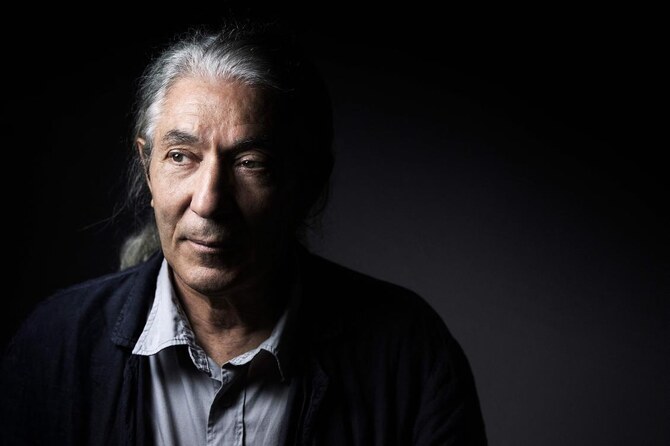
PARIS: Politicians, writers and activists have called for the release of French-Algerian writer Boualem Sansal, whose arrest in Algeria is seen as the latest instance of the stifling of creative expression in the military-dominated North African country.
The 75-year-old author, who is an outspoken critic of Islamism and the Algerian regime, has not been heard from by friends, family or his French publisher since leaving Paris for Algiers earlier this month. He has not been seen near his home in his small town, Boumerdes, his neighbors told The Associated Press.
“The detention without serious grounds of a writer of French nationality is unacceptable,” France’s Foreign Minister Jean-Noël Barrot said on Wednesday.
He added Sansal’s work “does honor to both his countries and to the values we cherish.”
The European Parliament discussed Algeria’s repression of freedom of speech on Wednesday and called for “his immediate and unconditional release.”
Algerian authorities have not publicly announced charges against Sansal, but the APS state news service said he was arrested at the airport.
Though no longer censored, Sansal’s novels have in the past faced bans in Algeria. A professed admirer of French culture, his writings on Islam’s role in society, authoritarianism, freedom of expression and the civil war that ravaged Algeria throughout the 1990s have won him fans across the ideological spectrum in France, from far-right leader Marine Le Pen to President Emmanuel Macron, who attended his French naturalization ceremony in 2023.
But his work has provoked ire in Algeria, from both authorities and Islamists, who have issued death threats against him in the 1990s and afterward.
Though few garner such international attention, Sansal is among a long list of political prisoners incarcerated in Algeria, where the hopes of a protest movement that led to the ouster of the country’s then-82 year old president have been crushed under President Abdelmadjid Tebboune.
Human rights groups have decried the ongoing repression facing journalists, activists and writers. Amnesty International in September called it a “brutal crackdown on human rights including the rights to freedom of expression, peaceful assembly and association.”
Algerian authorities have in recent months disrupted a book fair in Bejaia and excluded prominent authors from the country’s largest book fair in Algeria has in recent months, including this year’s Goncourt Prize winner Kamel Daoud,
“This tragic news reflects an alarming reality in Algeria, where freedom of expression is no more than a memory in the face of repression, imprisonment and the surveillance of the entire society,” French-Algerian author Kamel Daoud wrote in an editorial signed by more than a dozen authors in Le Point this week.
Sansal has been a polarizing figure in Algeria for holding some pro-Israel views and for likening political Islam to Nazism and totalitarianism in his novels, including “The Oath of the Barbarians” and “2084: The End of the World.”
Despite the controversial subject matter, Sansal had never faced detention. His arrest comes as relations between France and Algeria face newfound strains. France in July backed Morocco’s sovereignty over the disputed Western Sahara, angering Algeria, which has long backed the independence Polisario Front and pushed for a referendum to determine the future of the coastal northwest African territory.
“A regime that thinks it has to stop its writers, whatever they think, is certainly a weak regime,” French-Algerian academic Ali Bensaad wrote in a statement posted on Facebook.


![]()

Algeria facing growing calls to release French-Algerian author Boualem Sansal
Short Url
https://arab.news/vw9xm
Algeria facing growing calls to release French-Algerian author Boualem Sansal
- “The detention without serious grounds of a writer of French nationality is unacceptable,” France’s Foreign Minister Jean-Noël Barrot said
- The European Parliament discussed Algeria’s repression of freedom of speech on Wednesday and called for “his immediate and unconditional release”


Latest updates



© 2026 SAUDI RESEARCH & PUBLISHING COMPANY, All Rights Reserved And subject to Terms of Use Agreement.