PESHAWAR: Pakistan’s polio eradication program said on Friday two new cases of the crippling virus had been detected in the country’s northwest, bringing the nationwide tally for 2024 to 52.
Pakistan, along with neighboring Afghanistan, remains the last polio-endemic country in the world. The nation’s polio eradication campaign has hit serious problems with a spike in reported cases this year that have prompted officials to review their approach to stopping the crippling disease.
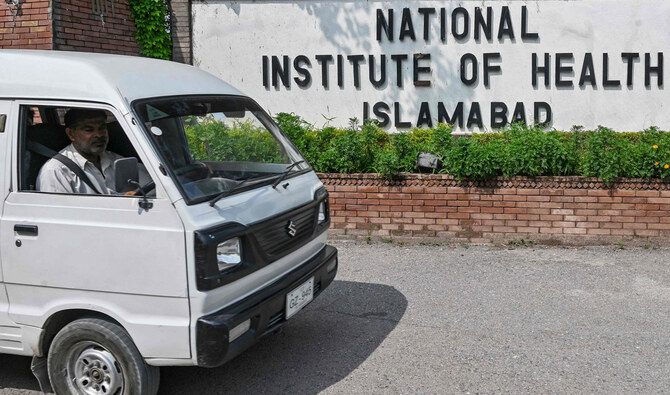
“The Regional Reference Laboratory for Polio Eradication at the National Institute of Health has confirmed the detection of two more wild poliovirus type 1 (WPV1) cases in Pakistan, bringing the number of total cases in the country this year to 52,” the National Emergency Operation Center for Polio Eradication said in a statement.
“On Thursday, November 21, the lab confirmed the cases from DI Khan where a boy and girl child are affected. Genetic sequencing of the samples collected from the children is underway.”
DI Khan, one of the seven polio endemic districts of the Khyber Pakhtunkhwa province, has now reported five polio cases this year.
Of the 52 cases reported in 2024, 24 are from the Balochistan province, 13 from Sindh, 13 from KP and one each from Punjab and Islamabad, the federal capital.
Poliovirus, which can cause crippling paralysis particularly in young children, is incurable and remains a threat to human health as long as it has not been eradicated. Immunization campaigns have succeeded in most countries and have come close in Pakistan, but persistent problems remain.
In the early 1990s, Pakistan reported around 20,000 cases annually but in 2018 the number dropped to eight cases. Six cases were reported in 2023 and only one in 2021.
Pakistan’s polio program began in 1994 but efforts to eradicate the virus have since been undermined by vaccine misinformation and opposition from some religious hard-liners, who say immunization is a foreign ploy to sterilize Muslim children or a cover for Western spies. Militant groups also frequently attack and kill members of polio vaccine teams.
In July 2019, a vaccination drive in Khyber Pakhtunkhwa was thwarted after mass panic was created by rumors that children were fainting or vomiting after being immunized.
Public health studies in Pakistan have shown that maternal illiteracy and low parental knowledge about vaccines, together with poverty and rural residency, are also factors that commonly influence whether parents vaccinate their children against polio.
Pakistan’s chief health officer this month said an estimated 500,000 children had missed polio vaccinations during a recent countrywide inoculation drive due to vaccine refusals.


![]()

Pakistan reports two new polio cases in northwest, raising 2024 tally to 52
Short Url
https://arab.news/pxuxf
Pakistan reports two new polio cases in northwest, raising 2024 tally to 52
- Cases detected in DI Khan district in Khyber Pakhtunkhwa province
- Pakistan and Afghanistan are last polio-endemic countries in the world
Latest updates


© 2026 SAUDI RESEARCH & PUBLISHING COMPANY, All Rights Reserved And subject to Terms of Use Agreement.