

Saudi entertainment sector to create 450,000 jobs by 2030: Investment ministry

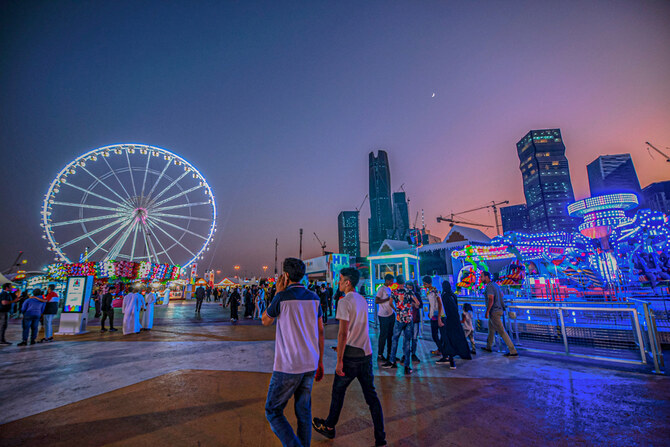
The rapid progress of the entertainment sector aligns with the Kingdom’s Vision 2030 goals. Shutterstock
Short Url
Updated 21 November 2024
Follow

Saudi entertainment sector to create 450,000 jobs by 2030: Investment ministry

  • Kingdom issued 34 investment licenses in the entertainment industry in the third quarter of the year
  • It also hosted 26,000 events in the past five years, attracting over 75 million attendees

RIYADH: Saudi Arabia’s entertainment sector is expected to create 450,000 jobs and could contribute 4.2 percent of the country’s gross domestic product by 2030, according to a new report. 

In its latest release, the Kingdom’s Ministry of Investment said that Saudi Arabia issued 34 investment licenses in the entertainment industry in the third quarter of the year, representing a rise of 13 percent compared to the previous three months. 

The ministry added that the total number of investment licenses issued in the entertainment sector from 2020 until the end of the third quarter reached 303. 

“In line with Saudi Vision 2030, Saudi Arabia aims to diversify its economy and enhance the quality of life by promoting tourism and Saudi culture internationally to attract visitors. The entertainment sector is a crucial pillar in achieving these ambitious goals, focusing on enhancing the quality of life through various cultural and entertainment activities,” said the Ministry of Investment. 

The rapid progress of the entertainment sector aligns with the Kingdom’s Vision 2030 goals, which are to reduce the country’s decades-long dependence on crude revenues. 

In 2016, Saudi Arabia established the General Entertainment Authority to boost the entertainment and leisure industry. Since then, the Kingdom has witnessed notable developments, including reopening cinema halls in 2018.

According to the report, Saudi Arabia issued 2,189 licenses in the entertainment sector over the past five years. 

The Kingdom also hosted 26,000 events in the past five years, attracting over 75 million attendees. 

The ministry added that the growing entertainment sector is also catalyzing the growth of the tourism sector in the Kingdom. 

The report said that the number of inbound tourists in the entertainment industry reached 6.2 million in 2023, representing a rise of 153.3 percent compared to 2022. 

Inbound tourist spending in the entertainment industry reached SR4 billion ($1.07 billion) in 2023, a 29.03 percent rise from the previous year. 

“The entertainment sector is a vital and dynamic part of the Kingdom, acting as a catalyst for the tourism sector. By hosting various events and activities, it boosts tourism and attracts visitors, resulting in higher tourism spending and strengthening the local economy,” said the Ministry of Investment.

In 2023, the entertainment sector attracted 35 million local tourists, up 17 percent compared to 2022. 
Local tourists’ spending in 2023 was SR4.7 million, representing a marginal decline of 8.5 percent from the previous year. 


Gulf-EU value chain integration signals shift toward long-term economic partnership: GCC secretary general

Updated 03 February 2026
Follow

Gulf-EU value chain integration signals shift toward long-term economic partnership: GCC secretary general

RIYADH: Value chains between the Gulf and Europe are poised to become deeper and more resilient as economic ties shift beyond traditional trade toward long-term industrial and investment integration, according to the secretary general of the Gulf Cooperation Council.

Speaking on the sidelines of the World Governments Summit 2026 in Dubai, Jasem Al-Budaiwi said Gulf-European economic relations are shifting from simple commodity trade toward the joint development of sustainable value chains, reflecting a more strategic and lasting partnership.

His remarks were made during a dialogue session titled “The next investment and trade race,” held with Luigi Di Maio, the EU’s special representative for external affairs.

Al-Budaiwi said relations between the GCC and the EU are among the bloc’s most established partnerships, built on decades of institutional collaboration that began with the signing of the 1988 cooperation agreement.

He noted that the deal laid a solid foundation for political and economic dialogue and opened broad avenues for collaboration in trade, investment, and energy, as well as development and education.

The secretary general added that the partnership has undergone a qualitative shift in recent years, particularly following the adoption of the joint action program for the 2022–2027 period and the convening of the Gulf–European summit in Brussels.

Subsequent ministerial meetings, he said, have focused on implementing agreed outcomes, enhancing trade and investment cooperation, improving market access, and supporting supply chains and sustainable development.

According to Al-Budaiwi, merchandise trade between the two sides has reached around $197 billion, positioning the EU as one of the GCC’s most important trading partners.

He also pointed to the continued growth of European foreign direct investment into Gulf countries, which he said reflects the depth of economic interdependence and rising confidence in the Gulf business environment.

Looking ahead, Al-Budaiwi emphasized that the economic transformation across GCC states, driven by ambitious national visions, is creating broad opportunities for expanded cooperation with Europe. 

He highlighted clean energy, green hydrogen, and digital transformation, as well as artificial intelligence, smart infrastructure, and cybersecurity, as priority areas for future partnership.

He added that the success of Gulf-European cooperation should not be measured solely by trade volumes or investment flows, but by its ability to evolve into an integrated model based on trust, risk-sharing, and the joint creation of economic value, contributing to stability and growth in the global economy.

GCC–EU plans to build shared value chains look well-timed as trade policy volatility rises.

In recent weeks, Washington’s renewed push over Greenland has been tied to tariff threats against European countries, prompting the EU to keep a €93 billion ($109.7 billion) retaliation package on standby. 

At the same time, tighter US sanctions on Iran are increasing compliance risks for energy and shipping-related finance. Meanwhile, the World Trade Organization and UNCTAD warn that higher tariffs and ongoing uncertainty could weaken trade and investment across both regions in 2026.