
Wonder District brings worlds of fun to Jeddah

1 / 5
Located on King Abdulaziz Road, it is part of the Jeddah Events Calendar and a major highlight of the coastal city’s entertainment scene this season. (Supplied)
2 / 5
Located on King Abdulaziz Road, it is part of the Jeddah Events Calendar and a major highlight of the coastal city’s entertainment scene this season. (Supplied)
3 / 5
Located on King Abdulaziz Road, it is part of the Jeddah Events Calendar and a major highlight of the coastal city’s entertainment scene this season. (Supplied)
4 / 5
Located on King Abdulaziz Road, it is part of the Jeddah Events Calendar and a major highlight of the coastal city’s entertainment scene this season. (Supplied)
5 / 5
Located on King Abdulaziz Road, it is part of the Jeddah Events Calendar and a major highlight of the coastal city’s entertainment scene this season. (Supplied)
Short Url
Updated 20 November 2024
Follow

Wonder District brings worlds of fun to Jeddah

  • The festival spans 10 immersive zones, each offering a unique experience designed to captivate visitors of all ages

JEDDAH: The newly opened Wonder District in Jeddah is drawing visitors looking for entertainment, thrills and cultural immersion until Dec. 11

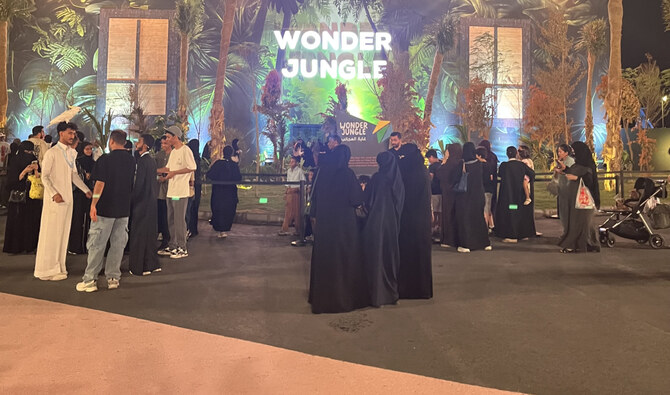
Located on King Abdulaziz Road, it is part of the Jeddah Events Calendar and a major highlight of the coastal city’s entertainment scene this season.

The festival spans 10 immersive zones, each offering a unique experience designed to captivate visitors of all ages, including adrenaline-pumping adventures to relaxing cultural experiences.

The Wonder Jungle section lets young visitors interact with animals including hens, raccoons, tortoises, rabbits, parrots, peacocks, flamingos, ducks, squirrels and even kangaroos.

The lush, verdant area is filled with wildlife exhibits, nature trails and peaceful corners for relaxation.

The Let’s Play, also for young visitors, is an energetic space brimming with interactive games and activities featuring iconic characters from beloved franchises such as Barbie, Hot Wheels, Barney, Scrabble, Cocomelon and more.

For those seeking a thrill, the 500 sq. meter Spooky Circus delivers a spine-tingling adventure. From creepy clowns and haunted houses to glow-in-the-dark rooms and suspenseful surprises, the section offers a thrilling journey into the world of mystery and fright.

At the Wonder Job, visitors can put their skills to the test in an exhilarating race against the clock. With only 60 seconds on the countdown, participants must unlock as many safes as possible to win prizes, with one lucky safe containing the ultimate luxury reward.

The excitement is amplified as the action is streamed live on screens outside the zone, creating an electrifying atmosphere for everyone to enjoy.

Smiley Beach, made from soft, sponge-like materials, creates a unique vibe where visitors can dive into a bubble pit or enjoy exciting activities like the blob jump, zipline, rope swing and slide. The beach zone also comes alive with DJ performances and light shows, making it an ideal spot to unwind or dive into high-energy fun.

For those craving adventure, Blast Off’s inflatable adventure zone uses varying air pressure to launch visitors into the air, creating a thrilling and exhilarating experience. It features trampolines, interactive ball pools, colored sand pools and slides, offering a unique twist on classic inflatable fun.

Entertainment comes to life at the Wonder Theater with a wide range of performances, including live stand-up comedy, captivating theatrical productions and kids’ shows.

Mohammed Hamza, who went to Wonder District with his children, said: “This is exactly what Jeddah needed; a place where the whole family can have fun while learning and exploring.

“We’ve never seen a jungle, theatrical shows and other similar interactive zones all in one place. We’ve been here for five hours and still have three more zones to explore!”

The retail area showcases the best of local craftsmanship, with 15 shops featuring fashion, accessories and artisanal products from talented local designers. Visitors can explore and purchase items that reflect the region’s rich culture and creativity.

“Customers have been thoroughly enjoying our designs and unique offerings. It has been an incredible opportunity to showcase our brand products. Sales have been remarkably good,” said Mohammed, a staff member at Rysh Fashionable.

Faiza Ahmed, another visitor, told Arab News: “The place is massive, and each zone really deserves at least 45 minutes to enjoy. The crowd management is excellent, and we’re not waiting in long lines; things are moving quickly.

“Smiley Beach was a huge hit with my kids, especially the bubble pit and lively music created such a fun atmosphere. The Spooky Circus is another standout feature, especially since it’s one of the few places where children can fully participate. The weather is perfect, and having such an open-air entertainment space is really enjoyable.”

Deena Ali, a visitor from Makkah, said: “Wonder District has quickly become a popular spot for entertainment and cultural exploration. With so much to see and do, it’s no wonder that visitors from nearby cities are eager to come. It offers activities that are unlike anything we’ve seen during Jeddah Season.”


Surviving the sands: The battle to save Arabian wolves

Updated 6 sec ago
Follow

Surviving the sands: The battle to save Arabian wolves

  • Exploring the wolf’s role in Arabia’s heritage and ecosystem

Surviving the sands: The battle to save Arabian wolves

Exploring the wolf’s role in Arabia’s heritage and ecosystem

DID YOU KNOW?

In Saudi Arabia, hunting wolves without a proper license can result in fines of up to SR80,000.

Mexican wolves, locally known as ‘El Lobo,’ are critically endangered, despite ongoing reintroduction efforts.

While recent figures for Saudi Arabia’s wolf population are not available, a 2004 report estimated their numbers at 500-600.

Haifa Alshammari

RIYADH: Wolves are often portrayed in Western stories and films as dangerous, unpredictable predators. In contrast, Arabic perspectives offer a more nuanced view. 

In Saudi Arabia, wolves are admired for their resilience, intelligence, and role in the natural environment. The Arabian wolf, or Canis lupus arabs, is one of the Peninsula’s iconic native predators. 

For centuries, it shaped both ecological and cultural landscapes across Saudi Arabia. However, its population declined in recent decades. Today, conservation efforts led by the National Center for Wildlife aim to protect and restore this species.

Saudi regulations now make it illegal to display, sell, or transport wolves without authorization. NCW’s initiatives include studying wolf genetics, developing breeding programs to restore wild populations, raising public awareness, and imposing fines of up to SR80,000 ($22,000) for unlicensed hunters.

The Arabian wolf is a symbol of the desert and an important component of the Kingdom’s biodiversity. Historically, it inhabited deserts, mountains, and valleys across Saudi Arabia, Yemen, and Oman. Unlike wolves from colder regions, it evolved to survive extreme heat, scarce water, and fluctuating prey populations.

“Saudi Arabia’s vast and diverse ecosystems have enabled many wildlife species to thrive, including the Arabian wolf,” NCW notes. The wolf historically helped control populations of rodents, small mammals, and weak or diseased animals, maintaining a balanced ecosystem.

However, the shift from nomadic life to urban settlements and agriculture, alongside expanding human activity, put increasing pressure on the species. 

Habitat loss, conflicts with herders, and hunting practices significantly reduced their natural range. NCW records show numerous cases of injured wolves rescued and rehabilitated, highlighting the challenges they face today.

Culturally, the Arabian wolf is admired and feared in equal measure. In Bedouin tradition, it symbolizes independence and intelligence, appearing in poetry and oral stories.

“Two cultures in the world share a similar view of the wolf: Native American and Arab cultures,” said Obaid Alouni, a Saudi environmentalist. “They admired wolves and respected wolves. For example, when they see a wolf and someone has a gun, they don’t kill it even though they could,” he added.

Alouni explained that despite being predators, wolves coexisted with humans in the Arabian Peninsula: “There was a kind of coexistence in the Arabian Peninsula.” Yet livestock owners often feared wolves for preying on sheep and goats, creating a tense relationship between humans and wolves.

This dual perception shaped the wolf’s role in cultural metaphors: it was seen as a mirror of the desert itself — tough, resilient, and adaptable. “Arabs have always sought positive qualities in wolves. For example, one of their characteristics is that wolves understand their pack and sacrifice themselves for them. They do not betray their pack and fight for it, in addition to their loyalty to it,” Alouni explained.

Physically, the Arabian wolf is one of the smallest gray wolf subspecies, adapted to desert life. It weighs 18-25 kilograms and measures 100-110 cm in length. Its large ears reduce heat, a light sandy-gray coat reflects sunlight and camouflages it in the desert, and its diet includes small mammals, birds, and occasionally livestock.

Sadly, the Arabian wolf is classified as endangered due to habitat loss, human conflict, and historical hunting. Alouni noted that hybridization has further reduced the population of purebred Arabian wolves: “Unfortunately, a species is now being circulated that is not the true size of the Arabian wolf. The National Center for Wildlife is currently conducting extensive research to learn more about the Arabian wolf and its true size. The species currently prevalent is shorter in stature.”

Other wolf subspecies include the Gray Wolf, found in North America, Europe, and Asia. It weighs 30–80 kilograms, measures up to 180 cm in length, and is known for its complex social packs. 

The Arctic Wolf, native to Arctic Canada and Greenland, has a thick white coat, short snout and ears, and survives extreme cold, preying on musk oxen, Arctic hares, and caribou. 

The Indian Wolf, scientifically known as Canis lupus pallipes, inhabits South and West Asia, weighs 20-30 kilograms, and forms small, stealthy packs. 

Finally, the Ethiopian wolf is fox-like, inhabits highlands above 3,000 meters, weighs 13–18 kilograms, and has a reddish coat with white markings. It is one of the world’s rarest wolves, with fewer than 500 individuals in the wild.

Protecting wolves is crucial for maintaining healthy ecosystems. As apex predators, they regulate prey populations, prevent overgrazing, maintain plant diversity, and reduce disease spread by feeding on sick or weak animals. Their presence influences herbivore behavior, supporting a balanced environment.

The Arabian wolf is more than a desert predator. It is a cultural symbol, a survivor of harsh landscapes, and a vital component of Saudi Arabia’s ecological identity. The work of the NCW is essential: protecting the Arabian wolf means conserving biodiversity, preserving heritage, and sustaining ecological systems across the Arabian Peninsula.