



RIYADH: “If you don’t channel your passion for executing a business, then you simply have a hobby,” Essa Behbehani said at the Misk Global Forum on Tuesday.
The CEO of Prepline, a food and beverage investment and development company, made the statement during the panel discussion “Dream, Do, Dare: The Entrepreneur’s Cookbook,” which discussed core business skills, provided guidance on overcoming common startup challenges, and offered essential advice on scaling enterprises through funding.
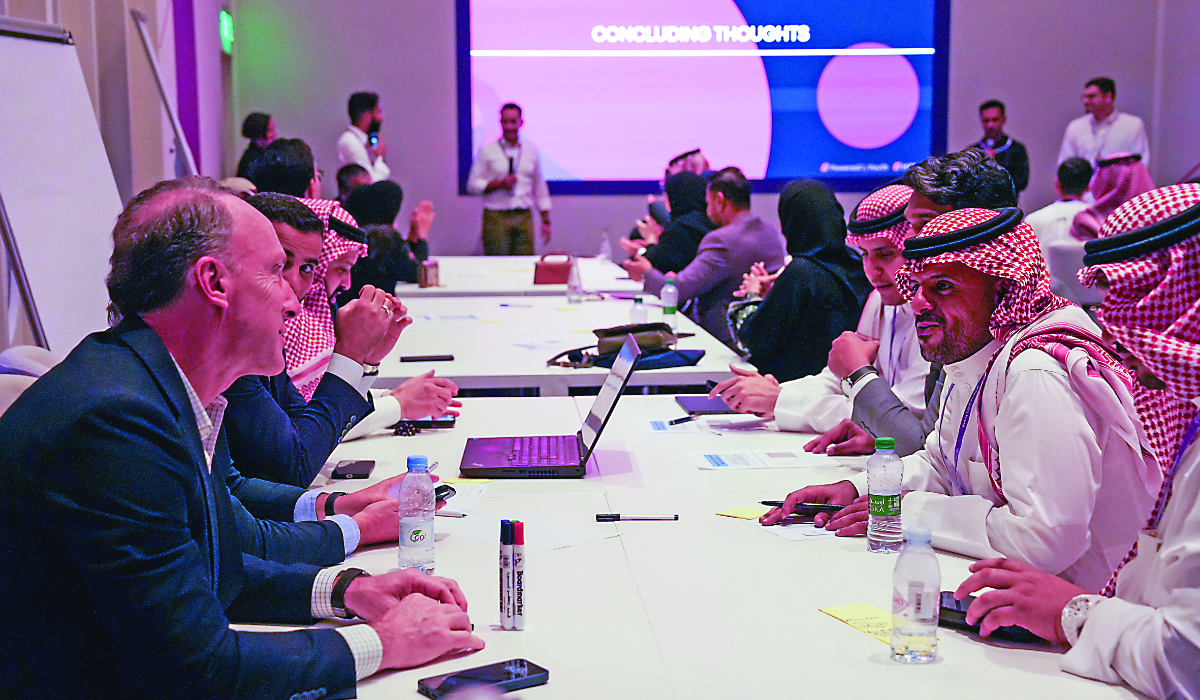
"In a business, the most important factors are the product, resistance, and community approval." (AN photo by Huda Bashatah)
“Passion is one of the main elements you need to build a business on, but it is not the main element,” Behbehani said.
He outlined the four key roles in business success, saying: “You are either an investor, manager, developer, or craftsman. Each one needs the other element to succeed.”
HIGHLIGHTS
• The eighth Misk Global Forum, designed to encourage dialogue and exchange of ideas, is showcasing Misk Foundation’s dedication to engaging young minds.
• On Tuesday, Essa Behbehani and Abdullah Al-Saleem discussed core business skills, provided guidance on overcoming common startup challenges, and offered essential advice on scaling enterprises through funding.
Reflecting on the evolution of business fundamentals over two decades, Behbehani noted a significant shift, and added: “Back then, (around) 2003 to 2004, the most important elements in a business were the product, resistance, and community approval.”

"In a business, the most important factors are the product, resistance, and community approval." (AN photo by Huda Bashatah)
Behbehani noted that at that time, entrepreneurs like himself lacked marketing knowledge and did not have modern tools like social media to promote their businesses.
However, today’s business landscape demands different priorities, and he said: “These skill sets that you have need to be transferred into three main elements: You need to have a mindset, speed, and quality of product.

"In a business, the most important factors are the product, resistance, and community approval." (AN photo by Huda Bashatah)
“Mindset nowadays is everything — without a mindset, you can never grow a business.”
He cautioned current entrepreneurs about the limitations of focusing solely on product excellence, asking: “What are you going to do with an amazing product without the right mindset and the right speed to execute it?”
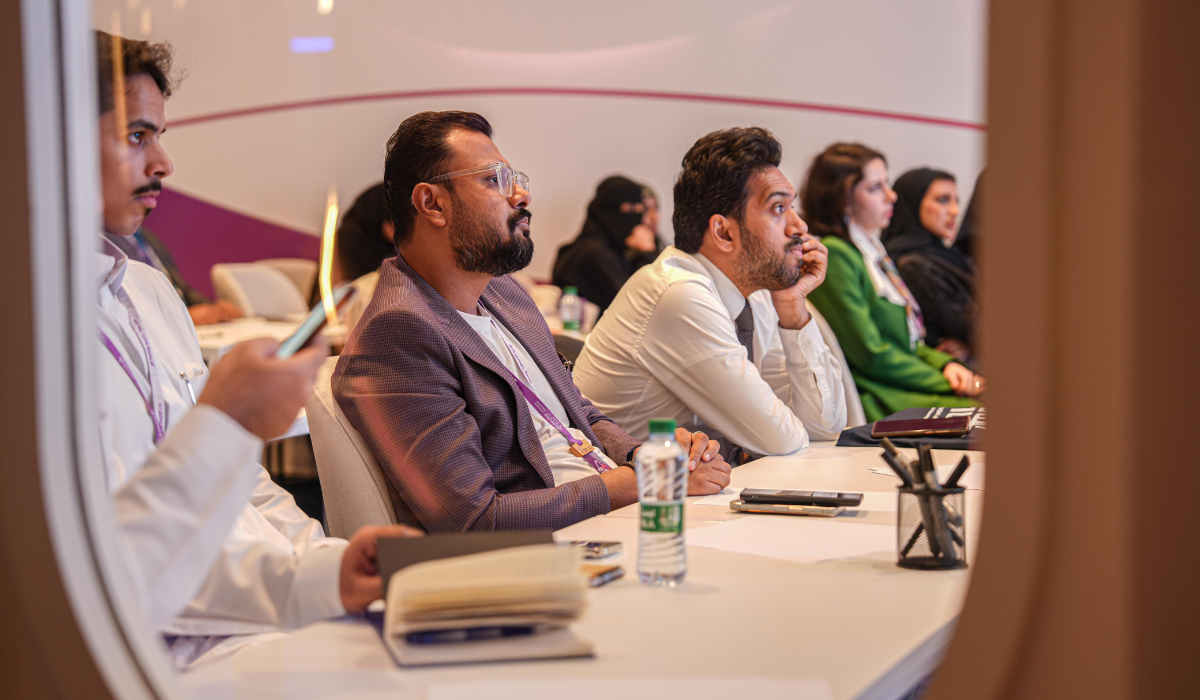
"In a business, the most important factors are the product, resistance, and community approval." (AN photo by Huda Bashatah)
During the same session, Abdullah Al-Saleem, the CEO and co-founder of Mushtari, a platform for business acquisition, shared valuable insights on when and how entrepreneurs should seek guidance for their ventures.
“Every time is the right time to seek help,” Al-Saleem said, highlighting the importance of continuous learning and consultation in business development.
He advocated for a two-pronged approach to seeking advice, distinguishing between general business consultants and industry-specific experts.
He added: “There are two people you have to seek help from: People that know generally about the industry, and people that know specifically about the industry.”
Using the restaurant business as an example, Al-Saleem described how he would consult general business experts for fundamentals like “hiring, culture, (and) cash flow,” while seeking industry-specific guidance for specialized operations.
However, gathering advice, he said, was just the first step. He noted that it was crucial to ensure team involvement in implementing recommendations.
He said: “When I take all these ideas or all these bits of advice, I brainstorm it with the team.”
This collaborative approach ensured that potential solutions were thoroughly evaluated before implementation, he said.
Al-Saleem further emphasized the importance of practical application through trial and error, and he always involved his team in the process.
He added: “They are the engine of the business and without the team, there is no business.”


