NEW YORK: Maribel Hidalgo fled her native Venezuela a year ago with a 1-year-old son, trudging for days through Panama’s Darien Gap, then riding the rails across Mexico to the United States.
They were living in the US when the Biden administration announced Venezuelans would be offered Temporary Protected Status, which allows people already in the United States to stay and work legally if their homelands are deemed unsafe. People from 17 countries, including Haiti, Afghanistan, Sudan and recently Lebanon, are currently receiving such relief.
But President-elect Donald Trump and his running mate, JD Vance, have promised mass deportations and suggested they would scale back the use of TPS that covers more than 1 million immigrants. They have highlighted unfounded claims that Haitians who live and work legally in Springfield, Ohio, as TPS holders were eating their neighbors’ pets. Trump also amplified disputed claims made by the mayor of Aurora, Colorado, about Venezuelan gangs taking over an apartment complex.
“What Donald Trump has proposed doing is we’re going to stop doing mass parole,” Vance said at an Arizona rally in October, mentioning a separate immigration status called humanitarian parole that is also at risk. “We’re going to stop doing mass grants of Temporary Protected Status.”
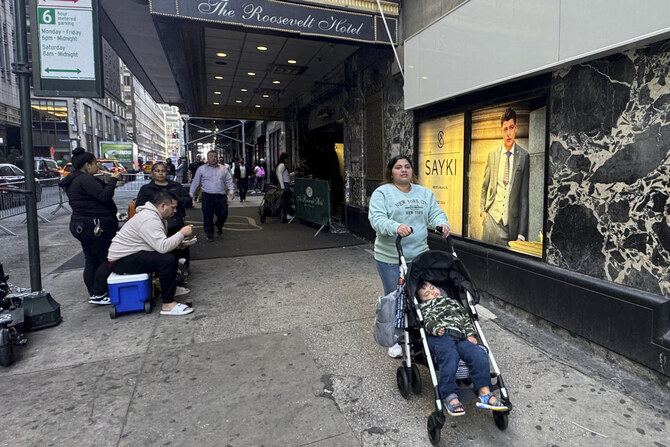
Hidalgo wept as she discussed her plight with a reporter as her son, now 2, slept in a stroller outside the New York migrant hotel where they live. At least 7.7 million people have fled political violence and economic turmoil in Venezuela in one of the biggest displacements worldwide.
“My only hope was TPS,” Hidalgo said. “My worry, for example, is that after everything I suffered with my son so that I could make it to this country, that they send me back again.”
Venezuelans along with Haitians and Salvadorans are the largest group of TPS beneficiaries and have the most at stake.
Haiti’s international airport shut down this week after gangs opened fire at a commercial flight landing in Port-Au-Prince while a new interim prime minister was sworn in. The Federal Aviation Administration barred US airlines from landing there for 30 days.
“It’s creating a lot of anxiety,” said Vania André, editor-in-chief for The Haitian Times, an online newspaper covering the Haitian diaspora. “Sending thousands of people back to Haiti is not an option. The country is not equipped to handle the widespread gang violence already and cannot absorb all those people.”
Designations by the Homeland Security secretary offer relief for up to 18 months but are extended in many cases. The designation for El Salvador ends in March. Designations for Sudan, Ukraine, and Venezuela end in April. Others expire later.
Federal regulations say a designation can be terminated before it expires, but that has never happened, and it requires 60 days’ notice.
TPS is similar to the lesser-known Deferred Enforcement Departure Program that Trump used to reward Venezuelan exile supporters as his first presidency was ending, shielding 145,000 from deportation for 18 months.
Attorney Ahilan T. Arulanantham, who successfully challenged Trump’s earlier efforts to allow TPS designations for several countries to expire, doesn’t doubt the president-elect will try again.
“It’s possible that some people in his administration will recognize that stripping employment authorization for more than a million people, many of whom have lived in this country for decades, is not good policy” and economically disastrous, said Arulanantham, who teaches at the University of California, Los Angeles School of Law, and helps direct its Center for Immigration Law and Policy. “But nothing in Trump’s history suggests that they would care about such considerations.”
Courts blocked designations from expiring for Haiti, Sudan, Nicaragua and El Salvador until well into President Joe Biden’s term. Homeland Secretary Alejandro Mayorkas then renewed them.
Arulanantham said he “absolutely” could see another legal challenge, depending on what the Trump administration does.
Congress established TPS in 1990, when civil war was raging in El Salvador. Members were alarmed to learn some Salvadorans were tortured and executed after being deported from the US Other designations protected people during wars in Bosnia-Herzegovina and Kuwait, from genocidal violence in Rwanda, and after volcanic eruptions in Montserrat, a British territory in the Caribbean, in 1995 and 1997.
A designation is not a pathway to US permanent residence or citizenship, but applicants can try to change their status through other immigration processes.
Advocates are pressing the White House for a new TPS designation for Nicaraguans before Biden leaves office. Less than 3,000 are still covered by the temporary protections issued in 1998 after Hurricane Mitch battered the country. People who fled much later under oppression from President Daniel Ortega’s government don’t enjoy the same protection from deportation.
“It’s a moral obligation” for the Biden administration, said Maria Bilbao, of the American Friends Service Committee.
Elena, a 46-year-old Nicaraguan who has lived in the United States illegally for 25 years, hopes Biden moves quickly.
“He should do it now,” said Elena, who lives Florida and insisted only her first name be used because she fears deportation. “Not in January. Not in December. Now.”


![]()

1 million migrants in the US rely on temporary protections that Trump could target
Short Url
https://arab.news/8m7yn
1 million migrants in the US rely on temporary protections that Trump could target
- People from 17 countries, including Haiti, Afghanistan, Sudan and recently Lebanon, are currently receiving such relief
- But President-elect Donald Trump promised mass deportations and suggested he would scale back the use of Temporary Protected Status


Latest updates


© 2026 SAUDI RESEARCH & PUBLISHING COMPANY, All Rights Reserved And subject to Terms of Use Agreement.