



QUETTA: Fear gripped passengers traveling via trains on Sunday from Quetta to different parts of the country, a day after a deadly suicide bombing killed more than two dozen people in the southwestern Pakistani city.
At least 26 people were killed and 64 others injured when a bomb blast struck the Quetta Railway Station early on Saturday morning in Pakistan’s restive Balochistan province, according to officials.
The Baloch Liberation Army (BLA) separatist group claimed responsibility for the attack, the deadliest since a string of coordinated assaults on Aug. 25-26 in which more than 50 people, civilians and security officials, were killed in the region.
On Sunday, signs of destruction and blood stains were still visible at the railway station and passengers traveling from Quetta to other cities described the environment as “fearful.”
“There is silence at the railway station this morning because everyone is in fear due to Saturday’s attack,” Muhammad Mubashir, a 24-year-old passenger who was traveling to Sibi, told Arab News.
“After any attack, the government increases the security arrangements but after a couple of days, they end the stringent security.”
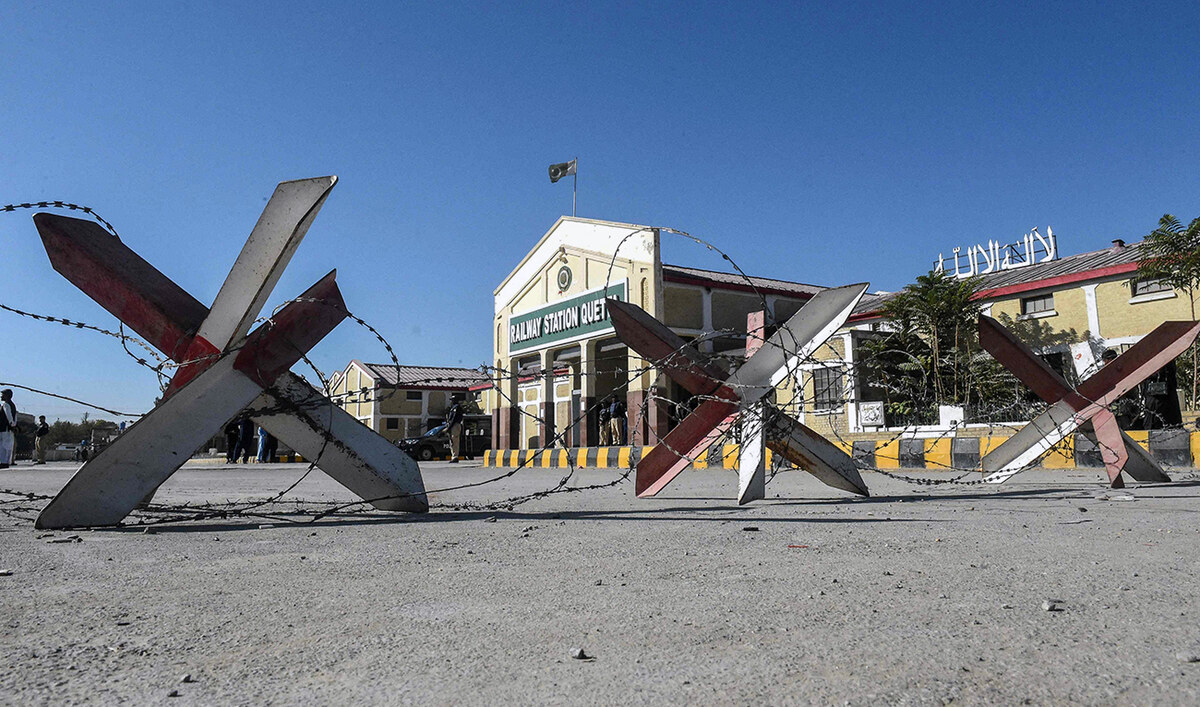
Police personnel stand guard outside a railway station, a day after an explosion allegedly by Pakistani separatists in Quetta, Pakistan, on November 10, 2024. (AFP)
Muhammad Ijaz, who came to see off his family at the railway station, was concerned about safety of his children who were traveling to Multan.
“The government must provide security to the commuters traveling through trains because it is a reasonable traveling service for poor passengers,” he demanded.
Imran Hayat, the Quetta divisional superintendent of Pakistan Railways, said they had beefed up security measures at the railway station following Saturday’s attack.
“It is very difficult to take preventive measures against suicide bombings, however, we have increased vigilance and due diligence at the Quetta Railway Station,” he told Arab News.
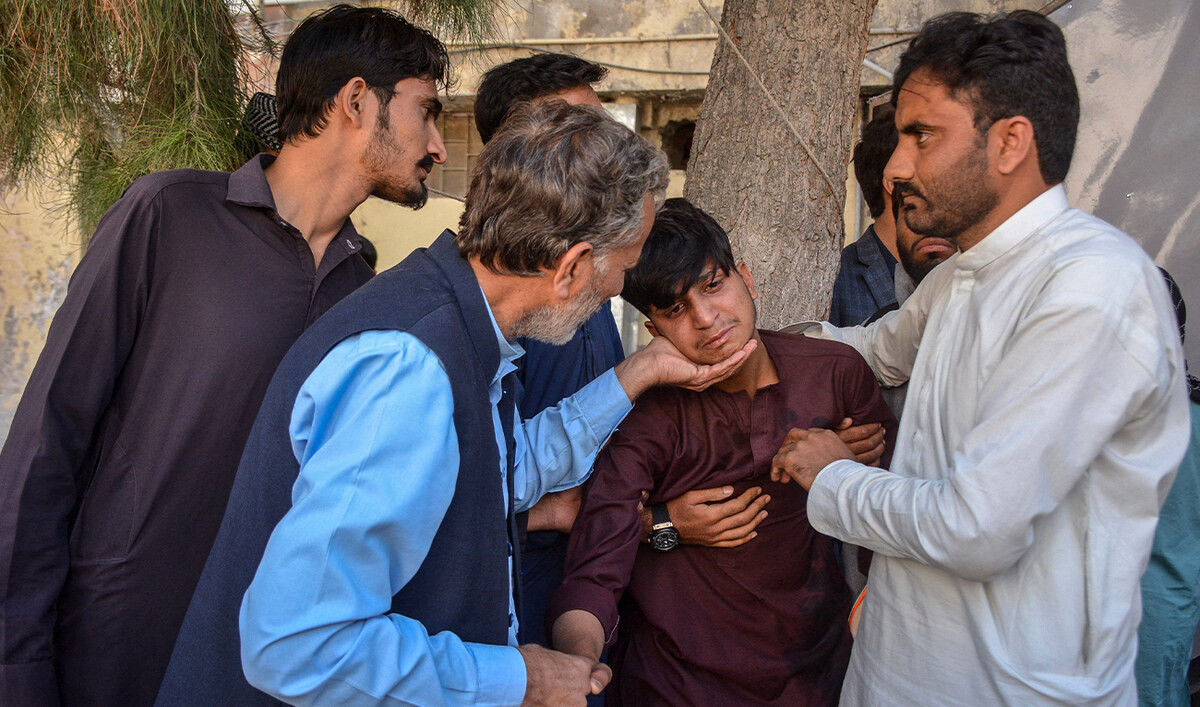
People mourn the death of their relatives in a hospital following a bomb blast at a railway station in Quetta, Pakistan, on November 9, 2024. (AP)
Balochistan is a resource-rich but impoverished province where separatist militants have been fighting a decades-long insurgency to win secession of the region. Insurgents say they are fighting what they see as the unfair exploitation of the province’s mineral and gas wealth by the federation at the center.
The Pakistani government and military deny they are exploiting Balochistan and have long maintained that neighbors such as India, Afghanistan and Iran foment trouble in the remote province and support and fund the insurgency there to impede its development potential. Balochistan is home to major China-led investment projects such as a strategic port and a gold and copper mine.
In a statement shared with the media, the BLA said its suicide unit, the Majeed Brigade, had carried out the bombing to target a “Pakistani army unit” returning via train after completing a course at an infantry school. The claim has not yet been confirmed by the Pakistani military.
The rise in separatist attacks in Balochistan poses a major challenge for the weak coalition government of Prime Minister Shehbaz Sharif, which is battling an economic crisis and political instability as well as a rise in militant violence by both religiously motivated and separatist groups across the country.
Pakistan’s Interior Minister Mohsin Naqvi and Army Chief General Asim Munir visited Quetta on Saturday to attend funeral prayers of those killed in the railway station attack.

In this handout photo, taken and released by Pakistan’s Inter-Service Public Relations (ISPR), Pakistan’s civil and military leadership attend the funeral prayers of army officers, who were killed during a suicide bombing in Quetta early Saturday, in Quetta on November 10, 2024. (ISPR)
“We must battle this terrorism together. Apart from the Balochistan government and the federation, the people of Pakistan have to fight against it too,” Naqvi told reporters in Quetta alongside Balochistan Chief Minister Sarfaraz Bugti.
“And you will see, God willing, as the chief minister said, we will eliminate this wave of terrorism.”


