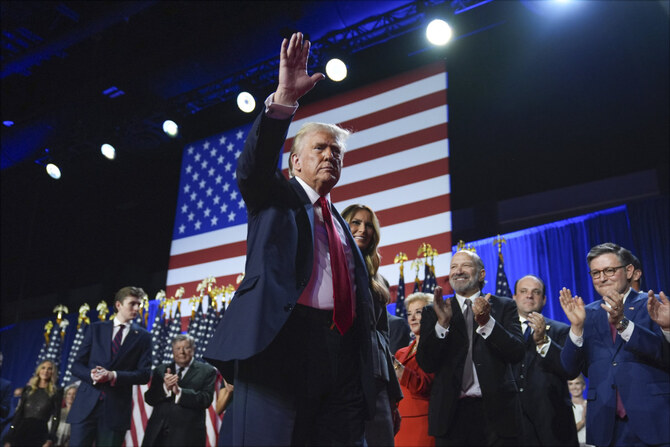


LONDON: Defying almost all election predictions, Donald Trump, or “Abu Ivanka” as he is commonly known in the region, has secured what he has called a “powerful mandate” to form the next US administration, with massive implications not just for domestic politics but for the international community, including the Middle East.
Since his election victory was confirmed on Wednesday, messages of congratulations have flooded in from Arab capitals, buoyed by the opportunities for deeper strategic cooperation that a second Trump presidency likely has in store for the region.
Saudi Arabia’s King Salman and Crown Prince Mohammed bin Salman congratulated Trump in separate cables on Wednesday, with King Salman praising the “historically close (bilateral) relations that everyone seeks to strengthen and develop in all fields.”
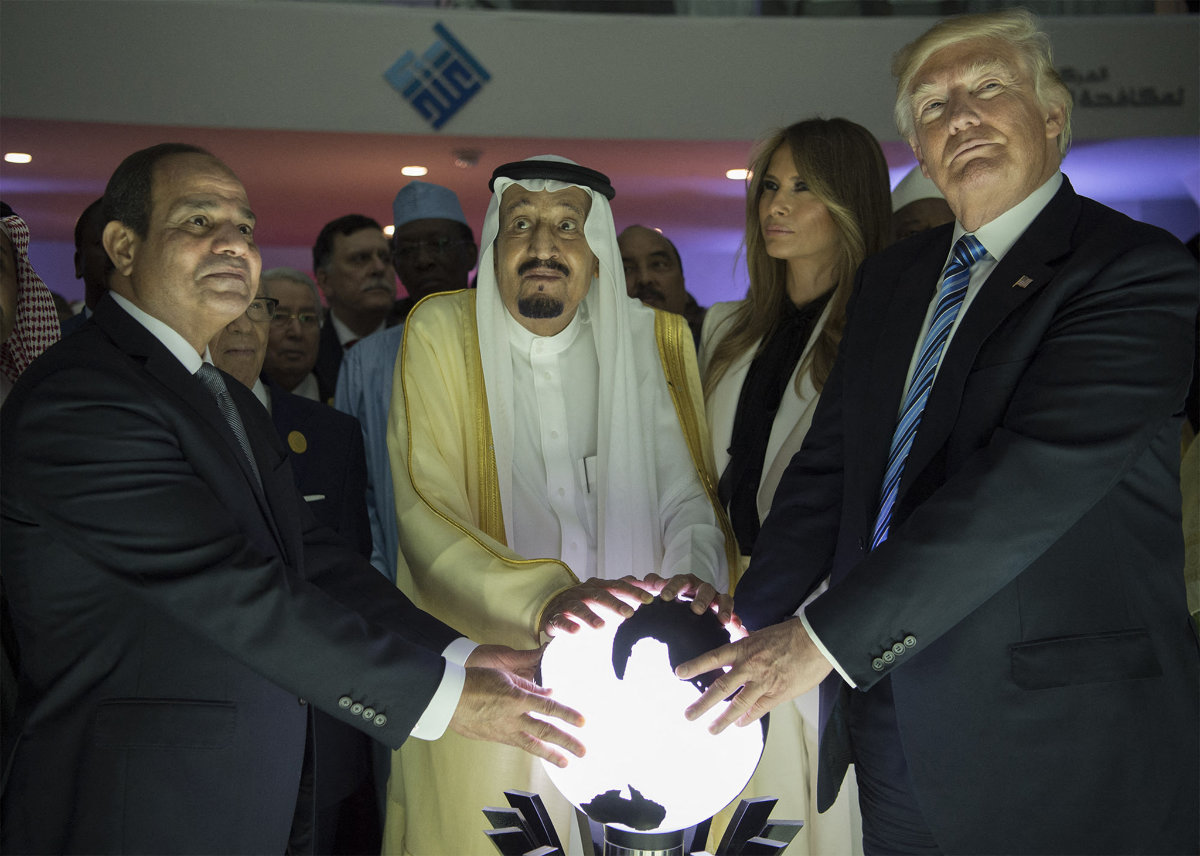
On May 21, 2017, US President Donald Trump (R) joined Saudi Arabia's King Salman and Egypt's President Abdel Fattah el-Sisi (L) led the inauguration of the Global Center for Combating Extremist Ideology "Etidal" in Riyadh. (Saudi Royal Palace/AFP/File photo)
UAE President Sheikh Mohamed bin Zayed Al-Nahyan sent his “sincere congratulations” to Trump in a message on X, saying: “The UAE looks forward to continuing to work with our partners in the US towards a future of opportunity, prosperity, and stability for all.”
Emir of Qatar Tamim bin Hamad Al-Thani posted on X that he looks “forward to working together again to strengthen our strategic relationship and partnership.”
Egypt also welcomed the result, with President Abdel Fattah El-Sisi posting on social media: “We look forward to working together in bringing and maintaining regional peace and stability and bolstering the strategic partnership between Egypt and the United States.”
While almost all of the national polls had placed Vice President Kamala Harris ahead in the race to succeed President Joe Biden in the Oval Office, there were clear signs that ethnic minority voters were beginning to turn their backs on the Democrats — among them Arab Americans.
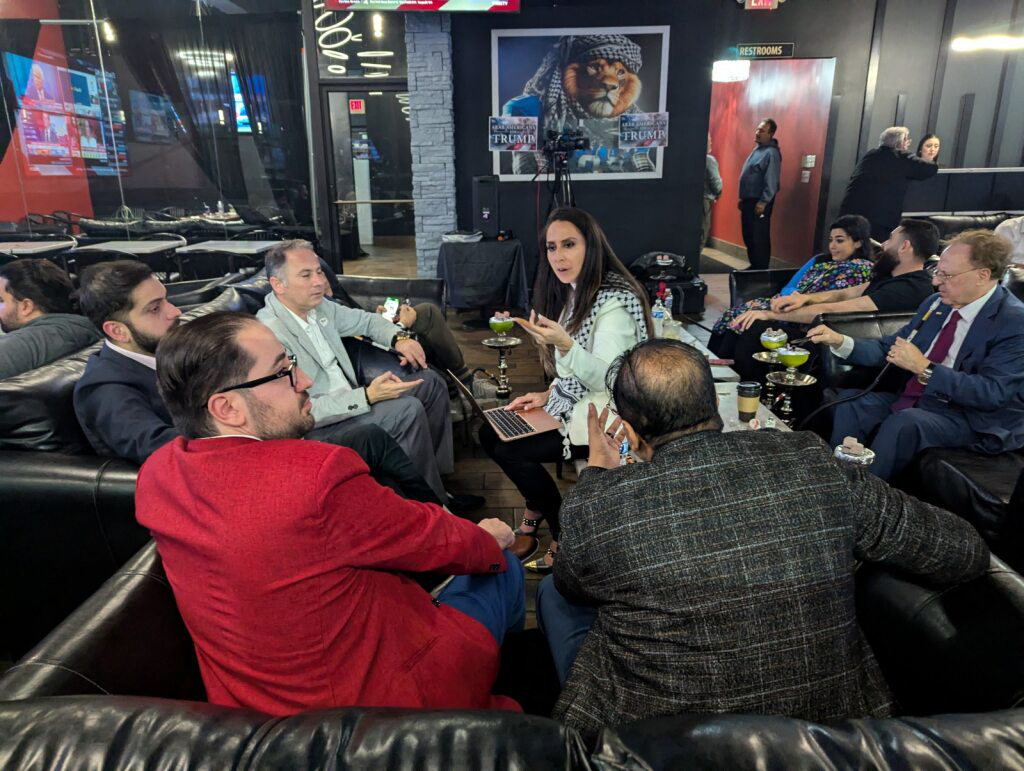
Supporters of former US President and Republican presidential candidate Donald Trump attend a late night hookah bar election watch party in Dearborn, Michigan, on November 6, 2024. Incoming president Donald Trump pulled off a surprising feat late in the 2024 campaign, winning over swathes of Muslim voters with a promise to end bloodshed in the Middle East. (Photo by Issam AHMED / AFP)
An Arab News-YouGov poll conducted in October showed that Biden’s stance on Israel and the war in Gaza had contributed to the alienation of Arab American voters, leading a slim majority of those surveyed to say they would be voting for the Republicans in several swing states.
Some 45 percent of those surveyed said they would vote for Trump, while 43 percent said they would opt for Harris, despite the fact that 40 percent of those polled described themselves as Democrats, 28 percent as Republicans, and 23 percent as independents.
Although Trump was perceived as being more supportive of Israel than Harris, many Arab Americans indicated in the poll that they would still vote for him. Those predictions appear to have played out, with Arab American voters in the swing state of Michigan, for instance, voting for Trump in huge numbers, helping tip the result against the Democrats.
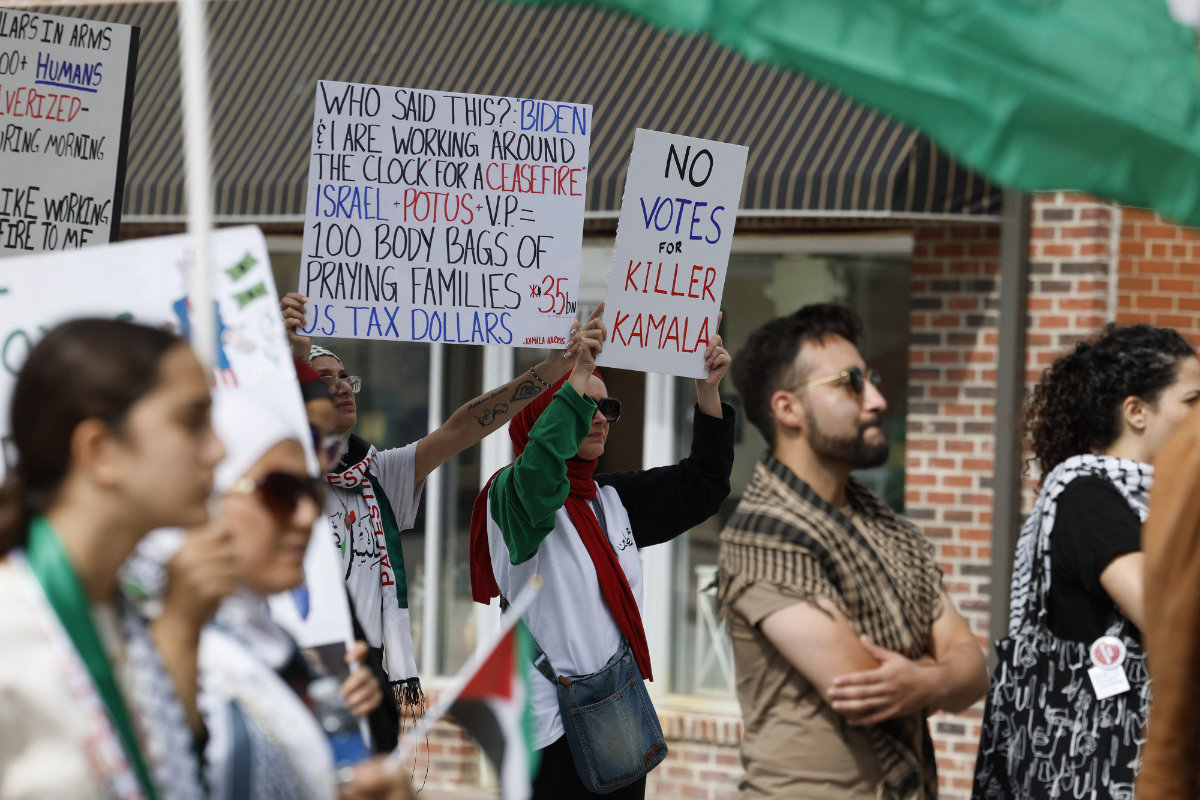
Demonstrators protest in support of the Palestinians who have died in Gaza outside of the Arab American National Museum in Dearborn, Michigan, on August 11, 2024. (AFP)
Trump won 42.5 percent of Dearborn’s vote, compared to 36 percent for Kamala Harris, officials reported. Green Party candidate Jill Stein won 18 percent.
“The reason for this seismic paradigm shift in the Arab American and Muslim voting electorate is because they responded to President Trump’s message of peace,” Oubai Shahbandar, a former defense intelligence officer and Middle East analyst with the Pentagon, told Arab News.
“They responded to President Trump’s outreach to these communities, which was spearheaded by his foreign policy envoy Richard Grenell. It was a message of peace. It was a message of inclusion. They brought in Muslim American community leaders and imams like Belal Alzuhairi, like Amer Ghalib, like Bill Bazzi, and the strategy has paid off.
“It was also a rejection by the Arab American and Muslim American or Middle Eastern community of the past four years of failed Biden-Harris policies, both domestically and when it comes to the foreign policy — a foreign policy that was widely viewed by these communities as enabling the mass killings of Muslims and Arabs across the Middle East.
“And there was a desire for real change, a new way forward. And the numbers speak for themselves. Muslim Americans and Arab Americans wanted President Trump back in the White House.”
Born in 1946 in New York, Trump was a prominent businessman and media personality before going on to serve as president between 2017 and 2021. His political career began in 2015 when he ran for the Republican Party nomination promising immigration reform, trade renegotiation, and a tough stance against Iran.
He won the 2016 election against Hillary Clinton with a focus on “America First” policies, which included tax cuts, deregulation, and shifting foreign policy. However, his presidency was marked by polarizing actions, including his response to the COVID-19 pandemic, two impeachment trials, and often divisive rhetoric on migration, abortion rights, and democracy.
When Trump enters the White House for the second time on Jan. 20, his in-tray will be stacked high with pressing issues jostling for attention, from the cost-of-living crisis and border controls, which were clearly top priorities for US voters, to the wars in Ukraine, Gaza, and Lebanon.
“Trump’s victory exceeded expectations and could prove historic,” Firas Maksad, a senior fellow at the Washington D.C.-based Middle East Institute, told Arab News.
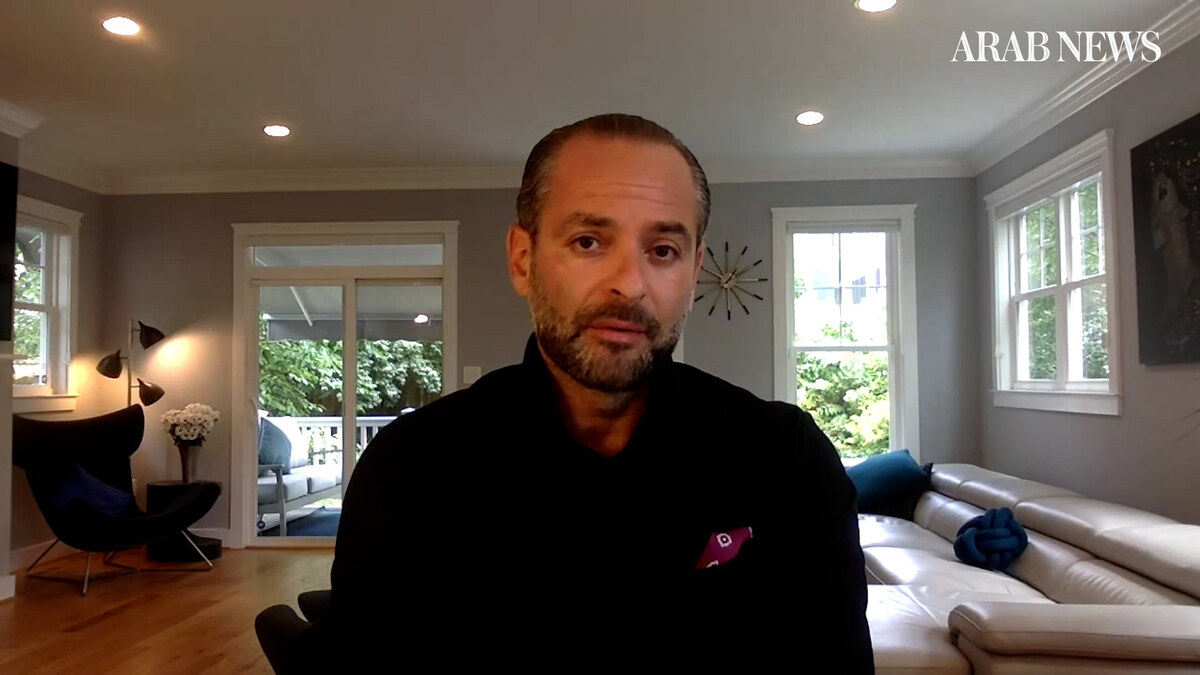
Firas Maksad. (AN file photo)
“If they also win the House, this might be the first time Republicans control all branches of government since World War One. It ushers in an era where America lurches decisively to the right.”
If Trump’s second term is anything like his first, tectonic shifts can be expected on foreign policy — shaped by a blend of “America first” isolationism and his aggressive deal-making style, designed to disengage the US from “the endless wars,” break costly stalemates, and promote American business interests over foreign rivals.
“The Trump foreign policy tent includes both foreign policy hawks and isolationists,” said Maksad. “We will need to watch closely to determine who will come to dominate in key foreign policy appointments. Figures like Grenell or Mike Pompeo and Tom Cotton.”
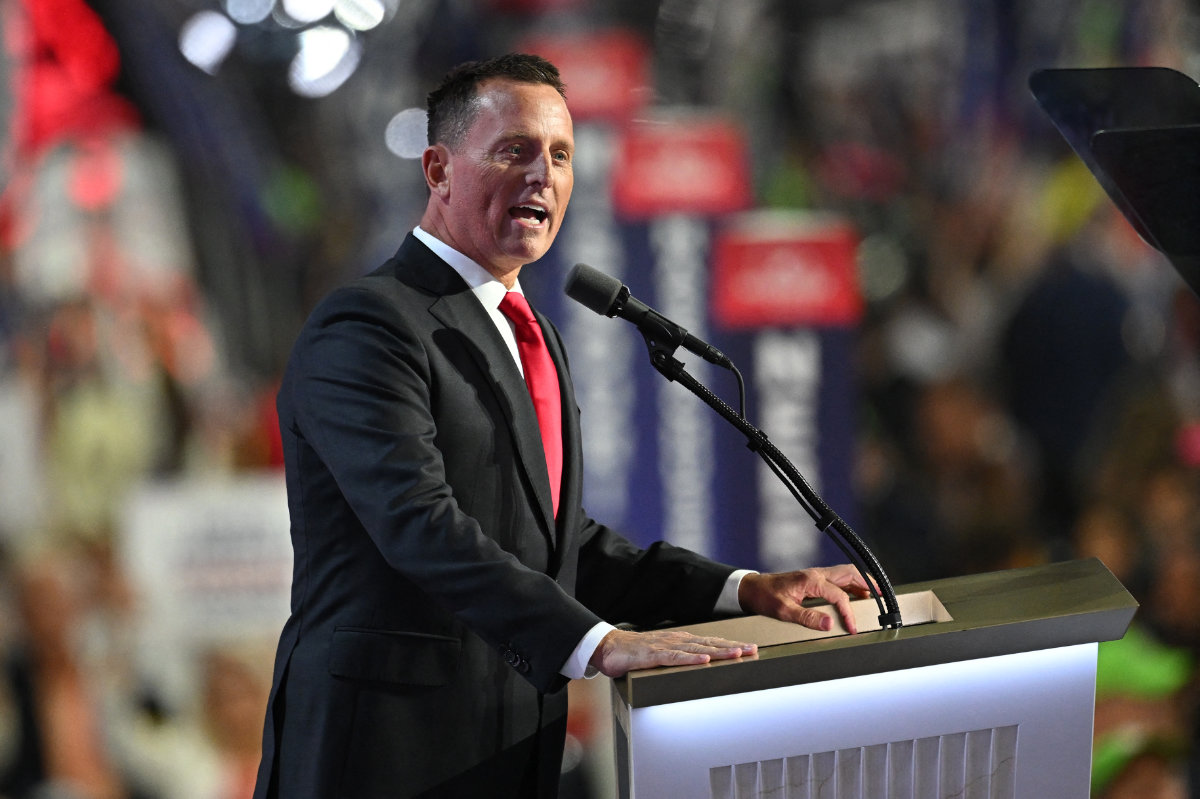
Richard Grenell, former acting Director of National Intelligence, speaks on stage during the Republican National Convention n Milwaukee, Wisconsin, on July 17, 2024. (AFP/File)
While many people in the Arab world are wary of Trump’s close ties to Israel’s Prime Minister Benjamin Netanyahu, others view him as an ally in the effort to rein in Iran-backed militia groups since the killing of the Iranian Gen. Qassem Soleimani in 2020.
After Trump’s 2016 election victory, his first overseas visit as president was to Riyadh, where in May 2017 he held bilateral talks with the Saudi government and two multilateral meetings with members of the Gulf Cooperation Council and other Arab and Muslim countries.
In an interview with Al Arabiya in October, Trump said the US-Saudi Arabia relationship “was great with capital letters. G-R-E-A-T, great” when he was in the White House and that the crown prince is “a great guy.”
“(I have) so much respect for the king and so much respect for Mohammed who is doing so great,” Trump said. “He’s a real visionary, he’s done things that nobody else would have even thought about.”
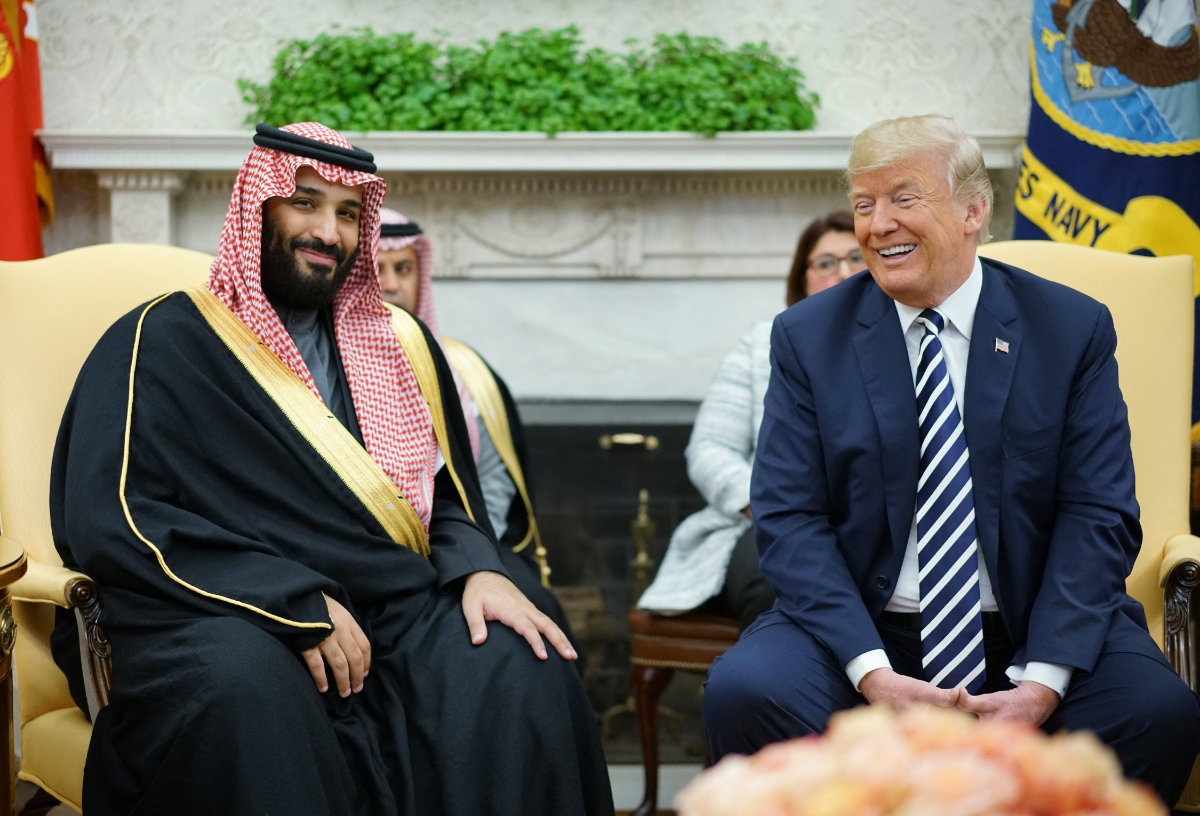
US President Donald Trump (R) meets with Saudi Arabia's Crown Prince Mohammed bin Salman at the White House on March 20, 2018 in Washington, DC. (AFP/File)
Trump’s previous administration strengthened the military and economic capacities of Saudi Arabia and other Gulf states, notably through a boost in trade, support for their regional ambitions, and a hardline stance against Iran, including his withdrawal from the 2015 Iran nuclear deal.
“Terrible news for Tehran,” Mohammed A. Salih, a non-resident senior fellow in the Foreign Policy Research Institute’s Middle East Program, said in a thread on X on Wednesday, responding to Trump’s election win.
“Expect a renewed maximum pressure campaign, sanctions against Tehran, and an increased likelihood of Israeli strikes within Iran against strategic sites, especially with Iran’s air defense now immensely weakened.”
A new Trump presidency is also likely to be bad news for Yemen’s Iran-backed Houthi militia, as it will likely come under further regional pressure and a stronger military campaign by the US and Israel in the wake of its attacks on Red Sea shipping in solidarity with Hamas.

This handout photograph taken on March 6, 2024 and released by the Indian Navy shows the Barbados-flagged bulk carrier following a attack by Yemen's Houthi militia, in the Gulf of Aden. (AFP/file)
The picture is unclear on Gaza, however, where Israel has been at war with Palestinian militant groups since the Oct. 7 Hamas-led attack on southern Israel. Likewise in Lebanon, where Israel is at war with the Iran-backed Hezbollah militia, the implications of a Trump win are uncertain.
While Trump is known as a staunch supporter of Israel, having recognized Jerusalem as Israel’s capital and moved the US Embassy there from Tel Aviv during his last presidency, he also showed a determination to find a solution to the decades-old Israeli-Palestinian conflict.
The previous Trump administration brokered the Abraham Accords in 2020, which established diplomatic and economic ties between Israel and Arab states including the UAE and Bahrain by decoupling normalization from recognition of Palestinian statehood.
His return to the White House could see the revival of the Abraham Accords and the drive toward Arab-Israeli normalization, which many had written off in the wake of the Gaza war. He has also pledged to end the conflicts in Gaza and Lebanon on day one of his presidency but has not outlined what a solution might look like for the Palestinian people.
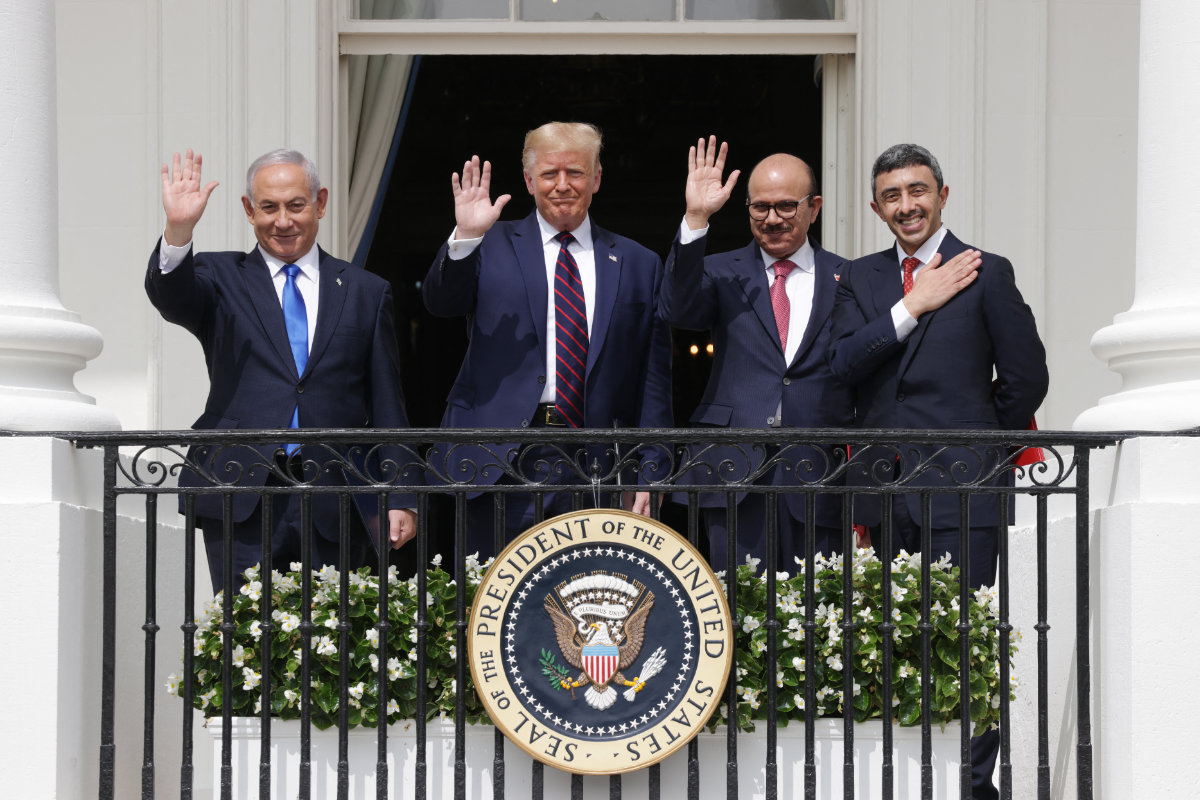
In this photo taken on Sept. 15, 2020, then US President Donald Trump celebrates with
Bahrain FM Abdullatif al-Zayani (L), Israeli PM Benjamin Netanyahu (2L), and UAE's FM Abdullah bin Zayed Al-Nahyan after the signing of the Abraham Accords at the White House in Washington, DC. (AFP)
“Trump will try to bring the wars in Gaza and Lebanon to a close, pressure Iran, and push forward on normalization,” said Maksad.
“However, his ability to deliver might be limited by the agency of local actors and the complexity of Israeli politics. There is also uncertainty about whether a Republican president can get enough Democrats in the Senate to approve a defense treaty with Saudi Arabia, a crucial part of any pathway towards normalization.”
Although Trump’s victory is likely to be viewed in Europe and perhaps China as ushering in a period of unpredictability, Middle Eastern leaders are likely to welcome a return to a more transactional relationship with Washington — one that is shaped by mutual trade and security interests without perceived interference in their domestic affairs.
“Trump’s victory will support His Highness the Crown Prince’s vision in the region for the benefit of all,” Saudi commentator Mohammed Al-Mubarak posted on X. “Even global companies, especially American ones, will have an active role in this renaissance.”