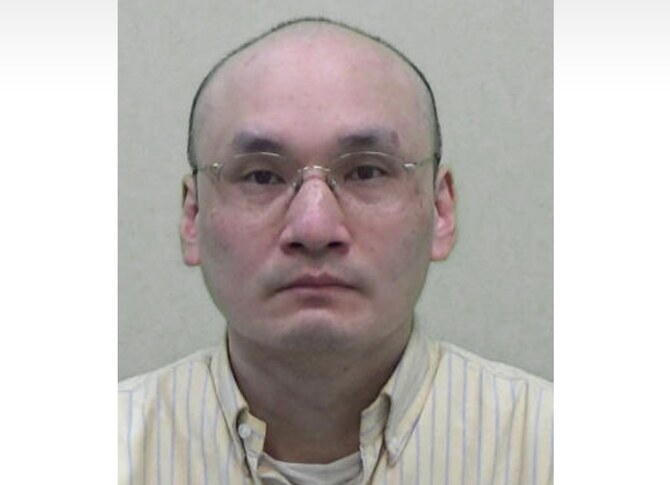
LONDON: A British doctor who was disgruntled about his inheritance and tried to kill his mother’s boyfriend by injecting him with a fake COVID-19 vaccine that was poison was sentenced Wednesday to 31 years in prison.
Dr. Thomas Kwan disguised himself as a nurse making home virus booster visits to infect Patrick O’Hara with a flesh-eating poison because he believed the older man stood in the way of him inheriting his mother’s home some day.
“It was an audacious plan to murder a man in plain sight and you very nearly succeeded,” Justice Christina Lambert said. “You were certainly obsessed by money and more particularly, the money to which you considered yourself entitled.”
Kwan, 53, pleaded guilty last month in Newcastle Crown Court to attempted murder.
O’Hara, 72, survived after being in intensive care for several weeks and having part of his arm cut away to prevent the necrotizing fasciitis from spreading.
The ordeal left him “a shell of an individual,” he said. O’Hara and Kwan’s mother, Jenny Leung, have since split up.
Police used surveillance camera footage to track down Kwan.
They found he had hatched an elaborate plot by sending fake letters with National Health Service logos, hyperlinks and even a QR code to offer a home visit for a COVID booster to O’Hara. Kwan disguised himself in head-to-toe protective gear, tinted glasses and a surgical mask and drove a vehicle to the appointment in January using fake license plates.
Kwan, who was described as having a morbid obsession with poisons, used iodomethane, a substance found in pesticides that he thought would be difficult for medics to detect, the judge said.
Police found arsenic, liquid mercury and castor beans, which can be used to make the chemical weapon ricin, during a search of his home. He had instructions on how to make ricin on his computer.
The judge said Kwan was upset about getting a smaller share of his inheritance when his father died. He had a strained relationship with his mother, and learned that she had a provision in her will that would allow O’Hara to stay in her home if she died before him.
“Your resentment and bitterness toward your mother and Mr. O’Hara was all to do with money and your belief you were not being given money which you thought you were entitled to,” Lambert said.
O’Hara said justice had been served by the sentence.


![]()

UK doctor gets 31 years for poisoning mother’s partner with fake COVID-19 vaccine
Short Url
https://arab.news/95has
UK doctor gets 31 years for poisoning mother’s partner with fake COVID-19 vaccine
- “It was an audacious plan to murder a man in plain sight and you very nearly succeeded,” Justice Christina Lambert said
- Kwan, 53, pleaded guilty last month in Newcastle Crown Court to attempted murder


Latest updates


© 2026 SAUDI RESEARCH & PUBLISHING COMPANY, All Rights Reserved And subject to Terms of Use Agreement.