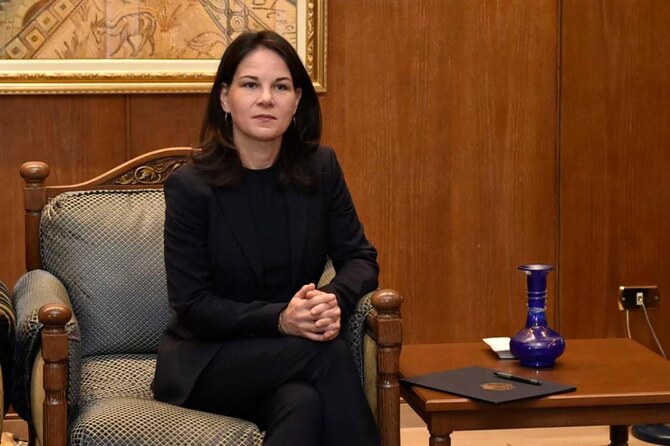
KYIV, Ukraine: Germany’s top diplomat arrived Monday in the Ukrainian capital Kyiv on an unannounced visit, in what appeared to be a show of European support for Ukraine on the eve of a US presidential election that could bring far-reaching changes in Washington’s policy toward Russia’s all-out invasion of its neighbor.
Germany is Ukraine’s second biggest weapons supplier after the US, and Foreign Minister Annalena Baerbock vowed that Berlin’s backing would remain steadfast.
“Together with many partners around the world, Germany stands firmly by Ukraine’s side,” she said, German news agency dpa reported. “We will support the Ukrainians for as long as they need us so that they can continue on their path to a just peace.”
The war is at a critical moment for Ukraine, with the Russian army making creeping gains on the battlefield and another hard winter ahead after Russia relentlessly battered the Ukrainian power grid.
Ahead of the US vote, Ukraine President Volodymyr Zelensky attempted to lock Ukraine’s Western supporters into a long-term “victory plan,” including a formal invitation for Ukraine to join NATO and permission to use Western long-range missiles to strike military targets in Russia, but the response was disappointing for Kyiv officials.
Russia is using its superior numbers to heap pressure on Ukrainian positions along the front line. Ukraine’s top commander, Gen. Oleksandr Syrskyi, said Saturday his troops are struggling to hold back “one of the most powerful (Russian) offensives” of the war.
Russia is now adding to its offensive push what Western intelligence sources say is a force of about 10,000 North Korean combat troops sent by Pyongyang under a pact with Moscow.
That has deepened Zelensky’s frustration with Western help. On Saturday, he urged allies to stop “watching” and take steps before the North Korean troops reach the battlefield.
Zelensky said Kyiv knows at which Russian camps the North Korean troops are being trained but Ukraine can’t strike them without permission from allies to use the Western-made long-range weapons to hit targets deep inside Russia.
Baerbock arrived in Kyiv hours after debris from drones intercepted by air defenses fell in two districts of the city, starting small fires, officials said. No people or property were harmed, according to the head of the Kyiv city administration, Serhii Popko.
A Russian glide bomb attack on Sunday night injured 15 people in Kharkiv, Ukraine’s second-largest city in the northeast, regional police said.
Russia fired some 80 Shahed drones at Ukrainian cities overnight, Ukraine’s air force said.


![]()

Germany’s top diplomat in Kyiv as Ukraine girds for impact of US election on the war
Short Url
https://arab.news/y6y4m
Germany’s top diplomat in Kyiv as Ukraine girds for impact of US election on the war
- Germany is Ukraine’s second biggest weapons supplier after the US
- Ahead of the US vote, Ukraine President Volodymyr Zelensky attempted to lock Ukraine’s Western supporters into a long-term “victory plan”
Latest updates


© 2026 SAUDI RESEARCH & PUBLISHING COMPANY, All Rights Reserved And subject to Terms of Use Agreement.