

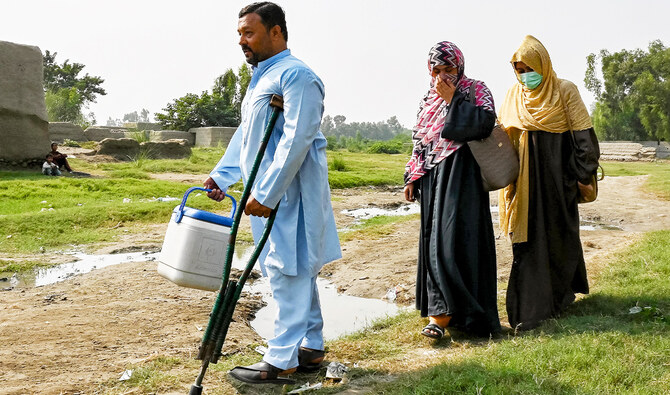

PESHAWAR, Pakistan: Militant attacks and suspicion stemming from misinformation are hampering Pakistan’s battle to eradicate polio, but teams of dedicated volunteer health workers are determined to fight on.
Pakistan and Afghanistan are the only countries where the debilitating virus remains endemic, the disease mostly affecting children under five and sometimes causing lifelong paralysis.
Cases in Pakistan are on the rise, with 45 registered so far this year, up from six in 2023 and only one in 2021.
Polio can easily be prevented by the oral administration of a few drops of vaccine, but in parts of rural Pakistan health workers risk their lives to save others.
Last week seven people including five children were killed when a bomb targeted police traveling to guard vaccine workers. Days earlier two police escorts were gunned down by militants.
“When we hear that a polio vaccination team has been attacked, it deeply saddens us,” said health worker Zainab Sultan, 28, as she went door to door in Panam Dehri in northwest Pakistan
“Our responsibility now is to continue our work. Our job is to protect people from disability, to vaccinate children, and to make them healthy members of society.”
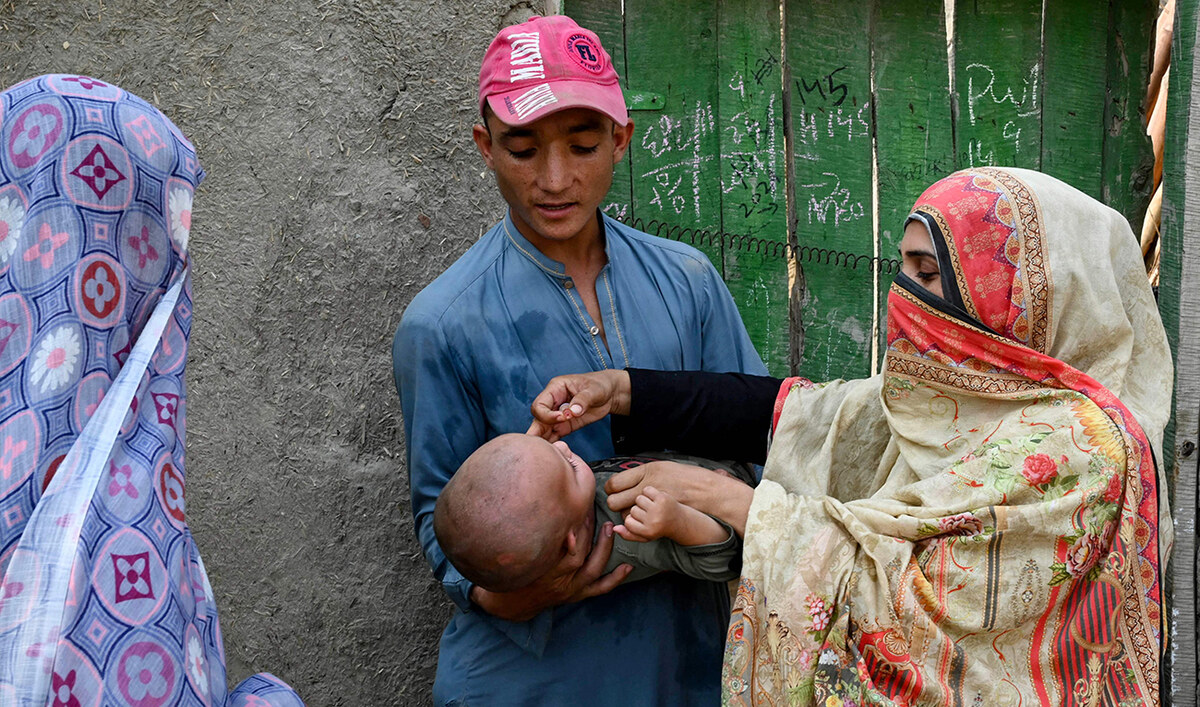
This photograph taken on October 5, 2024 shows a health worker (R) administering polio drops to a child during a door-to-door poliovirus vaccination campaign on the outskirts of Peshawar, Pakistan. (AFP)
In the past firebrand clerics falsely claimed the vaccine contained pork or alcohol, forbidding it for consumption by Muslims.
A fake vaccination campaign organized by the US Central Intelligence Agency (CIA) in Pakistan in 2011 to track Osama bin Laden compounded the mistrust.
More recently, militant groups have shifted to targeting armed police escorts in their campaigns of violence against the state.
Pakistan has witnessed a dramatic uptick in attacks since the return of the Taliban in neighboring Afghanistan in 2021, with Islamabad claiming hostile groups are now operating from there.
“In our area, nearly half of the parents were initially resistant to the polio vaccine, believing it to be a ploy by the West,” said local resident Ehsanullah, who goes by one name.
“There was a lack of awareness,” he said. “If this disease is spreading because of our reluctance, we are not just harming ourselves but the entire community.
From previously being blamed for the mistrust of polio vaccines, some religious leaders — who wield immense authority in Pakistan — are now at the forefront of the campaign to convince parents.
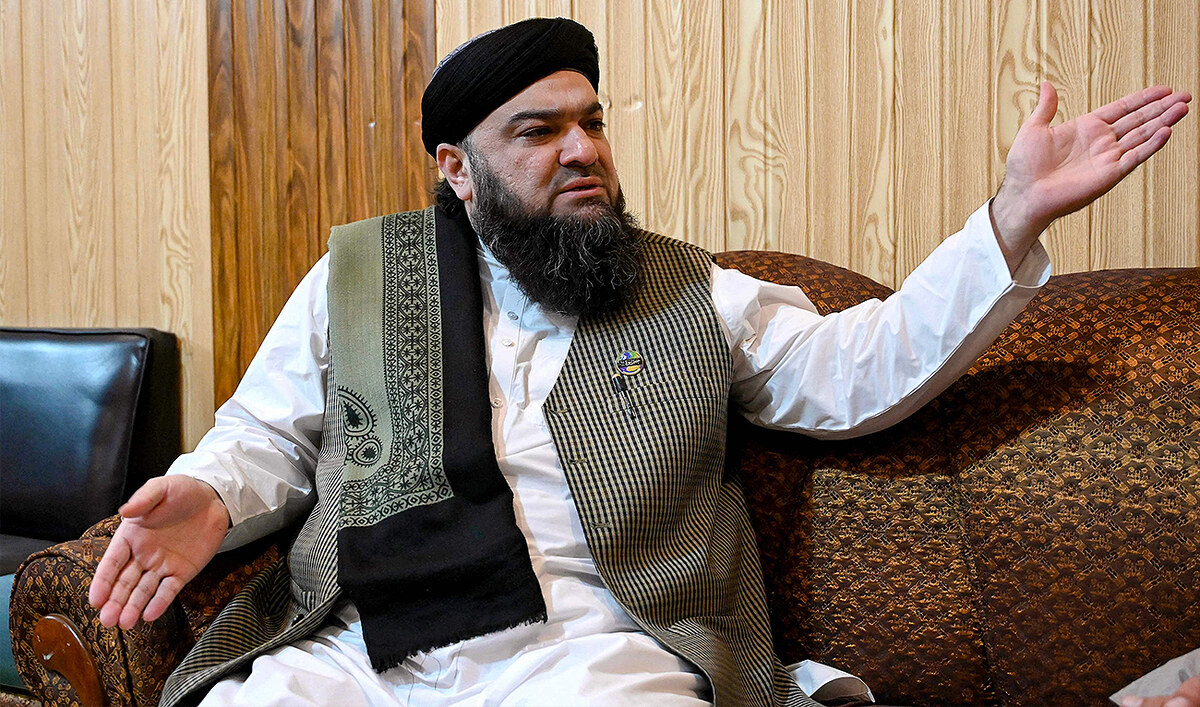
This photograph taken on October 29, 2024 shows religious scholar Imam Tayyab Qureshi speaking during an interview with AFP in Peshawar, Pakistan. (AFP)
“All major religious schools and scholars in Pakistan have debunked the rumors surrounding the polio vaccine,” said Imam Tayyab Qureshi.
“Those who attack polio vaccination teams have no connection to Islam or humanity,” he said in the provincial capital of Peshawar, where Panam Dehri lies on the outskirts.
For one parent in Panam Dehri, the endorsement by religious chiefs proved pivotal.
“Initially I did not vaccinate my children against polio. Despite everyone’s efforts, I refused,” said 40-year-old Zulfiqar, who uses one name.
“Later, the Imam of our mosque came to explain the importance of the polio vaccine, telling me that he personally vaccinated his own children and encouraged me to do the same,” he said.
“After that, I agreed.”
Another impediment can be that parents in impoverished areas use the government’s eagerness to vaccine as a bargaining chip, attempting to negotiate investment in water and road projects.
“There are demand-based boycotts and community boycotts that we face,” lamented Ayesha Raza, spokeswoman for the government polio eradication campaign.
“Your demands may be very justified, but don’t link it to your children’s health,” she pleads to them.
For some health workers, the battle to eradicate polio is more personal.
Hobbling door-to-door in Panam Dehri, polio survivor Ismail Shah’s paralyzed leg does not slow his mission.
“I decided in my childhood that when I grew up I would fight against the disease that disabled me,” said the 35-year-old.
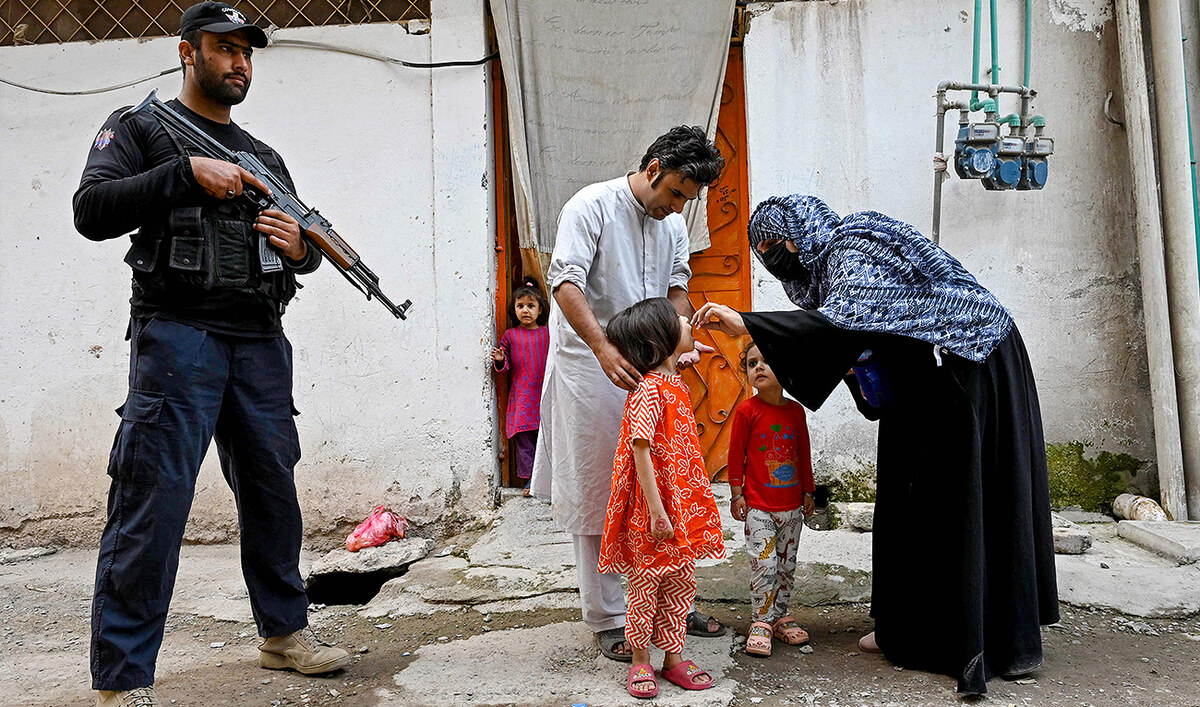
This photograph taken on October 29, 2024 shows an elite police personnel (L) standing guard as a health worker (R) administers polio drops to a child during a door-to-door poliovirus vaccination campaign on the outskirts of Peshawar, Pakistan. (AFP)
Shah is among 400,000 volunteers and health workers who spent the past week patiently explaining to families that the oral innoculation — administered in two doses — is safe.
Their goal is to protect 45 million children, but it’s far from straightforward. When Shah arrived in his patch of 40,000 inhabitants there were more than 1,000 refusals.
“Now, there are only 94 reluctant parents left, and soon I will persuade them as well,” he said.


