Pakistan’s largest independent power producer expands into lithium mining, battery manufacturing

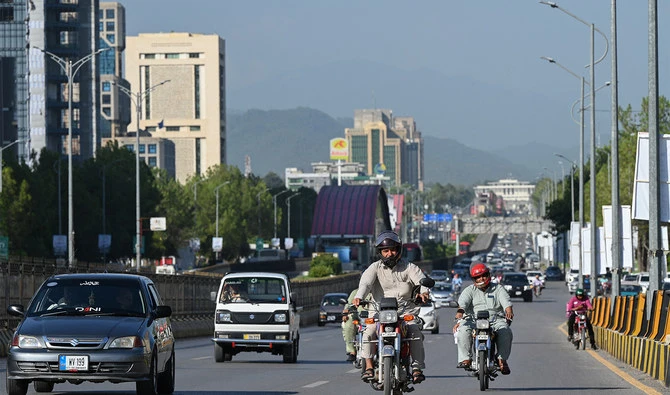
People commute on a road in Islamabad on July 11, 2023. (AFP/File)
Short Url
Updated 02 November 2024
Follow

Pakistan’s largest independent power producer expands into lithium mining, battery manufacturing

  • Hub Power Company’s subsidiary signed a collaboration agreement with Chinese EV giant BYD this year
  • Its lithium exploration is expected to further boost the manufacturing potential of Pakistan’s auto industry

ISLAMABAD: Pakistan’s largest independent power producer is set to enter lithium mining, battery manufacturing and electric vehicle (EV) production under Pakistan’s Special Investment Facilitation Council (SIFC), according to state media on Saturday.
Established in 1991, Hub Power Company (Hubco) has an installed generation capacity exceeding 3,500 megawatts and plans to diversify in other areas.
The planned initiatives, facilitated by the SIFC, a hybrid civil-military body established last year to assist foreign investors, aim to meet the country’s growing demand for batteries and electric vehicles.
A lithium exploration and battery production project is expected to reach completion in 12 to 18 months, meeting the rising demand for rechargeable batteries used in mobile phones, laptops and automobiles.
“Hub Power Company Limited’s exploration of lithium in Pakistan will further increase the manufacturing potential in the country’s auto industry,” Radio Pakistan reported.
“Work on establishing a manufacturing plant to produce electric vehicles in Pakistan is already underway, which will manufacture fifty thousand electric vehicles annually,” it added.
Earlier this year in June, Hubco’s subsidiary Mega Motor Company signed a collaboration agreement with Chinese EV giant BYD Auto Industry to assemble EVs in Pakistan.
Plans for the EV plant, with a projected annual production of 50,000 vehicles, include 30 to 40 percent allocated for export to markets in Australia and Africa.
HUBCO operates a diverse portfolio of power plants, including oil-fired, coal-based and hydropower facilities, and is also involved in coal mining.
Its new initiatives are expected to strengthen its market position, create employment opportunities and boost domestic capacity for battery production for electronic devices.

Pakistan rejects Amnesty claims of Israeli spyware use, calls reports ‘disinformation’

Updated 10 sec ago
Follow

Pakistan rejects Amnesty claims of Israeli spyware use, calls reports ‘disinformation’

  • FO denies any link with Israel, says Pakistan has “absolutely no cooperation” on surveillance tools
  • Islamabad accuses India of delaying clearance for relief aircraft bound for flood-hit Sri Lanka

ISLAMABAD: Pakistan on Friday rejected an Amnesty International report alleging the use of Israeli-made invasive spyware in the country, calling the findings speculative and misleading.

Amnesty’s investigation, published Thursday under the title Intellexa Leaks, cited the case of a Pakistan-based human rights lawyer who reported receiving a suspicious WhatsApp link in 2025. According to Amnesty International’s Security Lab, the link bore signatures consistent with Predator, a spyware product developed by Israeli manufacturer c

Foreign Office spokesperson Tahir Andrabi dismissed the suggestion that Islamabad had deployed the tool or maintained any technological cooperation with Israel.

“These are all media speculations. These are all rumor-mongering and disinformation. There is absolutely no cooperation between Pakistan and Israel on anything, let alone a spyware or these kinds of tools. So, I would reject it quite emphatically,” he said at a weekly briefing.

Andrabi also accused India of obstructing humanitarian operations, saying New Delhi delayed flight clearance for a Pakistani relief aircraft carrying aid to flood-affected Sri Lanka.

“The special aircraft carrying Pakistan’s relief goods had to wait for 48 hours, in fact more than 48 hours, around 60 hours, while the flight clearance from India was delayed,” he said.

He added that the eventual conditional flight window was too narrow to be workable.

“The partial flight clearance which eventually was given after 48 hours was operationally impractical, time-bound just for a few hours and hence not operable, severely hindering the urgent need for the relief mission for the brotherly people of Sri Lanka,” Andrabi stated.

“Humanitarian assistance is like justice, if it is delayed, it is denied.”

Responding to India’s claim that clearance was granted within four hours, he said Pakistan has documentary proof contradicting New Delhi’s version.

On a separate question about reported delays in the arrival of a Turkish delegation aimed at mediating between Islamabad and Kabul, Andrabi said Pakistan welcomed Ankara’s initiative but was unaware of the cause of postponement.

“We stand ready to receive the Turkish delegation. That delegation has not arrived as yet. And I’m not aware of any schedule. Pakistan is ready to hold negotiations, discussions,” he said, adding that the delay may be linked to coordination with the Afghan side.