



RIYADH: Saudi Arabia is undergoing an urban transformation, creating sustainable, vibrant communities that enhance the quality of life for residents while responding to environmental challenges.
Driven by the goals of Saudi Vision 2030 and its Quality of Life Program, the Kingdom wants to see three of its cities recognized among the top 100 in the world for livability. To achieve this, it is investing in sustainable urban management and development.
“Sustainable urban management is foundational to Vision 2030, supporting Saudi cities as dynamic, resilient, and economically sustainable environments,” Abdulaziz Al-Mizani, an energy and sustainability expert, told Arab News.
This approach aligns with the Kingdom’s aim to improve quality of life and promote resource efficiency, he added.
Central to this transformation are several key concepts, including green infrastructure, smart growth, transit-oriented development, eco-cities, circular economy principles, community engagement, and resilient urban design.

In Saudi Arabia, where urban areas are rapidly expanding, the need for effective green infrastructure is considered a key priority.
Green infrastructure refers to systems that use natural processes to manage stormwater and improve air quality. “As cities expand, green infrastructure is vital for managing environmental impact while enhancing livability,” said Al-Mizani.
Examples of green infrastructure being implemented in Saudi cities include the Green Riyadh Project, which is one of the biggest urban afforestation initiatives in the world. Launched by King Salman in March 2019, it is a key Riyadh megaproject.
With a view to reducing average ambient temperatures by 2 degrees centigrade during the summer and by achieving temperature reductions of 8-15 degrees in select afforested areas, the project aims to create a more comfortable urban landscape.
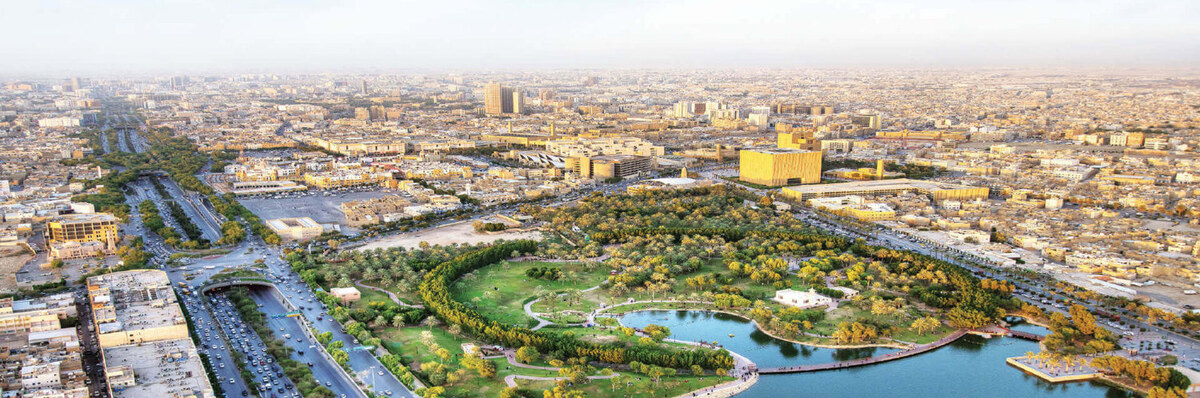
In Saudi Arabia, where urban areas are rapidly expanding, the need for effective green infrastructure is pronounced. (Supplied file photo)
According to the Green Riyadh Project, the initiative is also expected to lower annual power consumption by 650 gigawatt-hours by promoting green building techniques, including green ceilings and walls.
Additionally, it will enhance rainwater management to mitigate flood risks, preserve natural areas, and bolster biodiversity.
“Integrating elements like green roofs, parks, and sustainable water management is essential for eco-cities that harmonize urban growth with natural systems,” said Al-Mizani.
DID YOUKNOW?
• The Green Riyadh Project plans to plant 7.5 million trees, enhancing public spaces and managing flood risks.
• Eco-cities in Saudi Arabia integrate renewable energy, aiming for 58.7 GW of renewable power by 2030.
• Resilient urban design includes heat-resistant materials to reduce cooling demands and improve comfort in Saudi cities.
Green roofs are covered with vegetation, which helps reduce heat absorption, improve insulation, and manage rainwater.
For urban afforestation, Saudi Arabia is planting trees and creating new green spaces in urban areas.
In line with the goals of the Saudi Green Initiative, the Kingdom aims to plant 10 billion trees across the country by 2030, equivalent to rehabilitating more than 74 million hectares of land. The Green Riyadh Project intends to plant 7.5 million trees across the capital alone.
The distribution of these trees will be strategically planned to enhance various community spaces, including 175,000 sq. km of empty land, 16,400 km of streets and roads, 3,330 neighborhood gardens, 9,000 mosques, and 6,000 schools.
Saudi Arabia is also enhancing its sustainable urban landscape by implementing circular economy principles, which aim to minimize waste through reuse and recycling.
“Circular economy principles, such as adaptive reuse of buildings and waste-to-energy initiatives, support both resource efficiency and renewable energy generation, fitting well within the Kingdom’s sustainable development and resilience goals,” said Al-Mizani.
Circular economy principles can be applied to optimize economic zones in Saudi Arabia such as the King Abdullah Economic City in Rabigh, Jazan Economic City, Prince Abdulaziz bin Musaid Economic City in Hail, and Knowledge Economic City in Madinah.

CCE Index offers a comprehensive evaluation of global progress toward achieving net-zero emissions and readiness for the circular carbon economy. (AN File)
Such collaborations, known as industrial symbiosis, align with sustainable development and circular economy goals, emphasizing the importance of resource conservation, waste reduction, and environmental protection. They involve reusing waste and by-products generated by one particular industry or industrial process to serve as raw materials for another.
Another notable application is the adaptive reuse of buildings, where old structures are repurposed for new uses, conserving resources and preserving cultural heritage. A prime example of this is the King Abdulaziz Historical Center, which transforms old buildings into vibrant cultural hubs.
Eco-cities are urban areas designed with sustainability and environmental health in mind. “A successful eco-city embodies sustainability and resilience at its core, minimizing carbon emissions, optimizing resources, and incorporating green infrastructure,” said Al-Mizani.
Such eco-cities utilize renewable energy sources such as solar and wind to reduce their carbon footprints. Saudi Arabia aims to generate 58.7 GW of renewable energy by 2030, significantly impacting urban energy consumption.
Opinion
This section contains relevant reference points, placed in (Opinion field)
Resilient urban design is also crucial as it focuses on creating cities that can withstand and recover from environmental stresses. This can be achieved through energy-efficient buildings with energy-efficient designs and materials that lower energy consumption.
“Heat-resistant materials are crucial in Saudi Arabia’s climate, contributing to resilient urban design by reducing cooling demands,” said Al-Mizani. “This approach enables energy efficiency while enhancing building longevity and occupant comfort.”
Heat-resistant materials can withstand high temperatures, contributing to urban comfort and sustainability.
Nonetheless, transforming Saudi Arabia’s urban landscape sustainably presents several significant challenges. “Policy innovation, public-private collaboration, and circular economy strategies are pivotal to overcoming these barriers effectively,” said Al-Mizani.
Community engagement and encouraging collaboration between the government, private sector, and civil society, is also essential, he said, to create urban spaces that reflect shared environmental values.
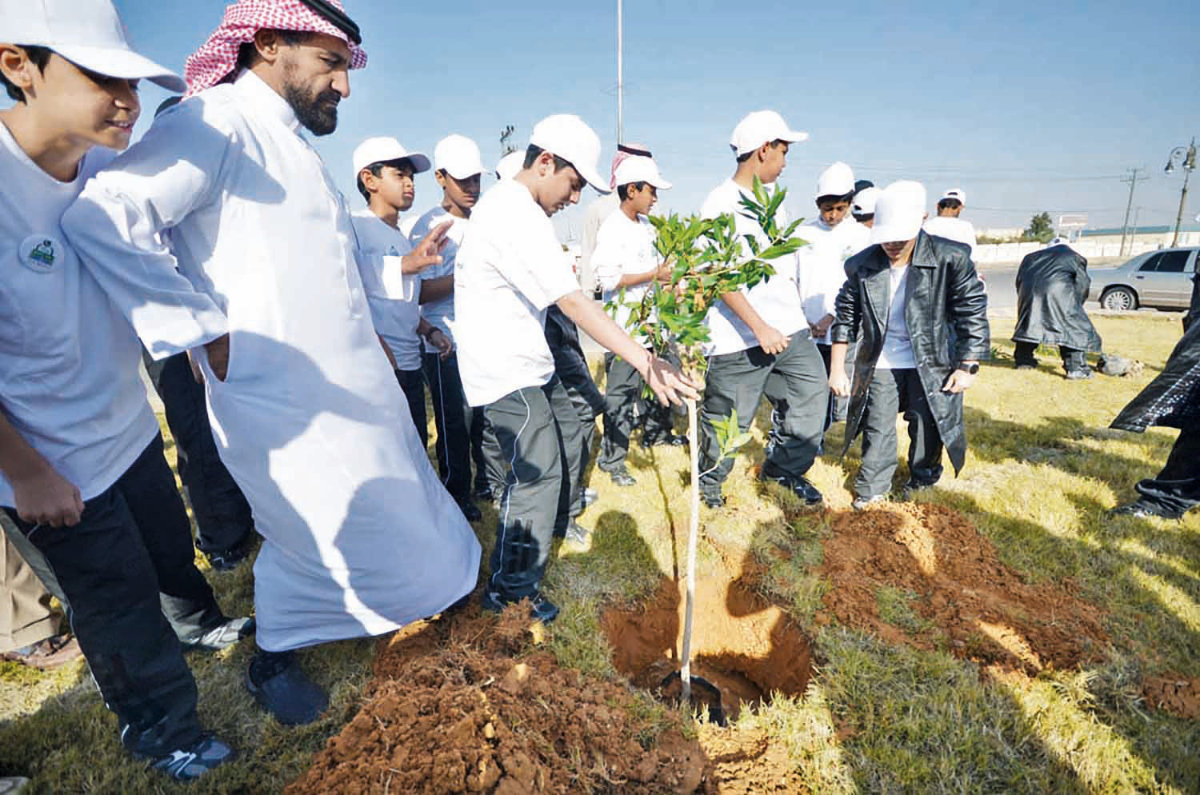
To create urban spaces that reflect shared environmental values, community engagement is essential. (Supplied photo)
By involving residents, developments can better reflect community priorities and preferences.
“Together, these groups bring diverse resources and insights, creating a foundation for integrated approaches to sustainable urban development,” Al-Mizani added.
Thanks to these initiatives, Saudi Arabia is poised to set a benchmark for sustainable urban development in the region.
“Future Saudi cities will likely stand as global models of eco-city principles, characterized by green infrastructure, smart growth, circular economy practices, and resilient design,” said Al-Mizani.


