



KARACHI: A leading environmental conservation organization in Pakistan on Wednesday recommended adopting electric vehicles and installing air quality sensors to combat rising pollution in Lahore, one of the world’s most polluted cities during the winter smog season, according to a statement it circulated.
WWF-Pakistan pointed to several key contributors identified by policymakers, including emissions from vehicles, industrial processes, crop residue burning and coal combustion as the city’s Air Quality Index (AQI) reached unprecedented levels this week.
The call for reform came on the same day when Punjab Chief Minister Maryam Nawaz Sharif advocated for diplomatic efforts with neighboring India to address cross-border pollution, as both nations contend with extreme air quality issues.
“Worsening air quality and persistent smog is a serious issue not only for the people but also for biodiversity, especially birds and other animals,” said Hammad Naqi Khan, Director General WWF-Pakistan.
“The adoption of electric vehicles can help reduce vehicular emissions that lead to poor air quality,” he added. “However, financial subsidies and establishing EV charging infrastructure are essential for the transition to electric vehicles.”
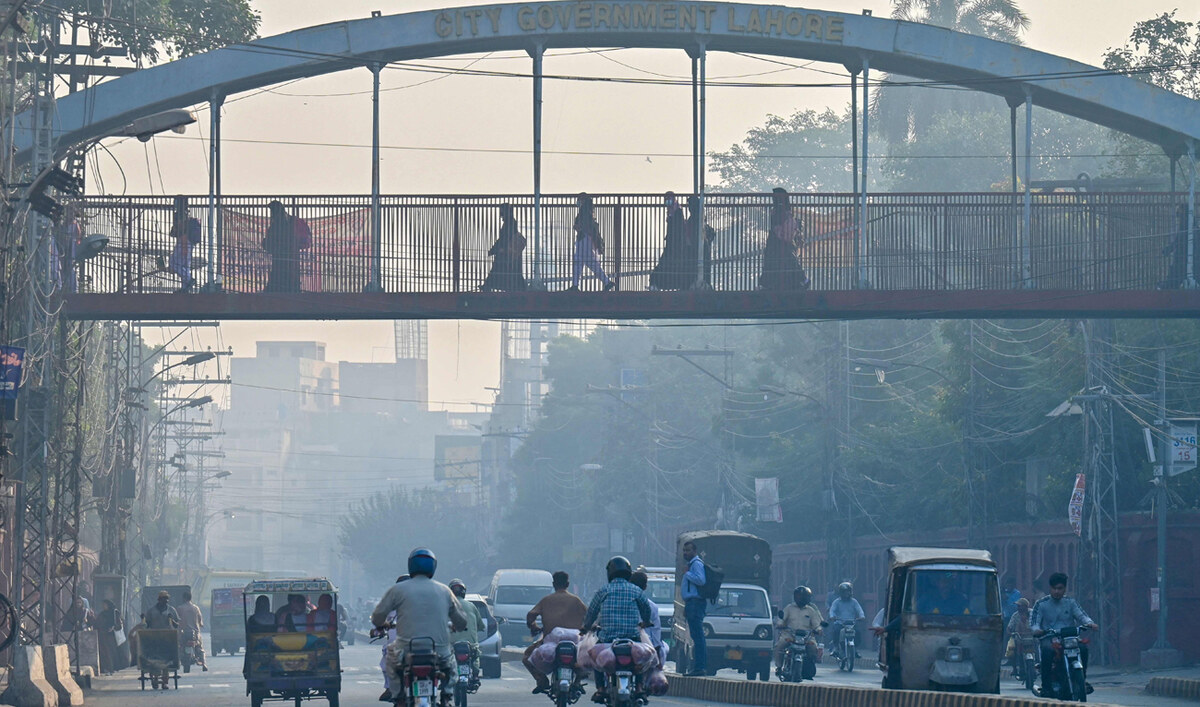
Commuters make their way amid heavy smog in Lahore on October 31, 2024. Pollution puffing rickshaws and barbeque restaurants were banned from operating in parts of Pakistan's second-largest city of Lahore on October 30, as public health officials battle choking smog. (AFP)
WWF-Pakistan’s policy recommendations, drawn from air quality data collected between 2013 and 2024, lay out a comprehensive strategy to improve Lahore’s air quality. Key proposals also include establishing industrial zones away from urban centers, expanding the mass transit network and transitioning industries to renewable energy sources.
Additionally, the report advocates for integrated traffic management, which, when combined with the installation of sensor-based monitoring systems, could help reduce localized pollution in heavily trafficked areas.
“These low-cost air quality monitoring systems can be used to identify air pollution hotspots and can also be synchronized with traffic management,” Khan noted, explaining that measures such as designating alternate routes or restricting heavy transport in certain areas can help reduce emissions in high-risk zones.
The report also recommended building the capacity of farmers to manage crop residue through sustainable practices and alternative uses.
Additionally, it called for mandatory vehicular emission testing, dust control in the construction sector, and promoting solar energy to replace diesel- and coal-based power in industrial sectors like leather, textile and steel.
“Industries emitting high levels of pollutants must install relevant pollution control devices,” said Nazifa Butt, Director Climate and Energy at WWF-Pakistan, highlighting the role of industrial compliance in achieving cleaner air.
Pakistani authorities have enforced new measures to combat hazardous smog, including making mask-wearing mandatory across the city of Lahore.
New, shorter school timings have also been announced in the city while student assemblies will be conducted in classrooms rather than outdoor spaces.
All outdoor activities at schools have also been temporarily suspended, and a ban has also been imposed on fireworks in Lahore until Jan. 31, 2025.


