

Electric vehicles, air quality sensors proposed to curb severe winter pollution in Lahore

Commuters drive along a road amid heavy smog in Lahore on October 29, 2024. (AFP)
Short Url
Updated 31 October 2024
Follow

Electric vehicles, air quality sensors proposed to curb severe winter pollution in Lahore

  • The eastern Pakistani city has witnessed unprecedented rise in Air Quality Index during this week
  • WWF-Pakistan calls for removal of industrial zones from urban centers, reliance on renewables

KARACHI: A leading environmental conservation organization in Pakistan on Wednesday recommended adopting electric vehicles and installing air quality sensors to combat rising pollution in Lahore, one of the world’s most polluted cities during the winter smog season, according to a statement it circulated.

WWF-Pakistan pointed to several key contributors identified by policymakers, including emissions from vehicles, industrial processes, crop residue burning and coal combustion as the city’s Air Quality Index (AQI) reached unprecedented levels this week.

The call for reform came on the same day when Punjab Chief Minister Maryam Nawaz Sharif advocated for diplomatic efforts with neighboring India to address cross-border pollution, as both nations contend with extreme air quality issues.

“Worsening air quality and persistent smog is a serious issue not only for the people but also for biodiversity, especially birds and other animals,” said Hammad Naqi Khan, Director General WWF-Pakistan.

“The adoption of electric vehicles can help reduce vehicular emissions that lead to poor air quality,” he added. “However, financial subsidies and establishing EV charging infrastructure are essential for the transition to electric vehicles.”
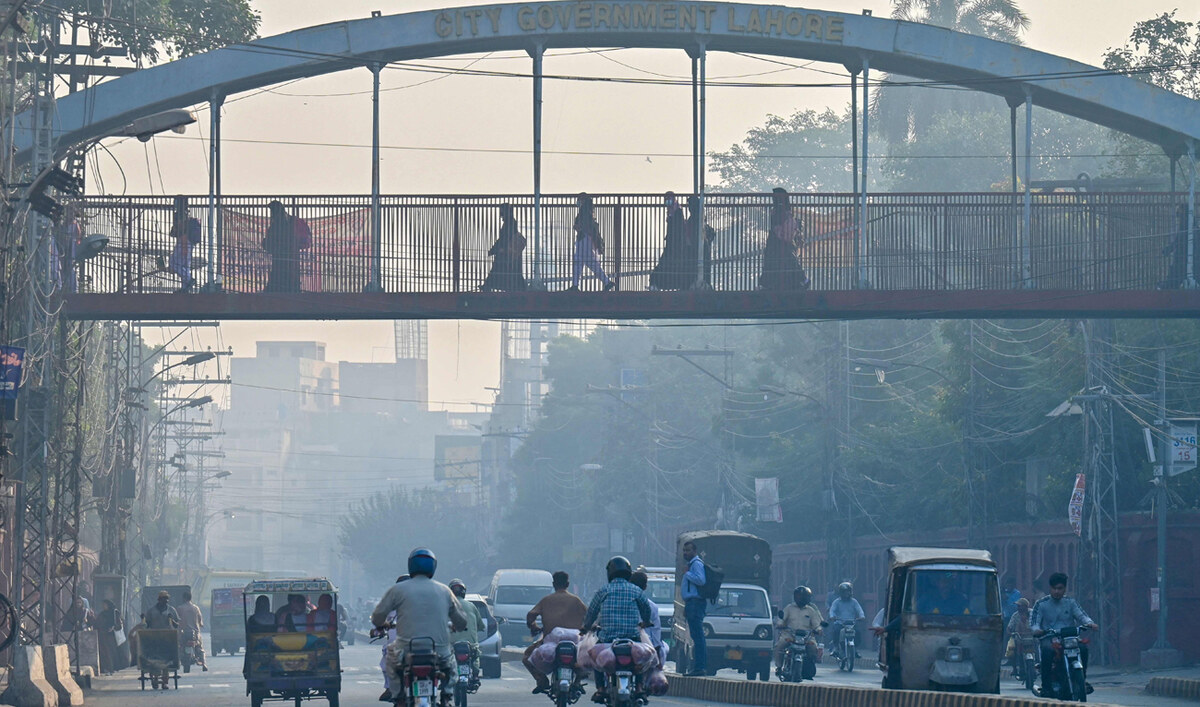


Commuters make their way amid heavy smog in Lahore on October 31, 2024. Pollution puffing rickshaws and barbeque restaurants were banned from operating in parts of Pakistan's second-largest city of Lahore on October 30, as public health officials battle choking smog. (AFP)

WWF-Pakistan’s policy recommendations, drawn from air quality data collected between 2013 and 2024, lay out a comprehensive strategy to improve Lahore’s air quality. Key proposals also include establishing industrial zones away from urban centers, expanding the mass transit network and transitioning industries to renewable energy sources.

Additionally, the report advocates for integrated traffic management, which, when combined with the installation of sensor-based monitoring systems, could help reduce localized pollution in heavily trafficked areas.

“These low-cost air quality monitoring systems can be used to identify air pollution hotspots and can also be synchronized with traffic management,” Khan noted, explaining that measures such as designating alternate routes or restricting heavy transport in certain areas can help reduce emissions in high-risk zones.

The report also recommended building the capacity of farmers to manage crop residue through sustainable practices and alternative uses.

Additionally, it called for mandatory vehicular emission testing, dust control in the construction sector, and promoting solar energy to replace diesel- and coal-based power in industrial sectors like leather, textile and steel.

“Industries emitting high levels of pollutants must install relevant pollution control devices,” said Nazifa Butt, Director Climate and Energy at WWF-Pakistan, highlighting the role of industrial compliance in achieving cleaner air.

Pakistani authorities have enforced new measures to combat hazardous smog, including making mask-wearing mandatory across the city of Lahore.

New, shorter school timings have also been announced in the city while student assemblies will be conducted in classrooms rather than outdoor spaces.

All outdoor activities at schools have also been temporarily suspended, and a ban has also been imposed on fireworks in Lahore until Jan. 31, 2025.


Pakistan passes Virtual Assets Act 2026, empowers regulator to combat money laundering

Updated 5 sec ago
Follow

Pakistan passes Virtual Assets Act 2026, empowers regulator to combat money laundering

  • Legislation introduces licensing for virtual asset service providers, market surveillance mechanisms
  • Pakistan is one of the world’s top cryptocurrency markets, with millions actively using virtual assets

KARACHI: Pakistan’s parliament on Friday passed the Virtual Assets Act 2026, granting the Pakistan Virtual Assets Regulatory Authority (PVARA) powers to combat money laundering, militant financing and other illicit activities, the regulator said.

The legislation introduces regulatory provisions including mandatory licensing for virtual asset service providers, market surveillance mechanisms, anti-money laundering and counter-terrorism financing compliance, and coordination with Pakistani financial regulators including the State Bank of Pakistan and the Securities and Exchange Commission of Pakistan.

Pakistan has in recent months stepped up efforts to draft rules for regulating the fast-expanding market for digital coins and tokens, requiring virtual asset service providers to secure government approval. Islamabad’s move to embrace digital currency marks a significant policy shift as it had banned cryptocurrency in 2018, citing financial risks.

“A year ago, Pakistan’s digital asset landscape was defined by uncertainty and grey areas. Today, we have the country’s first Act of Parliament establishing a regulatory body for virtual assets, building on the Presidential Ordinance introduced in 2025,” PVARA Chairman Bilal bin Saqib said in a post on X.

“With NOCs [no objection certificates] already issued and banking rails being developed in coordination with the State Bank of Pakistan, we are now moving toward a comprehensive licensing framework aligned with global AML [anti-money laundering] and financial integrity standards.”

Meanwhile, PVARA said the framework aims to boost transparency, protect investors, and ensure a stable, trustworthy virtual asset market while supporting responsible fintech innovation.

“The legislation also equips the Authority with powers to address money laundering, terrorist financing, and other illicit activities associated with virtual assets, bringing Pakistan’s regulatory approach in line with international standards,” it added.

Pakistan ranks among the world’s largest cryptocurrency markets by adoption, with millions of citizens actively engaged in virtual assets.

In February, Dr. Afnanullah Khan, a Pakistani senator from the ruling party, had said major crypto coins such as Bitcoin, Ethereum and XRP will soon be traded in Pakistan through crypto exchanges.

Pakistan earlier launched a “regulatory sandbox” for firms to trial crypto services under PVARA’s supervision before full approval.

In January, Pakistan signed a memorandum of understanding with a World Liberty Financial-linked firm, tied to US President Donald Trump’s family, to explore a dollar-backed stablecoin for cross-border payments.