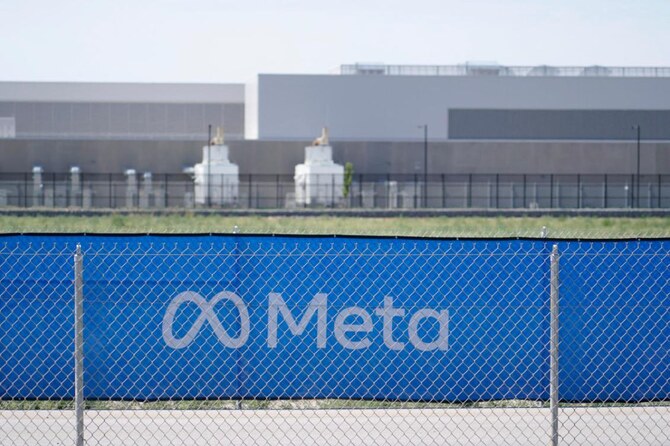
KUALA LUMPUR: A Meta Platforms official on Wednesday criticized Malaysia’s plan to require social media platforms to apply for a regulatory license by January, saying the proposal lacked clear guidelines and gave social companies little time to comply, risking digital innovation and growth in the country.
Malaysia said in July it will require social media platforms and messaging services with more than eight million users to obtain a license, as part of efforts to curb financial scams, cyberbullying and sexual crimes online.
The companies could face legal action if they failed to do so by Jan. 1, 2025.
The plan has faced a backlash, with an Asian industry group that includes Meta urging the government in August to pause the move. Malaysia however has said it will not delay the proposed regulations, with Communications Minister Fahmi Fadzil saying tech companies must comply with local laws to continue operating the country.
Meta’s director of public policy for Southeast Asia Rafael Frankel said the firm has not yet decided if it plans to apply for the license ahead of the January deadline, due to a lack of clarity over the new regulations.
The timeline to apply for a license was “exceptionally accelerated” and the obligations for social media firms under the plan remained unclear, Frankel said in an interview with Reuters.
“These regulations tend to take a couple years to go through multiple iterations... to properly structure them and to balance the need for safety and ensure that you don’t inadvertently cap innovation and digital economic growth,” he said.
Malaysia’s communications ministry did not immediately respond to a request for comment on the interview.
In a Facebook post on Wednesday following a meeting with Meta representatives a day earlier, communications minister Fahmi thanked the company for its willingness to cooperate with the government but urged it to take more proactive measures against sexual content involving minors on its platforms.
Frankel said Meta shared the Malaysian government’s goal for a safe online environment and was working closely with the communications regulator to remove or restrict harmful content from its platforms.
“We don’t need a licencing regime in order to take online safety seriously. We already take it seriously,” he said.
Meta has shared its concerns with the government and hopes to “bridge the differences” over the proposed regulations before they are implemented, Frankel added, without providing details.
Malaysian authorities deem online gambling, scams, child pornography and grooming, cyberbullying and content related to race, religion and royalty as harmful.
Malaysia reported a sharp increase in harmful social media content earlier this year and urged social media firms, including Facebook parent Meta and short video platform TikTok (8645.HK), to step up monitoring on their platforms.

Meta says Malaysia’s social media licencing plan lacks clarity, threatens innovation
https://arab.news/24hvr
Meta says Malaysia’s social media licencing plan lacks clarity, threatens innovation
- Malaysia to require social media licenses by Jan. 1, says platforms must step up monitoring
- Meta says undecided if it will apply for licencing by deadline due to “exceptionally accelerated” iter and unclear obligations
Gems of Arabia magazine launched to spotlight talents shaping Saudi Arabia’s evolving cultural landscape
- The publication features established and emerging talents elevating the region across design, fashion, art, tech, music, architecture and media
- Saudi fashion designer Hatem Alakeel seeks to highlight the richness of the Kingdom, and wider modern Arab culture to global audiences
DUBAI: When Saudi fashion designer Hatem Alakeel interviewed Princess Reema bint Bandar Al-Saud before her appointment as Saudi ambassador to the US, the longtime advocate of women’s empowerment made a powerful prediction: “I look forward to the day that the Saudi woman is no longer the story but rather a phenomenal achievement.”
That moment would become the foundation for Gems of Arabia, an arts and culture audio-visual podcast that spotlights the creative talents shaping the landscape of Saudi Arabia and the broader region.
Over six years, Gems of Arabia has documented the sweeping transformation of the Kingdom’s art and culture scene, and is now evolving into a full-fledged magazine.
“It started off as a column I used to write, and from there, it turned into a podcast. Now it is growing into a magazine,” Dubai-based Alakeel, the magazine’s founder and editor-in-chief, told Arab News ahead of the launch of the digital publication on Thursday.
Besides spotlighting celebrated regional artists, Alakeel said Gems of Arabia is in search of the “hidden gems” elevating the region across design, fashion, art, tech, music, architecture and media.
The magazine serves as a platform for talented, authentic creatives and tech entrepreneurs unable to articulate their work “because they don’t have the public relations or capacity to promote themselves even through social media.”
Alakeel added: “Our job is to identify all these authentic people; you don’t have to be famous, you just have to be authentic, and have a great story to tell.”
The digital publication offers a dynamic blend of short-form podcasts, coverage of regional cultural events, in-depth features and editorials, long-form interviews and artist profiles — spotlighting both celebrated and emerging talents. This is complemented by social media vox pops and bite-sized coverage of art events across the region.
Alakeel, who also runs Authenticite, a consulting and creative production agency connecting creators and brands who want to understand Saudi culture, said the magazine content is “carefully curated” to feature topics and personalities that resonate in the region.
What differentiates Gems of Arabia, he said, is its story of continuity and substance amassed over the years that has captured the evolution of the wider regional landscape.
“The website represents an archive of nearly 150 articles compiled through years of podcasts and long-form conversations that show continuity and depth changes,” he said.
“So, it’s an evolution and it’s another home for all our content and our community.”
Growing up in France, Alakeel said his mission started early on when he felt the need to represent his Saudi culture “in a way where it can hold its own internationally.”
Through his first brand, Toby, he sought to bring the traditional thobe into modern designs and introduce it to the luxury fashion world. This mission was accomplished when his thobe designs were placed alongside global labels such as Harvey Nichols, Dolce & Gabbana and Prada.
What began as a personal design mission would soon expand into a broader platform to champion Saudi talent.
“I was articulating my culture through fashion and it just felt natural to do that through the incredible people that the region has,” Alakeel said, adding that the magazine aims to highlight the richness of the Kingdom, and wider modern Arab culture to global audiences.
“Art is such a great way of learning about a culture and a country,” he said.
On the ground in Saudi Arabia, the publication hosts GEMS Forum, a series of live cultural gatherings that bring together prominent artistic figures for in-depth conversations later transformed into podcast episodes recorded with a live audience.
Alakeel said the print edition of Gems of Arabia will debut in March, designed as a collectible coffee-table quarterly distributed across the Gulf.
He envisions the platform growing into a long-term cultural record.
“It's a Saudi-centric magazine, but the idea is to make it inclusive to the region and everyone authentic has a seat at the table,” said Alakeel.


