KINSHASA, Congo: Alfred Mamba remembers the frenzy that gripped the main soccer stadium in Zaire, now known as Congo, as the fierce heavyweight title bout unfolded through eight rounds between the underdog Muhammad Ali and the seemingly invincible George Foreman.
“It was a big party,” Mamba said as he recalled his father, one of the co-founders of the boxing federation in Congo, taking him to the fight as a 15-year-old.
As Mamba flipped through a pile of photos he said were taken at the fight, he remembered the stadium erupting as Ali and Foreman stepped out for the much-anticipated “Rumble in the Jungle” as the contest was famously known.
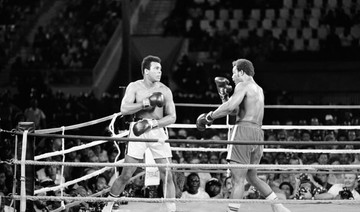
“When Foreman was throwing punches, the audience was screaming,” Mamba, now a boxing referee, remembered. “But Ali had surprised everyone with his hook technique. And how he was boxing on the ropes. And voila, this is how he won the fight.”
The crowd’s hysteria trailed the series of punches until Ali’s last blow. It also created a new generation of fighters and fans that became inspired to keep this country on the global boxing stage.
Ahead of the 50th anniversary of the Ali vs. Foreman fight, boxers and fans from across Africa have been in Kinshasa, the Congolese capital, for the just-concluded 21st African Amateur Boxing Championships that saw the Stade des Martyrs stadium and major roads lit up.
Landry Matete Kankonde, who represented Congo in the men’s heavyweight division, lost to Senegal’s Karamba Kebe but said he is still dreaming about becoming the next Ali, crediting the 1974 bout with putting Congo on the map.
“The next superstar will be me,” the 24-year-old Kankonde said, a wide grin flashing across his face.
But in this impoverished country of 110 million mostly young people, people like Kankonde are fighting against the odds to get to the highest levels.
While Congo is one of the most decorated African nations in boxing, it still lacks adequate sporting infrastructure such as a gym for its national team, leaving many to train in open spaces, Mamba said.
In its eastern region, where a deadly security crisis has resulted in one of the world’s biggest humanitarian disasters, many can only dream of getting out of conflict zones and displacement camps to make it to official contests in the faraway capital.
Even in Kinshasa, amateurs often train by the roadside and on the streets with no gear, ducking and weaving as their hands roll punches.
“Congo is a country where people are motivated by the suffering that we know here,” Kankonde said. “Every time a Congolese boxer gives his all, seeing all that we endure here, it pushes us.”
The 1974 fight was one of boxing’s most memorable moments.
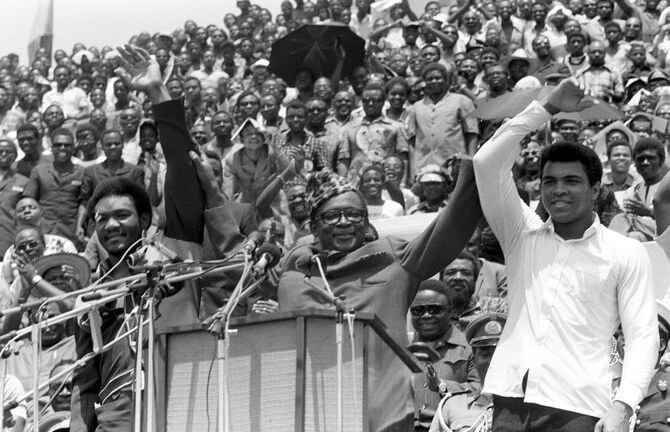
Mobutu Sese Seko, the Congolese dictator who was seeking to put the central African nation in the spotlight, had partnered with promoters to bring the contest to the country, putting up a $5 million purse for the fight.
Just before dawn on Oct. 30, 1974, with machine gun-carrying soldiers watching the crowd from ringside and a huge portrait of Mobuto towering over the Stade des Martyrs stadium, spectators from across the world watched the bout between the 32-year-old Ali — seeking a comeback after being stripped of the world title for refusing to be drafted for the Vietnam war — and the then-undefeated 25-year-old Foreman.
Many believed Ali didn’t stand a chance against Foreman, having been out of the ring for years after the sanction.
“People were praying before the fight that Ali doesn’t get killed,” Bill Caplan, who was Foreman’s public relations man in Zaire, has said.
“I think it was one of the top-10 upsets in boxing,” Ed Schuyler Jr., the longtime boxing writer for The Associated Press who was in Congo to cover the fight, has said of Ali’s victory.
The fight ended with Ali putting Foreman on the canvas in the eighth round, but that was only the beginning of a passion for the sport among many Congolese. After that, everyone wanted to learn boxing, said Mamba. He himself was inspired by both the contest and his father, also a referee.
And for fifty years, Congo has continued to rumble, producing boxing greats like Sumbu Kalambay, the Congolese-Italian champion who held the World Boxing Association (WBA) world middleweight title in the 1980s and Junior Ilunga Makabu, who held the WBC cruiserweight title in the early 2020s.
And people are still falling in love with the sport in the country, including Josue Loloje, who was among the spectators at the Kinshasa stadium for the African championship.
“The Ali vs. Foreman fight is the foundation (for) these talents emerging in Congolese boxing,” Loloje said in between the contests. “It all started there.”


![]()

50 years after Ali fought Foreman in Congo, the ‘jungle’ hasn’t stopped rumbling
Short Url
https://arab.news/c8cra
50 years after Ali fought Foreman in Congo, the ‘jungle’ hasn’t stopped rumbling
- Mobutu Sese Seko had partnered with promoters to bring the contest to the country, putting up a $5 million purse for the fight
- Alfred Mamba: ‘Ali had surprised everyone with his hook technique. And how he was boxing on the ropes. And voila, this is how he won the fight’

Latest updates


© 2026 SAUDI RESEARCH & PUBLISHING COMPANY, All Rights Reserved And subject to Terms of Use Agreement.