DOHA: Gaza war mediator Qatar on Tuesday condemned the Israeli parliament’s decision to ban the UN agency for Palestinian refugees from operating in Israel, the Gulf emirate’s foreign ministry said.
Israeli lawmakers on Monday overwhelmingly voted to ban the agency, UNRWA, from working in Israel and annexed east Jerusalem.
The lawmakers also passed a measure prohibiting Israeli officials from working with UNRWA and its employees.
“We emphasize that stopping support for UNRWA will have disastrous consequences,” ministry spokesman Majed Al-Ansari told reporters.
“The international community cannot stand silent in the face of this disregard for its international institutions,” he added.
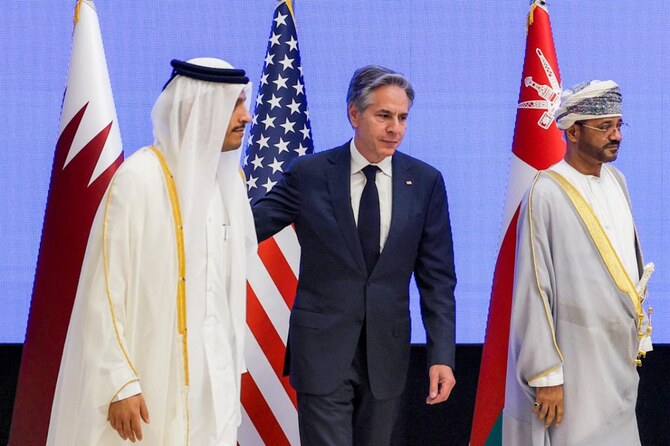
Qatar, along with the United States and Egypt, has mediated months of negotiations for a deal to end the Gaza war and exchange Israeli hostages held there for Palestinian prisoners held by Israel.
The talks have thus far failed to result in an agreement, with both of the warring parties accusing the other of blocking it.
In a bid to break the deadlock at the tail end of US President Joe Biden’s administration, Washington and Doha last week announced a fresh round of in-person Doha talks that would explore new options.
With the US election around the corner, Ansari told reporters that Qatar did not see “any negative result of the elections on the mediation process itself.”
He added that Qatar believes it is “dealing with institutions and in a country like the United States, the institutions are invested in finding a resolution to this crisis.”
UNRWA has provided essential aid, schooling and health care across the Palestinian territories and to Palestinian refugees elsewhere for more than seven decades.
UNRWA and other humanitarian agencies have accused Israeli authorities of restricting aid flows into Gaza, where almost all of the territory’s 2.4 million people have been displaced at least once during the war.
The agency itself has suffered heavy losses, with at least 223 of its staff killed and two-thirds of its facilities in Gaza damaged or destroyed since the war began.
In January, Israel accused a dozen of UNRWA’s Gaza employees of involvement in the October 7 attack by Hamas.
A series of probes found some “neutrality related issues” at UNRWA, and determined that nine employees “may have been involved” in the October 7 attack, but found no evidence for Israel’s chief allegations.


![]()

Qatar condemns Israel’s UNRWA ban, will work with Biden administration until ‘last minute’ for Gaza ceasefire deal
Short Url
https://arab.news/gsebb
Qatar condemns Israel’s UNRWA ban, will work with Biden administration until ‘last minute’ for Gaza ceasefire deal
- Israeli lawmakers on Monday overwhelmingly voted to ban the agency


Latest updates


Recommended


© 2026 SAUDI RESEARCH & PUBLISHING COMPANY, All Rights Reserved And subject to Terms of Use Agreement.