TAIPEI: A senior US diplomat who helps manage ties with Taiwan has arrived in Taipei, the de facto US embassy said on Tuesday, as Taiwanese officials sought to downplay Donald Trump’s latest attacks of the island’s crucial chip industry and defense needs.
The United States is Chinese-claimed Taiwan’s most important international supporter and arms supplier despite the lack of formal diplomatic ties.
The American Institute in Taiwan, which manages the unofficial relationship, said its Washington Office Managing Director Ingrid Larson was visiting Taiwan for meetings from Oct. 28 to Nov. 1.
The trip is “part of the United States’ strong commitment to Taiwan and to advance growing US-Taiwan partnership,” it said in a brief statement.
“While in Taiwan, she will discuss continued US-Taiwan collaboration on issues of mutual interest such as regional security, mutually beneficial trade and investment, and people-to-people, educational, and cultural ties.”
Trump, the Republican presidential candidate in the Nov.5 US presidential election, has unnerved democratically governed Taiwan by saying both in July and again over the weekend that Taiwan should pay the United States for its defense and that it had taken American semiconductor business.
“Taiwan, they stole our chip business. They want us to protect and they want protection, they don’t pay us money for the protection,” Trump told “The Joe Rogan Experience” podcast over the weekend.
American Depositary Receipts for Taiwan Semiconductor Manufacturing Co, the world’s largest contact chipmaker and major supplier to companies like Nvidia, closed down 4.3 percent on Monday, while on Tuesday its Taipei-listed shares were down more than 2 percent after Trump’s comments.
Taiwan Premier Cho Jung-tai, asked on Tuesday about Trump’s latest comments, struck a diplomatic tone, saying Taiwan-US ties are based on being like-minded democratic allies.
“I also believe that the major US political parties have an absolutely high degree of consensus on the understanding of the US-Taiwan relationship” he said.
Economy Minister Kuo Jyh-huei told reporters he respected the remarks of “international friends.”
“US relations with Taiwan have developed steadily over time, and both parties share the same attitude toward Taiwan,” Kuo said.
Taiwan does not have a formal defense treaty with the United States but it has billions of dollars of weapons on order and has repeatedly said it is committed to spending more on its military.
Taiwan’s government rejects Beijing’s sovereignty claims.
Taiwan received strong backing from Trump’s 2017-2021 administration, including arms sales, which have continued under the government of US President Joe Biden.
Trump spoke to then-Taiwan President Tsai Ing-wen in 2016 shortly after he won the election, prompting anger in Beijing, as the United States does not officially recognize Taiwan’s government, and glee in Taipei.
But with China’s stepped up military activities around Taiwan, including a new round of war games earlier this month, Taipei is nervously watching what a new Trump administration would mean, especially given the tightness of opinion polls.
In the run up to the election over the past three months, two former senior Trump administration officials visited Taiwan — Kelly Craft and Nikki Haley who both served as his ambassadors to the United Nations.
“Trump is going to expect some things from our friends and allies across the world, particularly friends like Taiwan who are under threat. He will expect you to carry your weight as a security partner,” Craft told a security forum in Taipei last month.


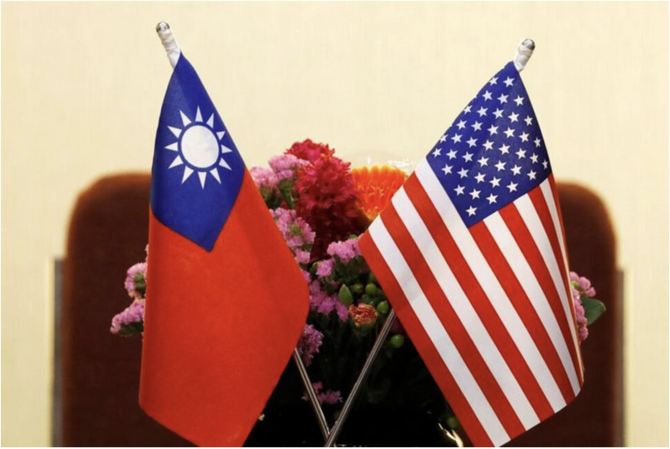
Senior US diplomat arrives in Taiwan as officials downplay Trump comments
https://arab.news/nvk46
Senior US diplomat arrives in Taiwan as officials downplay Trump comments

- Trump has unnerved Taiwan will comments on chips, defense
- Taiwan spending billions of dollars on new US arms
- China ramps up military activities around Taiwan


Iran war unsettles India’s packaged water makers as bottles, caps get pricey
- Higher polymer prices hurt bottled water industry
- Industry worth $5 billion has big multinational players like Pepsi, Coca-Cola
NEW DELHI: The Iran war is rattling India’s $5 billion packaged water market just ahead of the sweltering summer season.
One of the world’s fastest growing bottled water markets is seeing some manufacturers hike prices for distributors, as supply disruptions linked to the war fuel higher costs in everything from plastic bottles to caps, labels and cardboard boxes.
Though retail prices are yet to feel the heat and bigger companies are absorbing the pain, about 2,000 smaller bottled water makers have increased rates for their resellers by around 1 rupee per bottle, a 5 percent hike, which will rise by a further 10 percent in coming days, according to the Federation of All India Packaged Drinking Water Manufacturers’ Association.
Consumers usually pay less than 20 rupees, or around 20 US cents, for a one-liter bottle.
“There is chaos and within the next 4-5 days, this will start impacting customer prices,” said Apurva Doshi, the federation’s secretary general.
Rising oil prices have increased the cost of polymer, which is made from crude oil and is a key material for the industry’s plastic bottles. The cost of material used in making plastic bottles has risen by 50 percent to 170 rupees per kilogram, while the price of the caps has more than doubled to 0.45 rupees apiece. Even corrugated boxes, labels and adhesive tape are costing much more, industry letters showed.
Clean water is a privilege in the country of 1.4 billion people where researchers say 70 percent of the groundwater is contaminated, leaving people reliant on bottled water. Companies including Bisleri, Coca-Cola’s Kinley, Pepsi’s Aquafina, billionaire Mukesh Ambani’s Reliance and Tata all compete for a share of the $5 billion market. The companies did not respond to Reuters request for comment.
PREMIUM WATER FACES HEAT TOO
Within the broad bottled water market, natural mineral water is a $400 million business in India and a new, fast-growing wellness product for India’s wealthy.
The premium water segment accounted for 8 percent of the bottled water market last year in India, compared to just 1 percent in 2021, Euromonitor says.
Aava, which sells mineral water sourced from the foothills of the Aravalli mountains, has increased prices of its water bottles by 18 percent for resellers, Shiroy Mehta, CEO of the company, told Reuters.
“Most manufacturers are absorbing 40-50 percent of the cost to ensure that they don’t lose clients. It’s a poor situation for the beverage industry ahead of the summer season,” he said.
The mass market, however, is dominated by companies that produce “drinking water” to be sold in 1-liter bottles to customers. Clear Premium Water, a brand of India’s Energy Beverages, said in a notice to its distributors there had been an “unprecedented and continuous surge” in prices of key raw materials used in packaging and production.
“It is no longer possible for us to absorb the escalating costs while maintaining existing product prices,” the notice said.


