

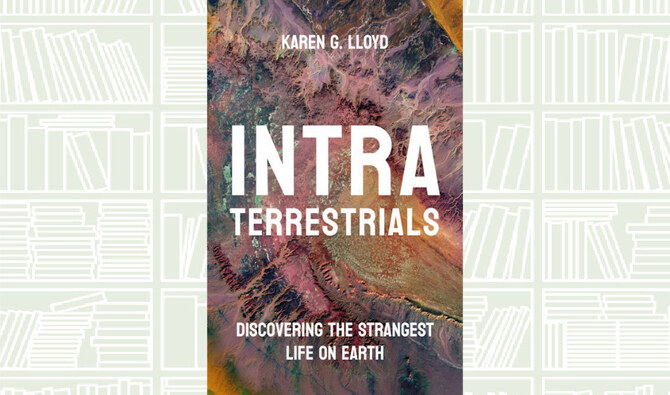
What We Are Reading Today: ‘Intraterrestrials’ by Karen G. Lloyd

Short Url
Updated 28 October 2024
Follow

What We Are Reading Today: ‘Intraterrestrials’ by Karen G. Lloyd

Life thrives in the deepest, darkest recesses of Earth’s crust—from methane seeps in the ocean floor to the highest reaches of Arctic permafrost —and it is unlike anything seen on the surface.

“Intraterrestrials” shares what scientists are learning about these strange types of microbial life — and how research expeditions to some of the most extreme locales on the planet are broadening our understanding of what life is and how its earliest forms may have evolved.


What We Are Reading Today: Making Waste by Sophie Gee

Updated 1 min 13 sec ago
Follow

What We Are Reading Today: Making Waste by Sophie Gee

Why was 18th-century English culture so fascinated with the things its society discarded? Why did Restoration and Augustan writers such as Milton, Dryden, Swift, and Pope describe, catalog, and memorialize the waste matter that their social and political worlds wanted to get rid of—from the theological dregs in “Paradise Lost” to the excrements in “The Lady’s Dressing Room” and the corpses of “A Journal of the Plague Year?” In “Making Waste,” the first book about refuse and its place in Enlightenment literature and culture, Sophie Gee examines the meaning of waste at the moment when the early modern world was turning modern.

Gee explains how English writers used contemporary theological and philosophical texts about unwanted and leftover matter to explore secular, literary relationships between waste and value. She finds that, in the 18th century, waste was as culturally valuable as it was practically worthless—and that waste paradoxically revealed the things that the culture cherished most.