Watchdog FATF places Lebanon on financial crime watchlist

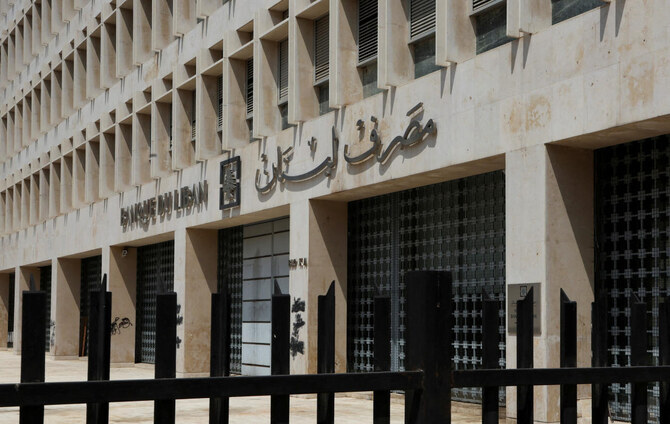
Lebanon has been placed on the so-called "grey list" of countries under special scrutiny by financial crime watchdog FATF, FATF said on Friday. (Reuters/File)
Short Url
Updated 27 October 2024
Follow

Watchdog FATF places Lebanon on financial crime watchlist

  • Elisa de Anda Madrazo, president of the Financial Action Task Force, said Lebanon had been accorded some flexibility regarding deadlines set in its action plan
  • Lebanon’s caretaker Prime Minister Najib Mikati said the country’s placement on the FATF grey list was an expected move

BEIRUT/PARIS: Global financial crime watchdog FATF said on Friday it has placed Lebanon on its “grey list” of countries under special scrutiny.
Lebanon has been in a financial crisis since 2019 that has been left to fester by the country’s leaders and now faces growing damage from Israeli airstrikes and ground operations against Hezbollah.
Elisa de Anda Madrazo, president of the Financial Action Task Force, said Lebanon had been accorded some flexibility regarding deadlines set in its action plan, but did not provide details at a news conference.
“Of course we recognize the extreme, grave situation that Lebanon is currently facing,” she said.
“Lebanon’s status on the grey list should not impede relief efforts. ... We are working to make sure that channels of humanitarian aid remain open,” she added.
The FATF, a 40-member organization based in Paris, is the global money laundering and terrorist financing watchdog.
Lebanon’s caretaker Prime Minister Najib Mikati said in a statement later on Friday that the country’s placement on the FATF grey list was an expected move “given the known circumstances that hindered the approval of necessary financial legislations and reforms.”
He said that Lebanon has made progress in implementing many recommended actions from the mutual evaluation report and will continue to cooperate with the FATF.
Mikati also said that Lebanon’s relationships with correspondent banks will not be affected by this classification.
A source told Reuters earlier on Friday that the war had led the FATF to give Lebanon until 2026, instead of 2025, to address the issues that led to its grey-listing, including concerns over terrorism financing and a lack of judicial independence.
The grey-listing is likely to further deter investment in Lebanon and could affect the relationship between some Lebanese banks and the global financial system.


Real Estate Registry signs 10 agreements at forum in Riyadh

Updated 50 min 48 sec ago
Follow

Real Estate Registry signs 10 agreements at forum in Riyadh

RIYADH: The Real Estate Registry concluded its participation in the Real Estate Future 2026, as a partner of the forum, with a distinguished presence that included the launch of its business portal, the signing of 10 agreements and memoranda of understanding with entities from the public and private sectors, the organization of specialized workshops, and the awarding of the Gold Award at the Real Estate Excellence Awards.

During his participation in the forum, the CEO of the firm, Mohammed Al-Sulaiman, reviewed the latest developments in real estate registration in the Kingdom in a keynote speech, highlighting the pivotal role of the Real Estate Registry in building a unified and reliable system for data. He also announced the launch of the national blockchain infrastructure, which aims to enable the microcoding of real estate assets, enhance transparency, expand investment opportunities, and support innovative ownership models within a reliable regulatory framework.

On the sidelines of the forum, Al-Sulaiman met with Nigeria’s Minister of Housing and Urban Development, Ahmed Dangiwa. During the meeting, they discussed areas of joint cooperation, exchanged experiences and advice on shaping the future of the real estate sector, and reviewed best practices in implementing real estate registration systems that enhance reliability and improve the efficiency of property registration.
efficiency of property registration systems.

The Real Estate Registry’s participation included organizing three specialized workshops that focused on the role of geospatial technologies in identifying ownership, enhancing transparency, and improving the quality of real estate data. 

The workshop “Empowering the Real Estate Registry for the Business Sector” reviewed digital solutions that enable the business sector to manage its real estate assets more efficiently and enhance governance and technical integration. The workshop “From Off-Plan Sales to Title Deed” focused on the journey of documenting real estate ownership and the role of the registry in linking the stages of development and documentation within an integrated digital system.

On the sidelines of the forum, the Real Estate Registry signed 10 agreements and memorandums of understanding, including a deal with Yasmina Information Technology Co. to utilize real estate data in developing smarter insurance solutions that support the real estate sector and enhance service reliability. 

Partnerships were also signed with Haseel, NewTech, and Sahl, as well as HissaTech and Droub, to develop innovative digital solutions in property ownership, fractional ownership, and asset tokenization, as well as real estate finance and investment within a trusted regulatory framework.

Further collaborations included an MoU with ROSHN Group, an agreement with the Saudi Water Authority to enable data integration and quality enhancement, an agreement with the Saudi National Bank, and a partnership with Saudi Post to link the national address with the property registry as a unified geospatial identifier supporting data accuracy and integration.

The registry’s participation was crowned with the Golden Award at the Real Estate Excellence Awards in the category of Excellence in Property Documentation, in recognition of its role in building a model based on transparency, accuracy, and speed, as well as advanced digital technologies and specialized legal expertise, contributing to rights protection and increasing the sector’s attractiveness.

The Real Estate Registry emphasized that its participation reflects its continued role as a key enabler of the real estate sector, a trusted data source, and an active partner in driving digital transformation, enhancing market efficiency, and building investor and financier confidence, in line with Saudi Arabia’s Vision 2030 objectives for a fully integrated and sustainable digital real estate ecosystem.