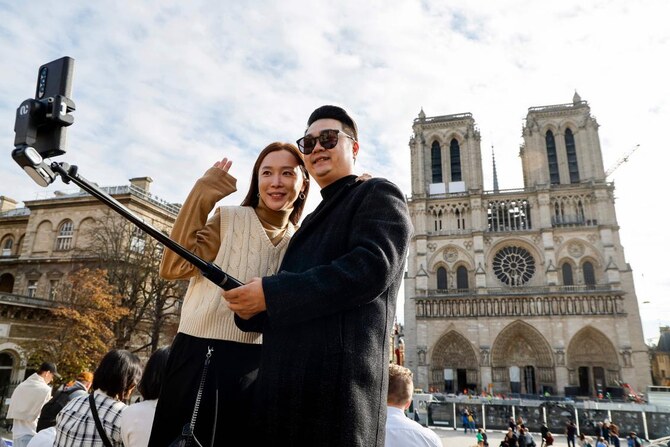
PARIS: France’s culture minister, Rachida Dati, has proposed introducing an entrance fee to visit Notre Dame cathedral when it reopens in December, aiming to raise funds for the preservation of the nation’s religious heritage.
The iconic cathedral is set to open its lofty doors again five years after it was ravaged by fire.
The storied interiors, with their soaring ceiling, intricate stained-glass windows and world-class organ, are set to welcome visitors once more — five years after the catastrophic fire in April 2019. Dati’s plan would charge tourists 5 euros ($4.16), which could generate 75 million euros ($62.41 million) annually to help restore France’s crumbling religious buildings. Dati believes Notre Dame could serve as a model for the country’s preservation efforts.
“Across Europe, visitors pay to access the most remarkable religious sites. With 5 euros per visitor at Notre Dame, we could save churches all over France. It would be a beautiful symbol,” Dati said in an interview with Le Figaro newspaper published Wednesday evening.
The funds are desperately needed. France is home to approximately 42,000 Catholic churches, many of which are in a state of disrepair. Experts estimate that one religious building is lost every two weeks due to neglect, fire or vandalism.
The French government has launched several campaigns to combat this crisis, including the (asterisk)Loto du patrimoine(asterisk), which funds restoration efforts. In 2022 alone, the Interior Ministry spent 57 million euros on religious heritage, and over the past five years 280 million euros have gone toward restoring over 8,000 sites. Yet many rural churches remain at risk.
Notre Dame’s reopening is particularly poignant. It once stood as one of the world’s most-visited monuments, attracting 12 to 14 million visitors each year.
Dati’s proposals have garnered support, with Interior Minister Bruno Retailleau saying: “If 5 euros can save our religious heritage, it’s worth it — whether you’re a believer or not.”
Dati said on social platform X that the entrance fee would apply to cultural visitors, not those attending mass or other religious services.
“Religious services must remain free, but every cultural visitor should contribute to preserving our heritage,” she said.
Prior to the fire, Notre Dame’s iconic towers had already charged an entry fee. Visitors paid 8.50 euros to climb the 387 steps and gain access to a panoramic view of Paris and a close-up of the cathedral’s famous gargoyles.


![]()
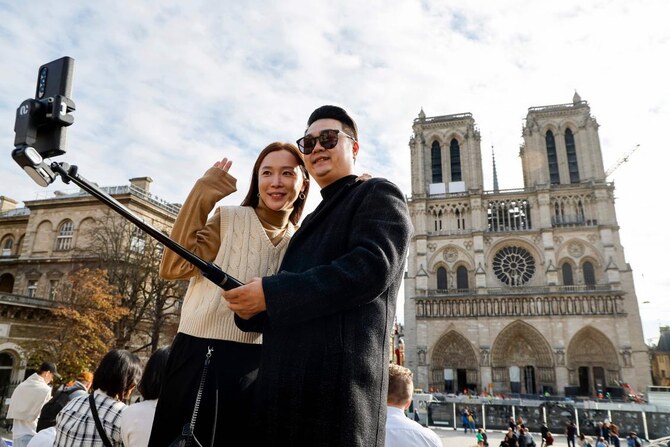
French culture minister proposes entrance fee for Notre Dame to help fund preservation work
Short Url
https://arab.news/m594e
French culture minister proposes entrance fee for Notre Dame to help fund preservation work
- The iconic cathedral is set to open its lofty doors again five years after it was ravaged by fire
- “Across Europe, visitors pay to access the most remarkable religious sites. With 5 euros per visitor at Notre Dame, we could save churches all over France,” Dati said


Latest updates


Recommended


© 2026 SAUDI RESEARCH & PUBLISHING COMPANY, All Rights Reserved And subject to Terms of Use Agreement.