

Arab Week at UNESCO to showcase rich culture, heritage

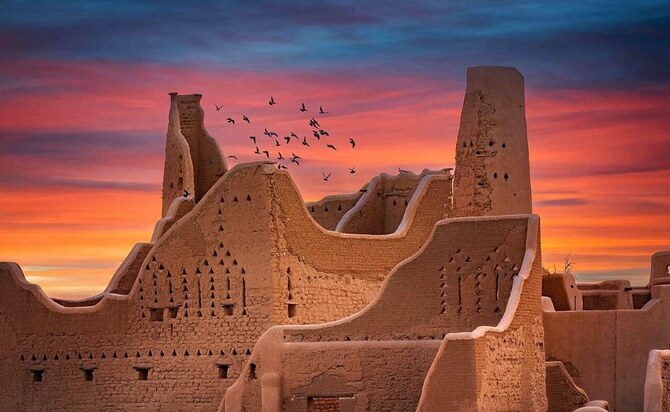
At-Turaif District is a UNESCO World Heritage site located in Diriyah, Saudi Arabia. (Wikimedia Commons)
Short Url
Updated 23 October 2024
Follow

Arab Week at UNESCO to showcase rich culture, heritage

  • Event will showcase the diversity of Arab cultural heritage and civilization while promoting intercultural dialogue and cultural development goals
  • Initiative reflects Saudi Arabia’s commitment to global engagement and received unanimous backing from Arab culture ministers at the ALECSO General Conference in May

RIYADH: Saudi Arabia is organizing the inaugural Arab Week at UNESCO, set for Nov. 4-5 at its Paris headquarters.

This marks the first such event in more than 50 years of Arab-UNESCO relations, the Saudi Press Agency reported on Wednesday.

Supported by all Arab nations, the event will showcase the diversity of Arab cultural heritage and civilization while promoting intercultural dialogue and cultural development goals.

Organizing by Saudi Arabia’s National Commission for Education, Culture and Sciences, the event will highlight the Arab world’s artistic and literary traditions, creating a broad platform for cultural exchange. 

The initiative reflects Saudi Arabia’s commitment to global engagement and received unanimous backing from Arab culture ministers at the ALECSO General Conference in May.

Prince Badr bin Abdullah bin Farhan, minister of culture and chairman of the commission, has led the initiative, positioning Saudi Arabia as a key player in promoting regional and international cultural collaboration.

The program includes a marketplace for Arab cultural products, Arabic calligraphy exhibitions, UNESCO-listed heritage site displays, music, food demonstrations, traditional crafts, and fashion showcases.

Academic activities feature symposiums on novel writing, artificial intelligence, calligraphy, children’s literature, and poetry, alongside competitions and artist displays.

This event enhances Arab culture’s global standing, providing a platform to share its rich heritage and ideas while uniting Arab nations through shared values and contributing to global development.


Berlinale responds to backlash over Gaza-related comments

Updated 16 February 2026
Follow

Berlinale responds to backlash over Gaza-related comments

The Berlin International Film Festival has issued a statement after what organisers described as a growing “media storm” linked to comments about the war in Gaza and the broader role of politics in cinema.

Festival director Tricia Tuttle released a lengthy note late Saturday following criticism directed at several high-profile guests. The controversy began during the opening day press conference when jury president Wim Wenders was asked about the conflict in Gaza. He responded: “We have to stay out of politics because if we make movies that are dedicatedly political, we enter the field of politics,” a remark that sparked swift backlash online.

Indian author Arundhati Roy later withdrew from the festival, reportedly angered by the remarks.

Other prominent figures, including Michelle Yeoh and Neil Patrick Harris, also faced online criticism after responding cautiously to questions about politics. Harris stated that he was interested in “doing things that were ‘apolitical,’” a comment that further fuelled debate.

In her statement, Tuttle defended the festival and its participants, stressing the importance of artistic freedom. “People have called for free speech at the Berlinale. Free speech is happening at the Berlinale. But increasingly, filmmakers are expected to answer any question put to them. They are criticised if they do not answer. They are criticised if they answer and we do not like what they say. They are criticised if they cannot compress complex thoughts into a brief sound bite when a microphone is placed in front of them when they thought they were speaking about something else,” she said.

She added: “It is hard to see the Berlinale and so many hundreds of filmmakers and people who work on this festival distilled into something we do not always recognise in the online and media discourse… It is a large, complex festival.”

“Artists are free to exercise their right of free speech in whatever way they choose… nor should they be expected to speak on every political issue raised to them unless they want to,” Tuttle said.