

RIYADH: Saudi surgeon Dr. Feras Khaliel, from King Faisal Specialist Hospital and Research Center, has been honored in Riyadh for performing the world’s first fully robotic heart transplant.
At the Global Health Exhibition in Riyadh on Tuesday, Khaliel, head of cardiac surgery and director of the Robotics and Minimally Invasive Surgery Program, received the Health Research Excellence: Applied Innovation Award from the Research, Development and Innovation Authority.
This achievement recognizes the hospital’s expanding robotic heart surgery program, which has completed over 400 procedures since its establishment in 2019.
Khaliel’s award underscores his contributions to advancing research and innovation, particularly in robotic heart surgery.
The transplant was performed on a 16-year-old patient with end-stage heart failure, marking a significant advancement in heart transplant surgery. This minimally invasive procedure reduces pain, recovery time, and complication risks, heralding a new era in cardiac surgery.
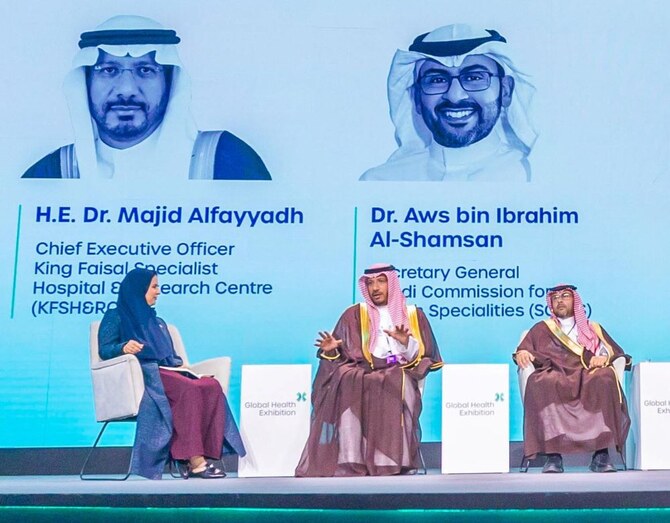
The center’s CEO, Dr. Majid Al-Fayyadh, emphasized the integration of artificial intelligence in operations to enhance accuracy and efficiency, driving innovation and sharing knowledge to elevate healthcare standards.
Speaking at a panel titled “Innovating Saudi Arabia’s Healthcare: Vision 2030 and Beyond,” Al-Fayyadh said: “Following KFSHRC’s groundbreaking achievement in performing the world’s first fully robotic heart transplant, we are now moving toward using robotic surgery more widely in all our operating rooms, envisioning it as the preferred option in the future.”
He noted that the success in robotic surgery resulted from extensive preparations, including advanced technology in operating rooms, cutting-edge equipment, and comprehensive team training.
“This approach balances bold innovation with stringent safety protocols, ensuring superior outcomes that enhance patient well-being,” Al-Fayyadh added.
Dr. Mohammed Al-Aboud, a cardiac surgeon at King Faisal Hospital, highlighted this achievement’s significance in relation to Saudi Arabia’s Vision 2030, which aims to integrate advanced technology into healthcare.
“Today, we are showcasing our case as part of Vision 2030 to integrate technology into healthcare and innovate,” said Al-Aboud.
“We have developed a dedicated team for robotic heart surgeries that is achieving excellent milestones in this field.”
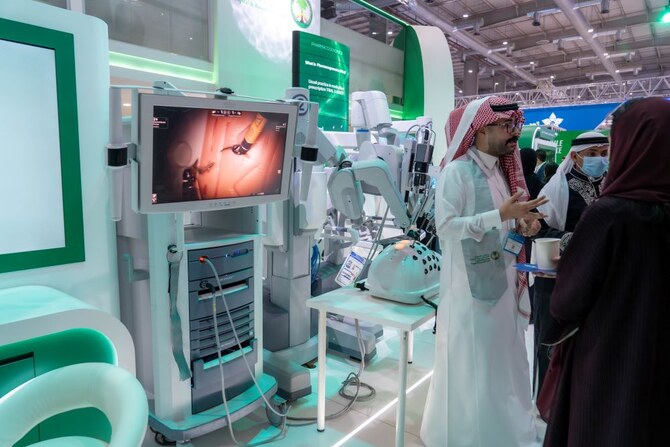
The center’s pavilion at the exhibition showcases its latest health innovations, including robotic heart surgery, organ transplantation, CAR-T cell production, pharmacogenomic analysis, and virtual reality applications in medical education.
It also features the Mobile Stroke Unit, aimed at expediting treatment for stroke patients and reducing disabilities and mortality rates.
Additionally, the center highlights its pharmacogenomic analysis service, which matches medications to a patient’s DNA to predict drug efficacy.