GAZA: Israeli authorities are still preventing humanitarian missions from reaching areas of northern Gaza with critical supplies including medicine and food for people under siege, the head of the UN Palestinian refugee agency UNRWA said on Monday.
Hospitals have been hit and are without power while injured people are left without care, Philippe Lazzarini said on X.
“@UNRWA remaining shelters are so overcrowded, some displaced people are now forced to live in the toilets. According to reports, people attempting to flee are getting killed, their bodies left on the street. Missions to rescue people from under the rubble are also being denied,” he added.
There was no immediate comment from Israel on the UNRWA statement.
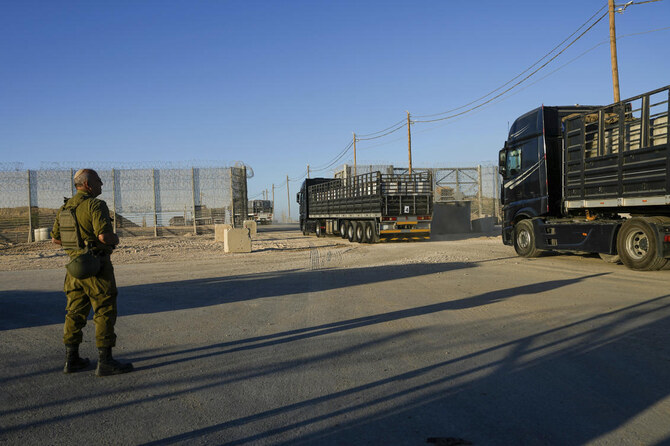
Israel says it is getting large quantities of humanitarian supplies into Gaza with land deliveries, including one on Monday morning, and airdrops. It also says it has facilitated the evacuation of patients from the Kamal Adwan Hospital.
“Humanitarian agencies including @UNRWA must get access to north Gaza. Denying & weaponizing humanitarian assistance to achieve military purposes is a sign of how low the moral compass is,” Lazzarini said.
He said assistance must reach everyone in need in the Palestinian enclave, including children and Israeli hostages held by Hamas militants.
“A ceasefire is the beginning of putting an end to this endless nightmare,” he added.
Israel began a wide military offensive in northern Gaza, especially inside Jabalia, the largest of the enclave’s eight historic camps, over two weeks ago, with the declared aim of preventing Hamas fighters from regrouping.

UN agency says Israel still preventing aid from reaching northern Gaza
Short Url
https://arab.news/bpqkw
UN agency says Israel still preventing aid from reaching northern Gaza
- Hospitals have been hit and are without power while injured people are left without care, Philippe Lazzarini said on X
- “@UNRWA remaining shelters are so overcrowded, some displaced people are now forced to live in the toilets,” he added
Thieves steal ancient Roman-era statues from the national museum in Syria
- Security had been boosted with metal gates and surveillance cameras after the war started
- The theft occurred Sunday night, with a broken door found in the classical department. Both officials spoke anonymously, and the government has not yet made a statement
DAMASCUS: Thieves broke into the national museum in the Syrian capital and stole several ancient statues dating back to the Roman era, officials said Tuesday.
The National Museum of Damascus was temporarily closed after the heist was discovered early Monday. The museum reopened in January as the country is reeling from the 14-year civil war and the fall of the 54-year Assad family rule last year.
The museum in central Damascus, the country’s largest, houses invaluable antiquities dating back to Syria’s long history. After the war started, security was boosted with metal gates and surveillance cameras.
An official from Syria’s Directorate-General for Antiquities and Museums told The Associated Press that six marble statues were stolen, adding that an investigation is ongoing.
Another official told AP that the theft occurred Sunday night and was discovered early Monday, when one of the doors at the classical department was found broken and several statues dating back to the Roman era were missing. The official refused to give an exact number.
Both officials spoke on condition of anonymity in line with regulations because the government has not yet made a statement.
On Tuesday morning, an AP journalist tried to enter the museum and was told by security guards that it was closed. They refused to answer questions about the theft.
The section of the museum where the statues were reported stolen is “a beautiful and historically-rich department with artifacts dating back to the Hellenistic, Roman and Byzantine periods,” said Maamoun Abdulkarim, the former head of the government’s antiquities and museums department.
The museum reopened on Jan. 8, a month after rebels ousted President Bashar Assad, ushering in a new era for the country. Fearful of looting, the museum in Damascus closed after the lightning offensive that ended five decades of Assad’s family rule.
After Syria’s conflict began in March 2011, authorities had moved hundreds of priceless artifacts to Damascus from different parts of the country, including the historic central town of Palmyra that was once held by members of the Daesh group.
In 2015, IS members destroyed mausoleums in Palmyra’s UNESCO World Heritage site that is famous for its 2,000-year-old Roman colonnades, other ruins and priceless artifacts.
The National Museum of Damascus was temporarily closed after the heist was discovered early Monday. The museum reopened in January as the country is reeling from the 14-year civil war and the fall of the 54-year Assad family rule last year.
The museum in central Damascus, the country’s largest, houses invaluable antiquities dating back to Syria’s long history. After the war started, security was boosted with metal gates and surveillance cameras.
An official from Syria’s Directorate-General for Antiquities and Museums told The Associated Press that six marble statues were stolen, adding that an investigation is ongoing.
Another official told AP that the theft occurred Sunday night and was discovered early Monday, when one of the doors at the classical department was found broken and several statues dating back to the Roman era were missing. The official refused to give an exact number.
Both officials spoke on condition of anonymity in line with regulations because the government has not yet made a statement.
On Tuesday morning, an AP journalist tried to enter the museum and was told by security guards that it was closed. They refused to answer questions about the theft.
The section of the museum where the statues were reported stolen is “a beautiful and historically-rich department with artifacts dating back to the Hellenistic, Roman and Byzantine periods,” said Maamoun Abdulkarim, the former head of the government’s antiquities and museums department.
The museum reopened on Jan. 8, a month after rebels ousted President Bashar Assad, ushering in a new era for the country. Fearful of looting, the museum in Damascus closed after the lightning offensive that ended five decades of Assad’s family rule.
After Syria’s conflict began in March 2011, authorities had moved hundreds of priceless artifacts to Damascus from different parts of the country, including the historic central town of Palmyra that was once held by members of the Daesh group.
In 2015, IS members destroyed mausoleums in Palmyra’s UNESCO World Heritage site that is famous for its 2,000-year-old Roman colonnades, other ruins and priceless artifacts.
© 2025 SAUDI RESEARCH & PUBLISHING COMPANY, All Rights Reserved And subject to Terms of Use Agreement.


