
RIYADH: Saudi Aramco has called for a new energy transition strategy that addresses the needs of Asia and the Global South, amid concerns over the current plan’s uneven progress.
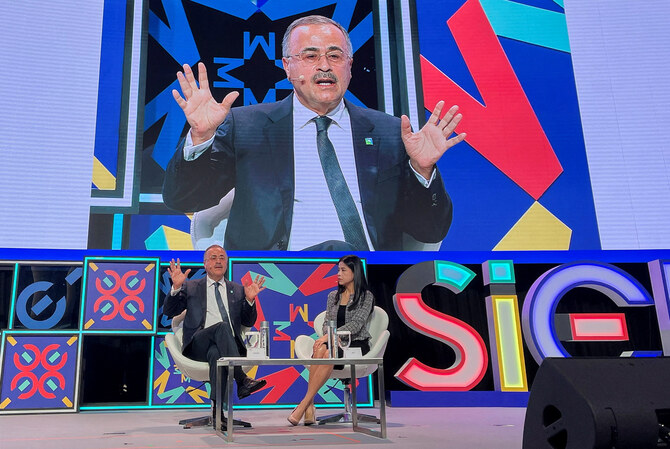
Speaking at the Singapore International Energy Week, Aramco President and CEO Amin Nasser emphasized the need for a “Transition Plan 2.0,” placing Asia at the forefront of global energy efforts.
“This may be Asia’s century. But Asia’s voice and priorities, like those of the broader Global South, are hard to see in current transition planning, and the whole world is feeling the consequences,” said Nasser.
He stressed that the current transition is "far slower, far less equitable, and far more complicated than many expected.”
Nasser proposed a more flexible approach to emissions reduction, one that is not bound by ideology. “This ideology-free approach simply prioritizes systematic emissions reduction where the impact is greater, at an acceptable cost, within reasonable timeframes, and whatever the source or technology,” he said.
He described the plan as “multi-source, multi-speed, and multi-dimensional,” aiming to meet the security, affordability, and sustainability needs of all countries.
Addressing the financial challenges of the energy transition, Nasser pointed out the staggering cost estimates. “Transition will be expensive for everyone, with estimates of between $100 and $200 trillion required globally by 2050.”
For developing countries, he noted, almost $6 trillion may be required each year. Aramco's CEO also highlighted the disparity in capital costs, stating that “the cost of capital is more than twice as high in developing countries where the need is greater.”
Nasser also addressed the future of oil demand, dismissing predictions of a steep decline. “Even when the growth in global oil demand stops at some point, no abrupt drop is anticipated. More than 100 million barrels per day would realistically still be required by 2050,” he said, countering claims that oil demand could fall to just 25 million barrels per day by then.
A shortfall of 75 million barrels, he warned, would be “devastating” for global energy security and affordability.
Despite significant investments in the global energy transition, Nasser pointed out that oil demand is at an “all-time high,” while gas demand has surged nearly 70 percent since 2000.
“So, rather than an energy transition, we are really talking about energy addition, where just the growth is mostly met by alternatives, instead of replacing conventional energy in any meaningful way,” he said.
Nasser criticized the current transition strategy for failing to deliver on its promises. “One, energy that is affordable — electricity prices in Europe rose as much as three to five-fold in many countries over the past two decades, despite the shift to renewables,” he explained.
Aramco's CEO also noted that progress in renewable energy remains sluggish, with wind and solar supplying less than 4 percent of the world’s energy.
“As energy consumers around the world are served an increasingly unrealistic and expensive transition, the less they like the taste. They hunger for something that connects their passion for the net-zero future we all want, with a reality we can all afford, and a relentless focus on what works,” he concluded.