

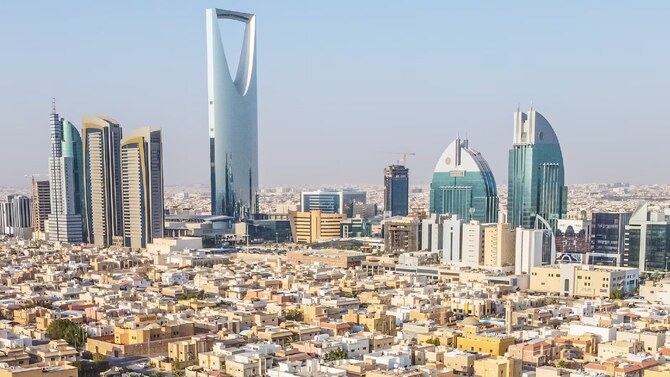
Saudi Arabia’s PIF launches new property developer to transform staff housing market

The Smart Accommodation for Residential Complexes Co. will address the growing demand for housing solutions in both public and private sector projects as the Kingdom continues its extensive infrastructure expansion. File
Short Url
Updated 20 October 2024
Follow

Saudi Arabia’s PIF launches new property developer to transform staff housing market

RIYADH: Saudi Arabia’s Public Investment Fund has established a new property developer focused on housing for staff involved in major construction projects.

The Smart Accommodation for Residential Complexes Co. will address the growing demand for housing solutions in both public and private sector projects as the Kingdom continues its extensive infrastructure expansion.

SARCC will transform the staff housing market by developing and managing complexes that meet international standards established by the International Finance Corp. and the European Bank for Reconstruction and Development.

“The staff accommodation market presents a significant opportunity due to increasing local demand,” said Khalid Johar, co-head of the Local Real Estate Portfolio Department at PIF.

“SARCC will play an important role in meeting the increasing need for accommodation solutions in Saudi Arabia, creating new opportunities for companies in the private sector,” he added.  

PIF aims to transform key sectors through substantial investments in infrastructure, real estate, technology, and renewable energy, both domestically and internationally.

With a focus on fostering innovation and boosting the private sector, PIF has launched various initiatives to develop local industries, create jobs, and attract foreign investment.

The fund’s strategy centers on positioning Saudi Arabia as a global investment powerhouse while supporting national projects that drive long-term economic growth. The new company will cultivate long-term investments and partnerships across the value chain, involving sectors such as construction, catering, transportation, and retail.

By providing modern accommodations with suitable amenities and services, SARCC aims to attract talent and partners to the Kingdom’s major development initiatives.

This announcement is part of PIF’s broader efforts to enhance infrastructure and real estate services linked to key projects, including those under its ROSHN Group, Saudi Downtown Co., and New Murabba Development Co.

ROSHN Group focuses on building large-scale residential communities across the Kingdom, supporting Saudi Arabia’s housing sector and urban development goals. Saudi Downtown Co. aims to revitalize urban centers by developing mixed-use projects in 12 cities, promoting local economic activity and tourism. Meanwhile, New Murabba Development Co. is leading the creation of a vast, sustainable mixed-use district in Riyadh, anchored by the world’s largest modern downtown development.

These initiatives are central to PIF’s goal of expanding its assets under management to $2 trillion by 2030, positioning it among the largest sovereign wealth funds globally. Additionally, PIF plans to create 1.8 million direct and indirect jobs in the Kingdom while investing $40 billion annually in domestic projects by 2025 to drive economic growth.


Middle East war economic impact to depend on duration, damage, energy costs, IMF official says

Updated 3 sec ago
Follow

Middle East war economic impact to depend on duration, damage, energy costs, IMF official says

  • Katz: Prolonged increase in energy prices could unanchor inflation expectations
  • IMF: 2026 global GDP outlook was solid, too early to judge war’s impact on growth
WASHINGTON: The Middle East war’s impact on the global economy will depend on its duration and damage to infrastructure and industries in the region, particularly whether energy price increases are short-lived or persistent, the International Monetary Fund’s number two official said on Tuesday. IMF First Deputy Managing Director Dan Katz told the Milken Institute Future of Finance conference in Washington that if there is prolonged uncertainty from the conflict and a prolonged impact on energy prices, “I would expect central banks to be cautious and ‌respond to the ‌situation as it materializes.”
He said the conflict could ​be “very ‌impactful ⁠on ​the global economy ⁠across a range of across a range of metrics, whether it’s inflation, growth and so on” but it was still early to have a firm conviction.
Prior to the US and Israeli air strikes on Iran and counterattacks across the region, the IMF had forecast solid global GDP growth of 3.3 percent in 2026, powering through tariff disruptions due in part to the continued AI investment boom and expectations of productivity gains.
Katz said ⁠that the economic impact from the Middle East conflict would ‌be influenced by its duration and further geopolitical ‌developments.
Earlier, the IMF said it was monitoring the ​conflict’s disruptions to trade and economic activity, ‌surging energy prices and increased financial market volatility.
“The situation remains highly fluid and ‌adds to an already uncertain global economic environment,” the Fund said in a statement issued from Washington. Katz said the IMF will look at the conflict’s direct impacts on the region, including damage to infrastructure, and disruptions to key sectors.
“Tourism is an important one. Air travel. Is ‌there physical damage to infrastructure, production facilities, and the big industry in particular that everyone will be focused on is, ⁠of course, the energy ⁠industry,” he said.
Oil rose further on Tuesday as Iran vowed to attack ships passing through the Strait of Hormuz. Brent crude oil , the global benchmark, surged to $83 per barrel, up 15 percent from its level on Friday.
Katz said he expected central banks to “look through” a temporary rise in energy prices, given their focus on core inflation. But central banks could respond if a more persistent energy shock results in “a destabilizing of inflation expectations.”
He said the post-COVID inflation spike of 2022 was influenced by energy impacts from Russia’s invasion of Ukraine, with more pass-through from headline inflation to core inflation.
“And so I’m sure central banks, as they are thinking about how the ​geopolitical situation is translating into ​energy markets, will be looking at the lessons of the pandemic and seeing if they can apply any of those lessons in setting monetary policy,” Katz said.