- Zelensky outlined the plan to Ukraine’s Parliament on Wednesday without disclosing confidential elements that have been presented in private to key allies, including the US
KYIV: Ukraine’s President Volodymyr Zelensky has partially revealed his five-point plan aimed at prompting Russia to end the war through negotiations. A key element would be a formal invitation into NATO, which Western backers have been reluctant to consider until after the war ends.
Zelensky outlined the plan to Ukraine’s Parliament on Wednesday without disclosing confidential elements that have been presented in private to key allies, including the United States.
Here’s what we know:
Invitation to NATO
The plan’s first section involves formally inviting Ukraine to join NATO in the near future.
While this doesn’t mean Ukraine would become a member until after the war ends, it would signal a “testament of determination” and demonstrate how Western partners view Ukraine within the “security architecture,” Zelensky said.
“For decades, Russia has exploited the geopolitical uncertainty in Europe, particularly the fact that Ukraine is not a NATO member,” Zelensky said. “This has tempted Russia to encroach upon our security.”
He described the invitation to join NATO as “truly fundamental for peace” in Ukraine.
NATO partners have been reluctant to invite Ukraine to join while the war is ongoing, and Zelensky’s request for an invitation puts the military alliance in a difficult position.
Since the onset of the full-scale invasion in 2022, the alliance has faced challenges in finding ways to bring Ukraine closer without formally extending an invitation.
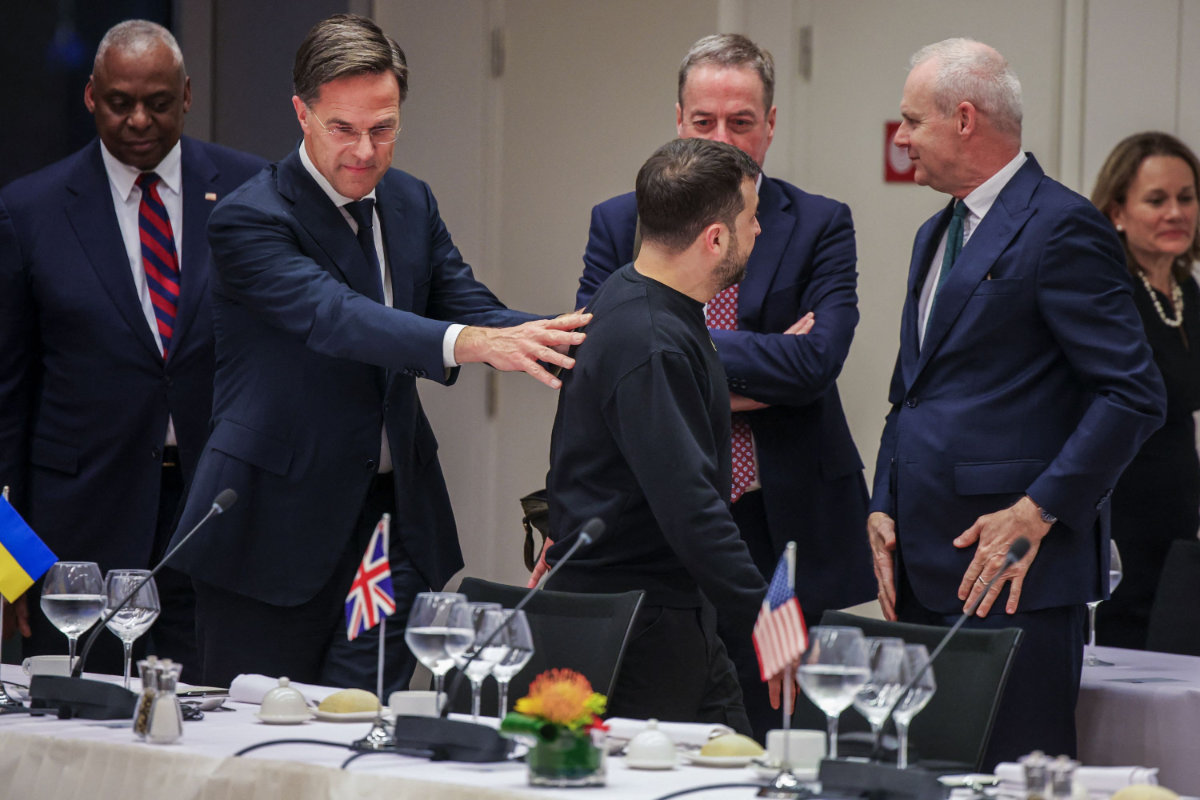
At their summit in Washington in July, NATO’s 32 members declared Ukraine on an “irreversible” path to membership. But any decision on offering to start membership talks is not likely before the next summit in the Netherlands in June.
Defense
The second section, entitled defense, focuses on strengthening Ukraine’s capability to reclaim territory and “to bring the war back to the Russian territory.”
It includes the continuation of military operations in Russia with the aim of strengthening Ukraine’s ability to repel Russian forces from occupied territories in Ukraine.
It also would involve enhancing air defense and jointly intercepting Russian missiles and drones with neighboring countries along the international border. Ukraine wants to expand the use of Ukrainian drones and missiles, and lift restrictions on using Western-supplied weapons for long-range strikes against military infrastructure inside Russia.
Ukraine also seeks greater access to a broader range of intelligence from allies and real-time satellite data. This section of the plan has confidential elements accessible only to allies with the “relevant assistance potential,” Zelensky said.
He said Ukraine has been providing its partners “with a clear justification of what its goals are, how they intend to achieve them, and how much this will reduce Russia’s ability to continue the war.”
Western partners have been wary of Ukraine using donated weapons in anything but a defensive capacity, for fear of being drawn into the conflict.
Ukraine has long been lobbying for the US to drop its restrictions on using long-range Western weapons to strike deep inside Russia, but the Biden administration’s red line remained unchanged even after Zelensky’s recent visit to Washington, D.C.
Deterrence
In the deterrence section of the plan, Ukraine calls for deploying “a comprehensive non-nuclear deterrence package on its territory that would be sufficient to protect the country from any military threat posed by Russia.”
Zelensky did not elaborate on the details of such a non-nuclear deterrence, but he said it would be used against specific Russian military targets, meaning that Russia would “face the loss of its war machine.”
He said this capability would limit Russia’s options for continuing its aggression and prod it into engaging in a fair diplomatic process to resolve the war.
Classified elements of this section have been shared with the United States, the United Kingdom, France, Italy, and Germany, he said. Other countries capable of contributing also would be briefed, Zelensky said.
Economy
The fourth section focuses on developing Ukraine’s strategic economic potential and strengthening sanctions against Russia.
Zelensky highlighted that Ukraine is rich in natural resources, including critically important metals “worth trillions of US dollars,” such as uranium, titanium, lithium, graphite, etc.
“Ukraine’s deposits of critical resources, combined with its globally significant potential in energy and food production, are among Russia’s key objectives in this war,” he said. But it also “represents our opportunity for growth.”
The economic component of the plan also includes a confidential addendum shared only with selected partners, he said.
“Ukraine offers … a special agreement for the joint protection of Ukraine’s critical resources, shared investment, and use of its economic potential,” he said. “This, too, is peace through strength — economic strength.”
Post-war period
The fifth section is geared toward the post-war period. Zelensky stated that Ukraine will have a big army of experienced military personnel after the war.
“These are our soldiers — warriors who will possess real experience in modern warfare, successful use of Western weaponry, and extensive interaction with NATO forces,” he said. “This Ukrainian experience should be used to strengthen the alliance’s defense and ensure security in Europe. It’s a worthy mission for our heroes.”
He also mentioned that, with partners’ approval, Ukrainian units could replace certain US military contingents stationed in Europe.