It was a year ago when Jomana Siddiqui visited Lebanon, where her father was born — and is now buried. She planned to return there soon; this time, she thought, she would take her two teenage daughters.
Instead, Siddiqui, who lives in California, now worries about relatives there. As she watches from afar the violence and the recent escalation in Israel’s military campaign against Hezbollah in Lebanon, Siddiqui thinks about the people she met during her visit, the kindness and generosity she encountered.
She thinks about her father’s grave — when, or if, she will get to visit it again. Her voice cracks with emotions. It’s been gut-wrenching, she said.
“It’s like the universal story of the Lebanese people,” she said. “They have to keep leaving and not knowing when they can come back.”
From the United States to South Africa, Cyprus, Brazil and beyond, many members of Lebanon’s far-flung and large diaspora are contending with the ripples of the violence — grieving, gripped by fear for loved ones and for their homeland, trying to find ways to help.
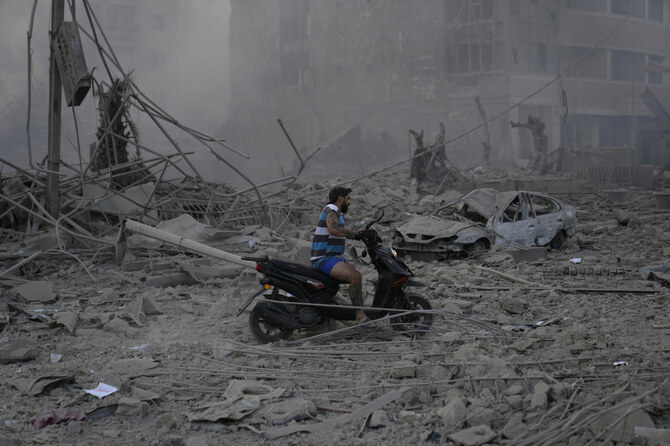
Some 1,400 Lebanese, including civilians and fighters of the militant group Hezbollah, have been killed and some 1.2 million driven from their homes since Israel escalated its strikes in late September, saying it aims to push Hezbollah away from the countries’ shared border.
For Lina Kayat, who moved to South Africa almost 36 years ago but still has a big family in Lebanon, the violence and tensions there have echoes of earlier turbulent chapters.
“We lived through a civil war for a long time; I was like seven years old,” she said. “It feels like history repeating itself. ... It’s the unknown of who is going to get killed next.”
Kayat, who lives in South Africa’s coastal city of Durban, speaks daily to her family, including her mother and her sister.
“They are very scared and very worried about what is going to happen,” she said.
Generations of Lebanese have grappled with whether to leave to seek better opportunities or escape various times of tumult — from a 15-year-old civil war to military occupations, bombings and political assassinations — or stay in a Lebanon that despite its numerous scars retains its allure for many. Lebanon — home to multiple religious groups, including Christians and Sunni and Shiite Muslims — takes pride in its large emigrant communities, which include successful businessmen and celebrities of Lebanese heritage.
The current military escalation unfolds amid fears that fighting could spread in the region and comes as the Israel-Hamas war in Gaza nears the grim one-year mark.
“It happening on top of Gaza is almost too much to bear,” said James Zogby, president of the Washington D.C.-based Arab American Institute.
“It almost makes you physically ill just trying to fathom the extent of the trauma,” added Zogby, whose father was born in Lebanon.
Already, Lebanon had been on edge and struggling under the weight of an economic meltdown, the fallout from a massive 2020 port explosion and other crises. It’s been without a president for two years.
Against such a somber backdrop, Zogby wonders what will become of the displaced.
“Who’s going to care for them? Where do the health services come from ... when the country is already as overstretched as it is and on the verge of collapse?” he said. “At what point does it finally collapse? And who will care?”
Fueling the pain, he said, is his anger at the US response to the devastation in Gaza and now the escalation in Lebanon.
“There’s a sense of powerlessness, a sense of almost despair that, you know, it can get out of control. And as long as nothing here happens to restrain it, it will get worse.”
Akram Khater, director of the Khayrallah Center for Lebanese Diaspora Studies at North Carolina State University, said that since the earliest diaspora, Lebanese who left have been contributing heavily to the economic well-being of Lebanon, sending large amounts of remittances.
Watching the escalation in Lebanon, where he was born and raised, has been re-traumatizing, he said.
“I find myself amidst a swirl of emotions that are unresolved and that derive from this recurring nightmare,” he said. “Yet, even amidst this our community comes together to create solidarity and provide solace and comfort for each other.”
Recently, hundreds of Lebanese flags filled the night sky in Dearborn, Michigan, as some attended a rally to support Lebanon and protest the Israeli offensive there.
At Sao Paulo’s international airport, two Lebanese brothers who’ve been living in Brazil, recently had a solemn reunion. They said eight of their loved ones — their sister, brother-in-law, four of their nephews and two of their nephews’ children — were killed in Lebanon in one of the attacks.
Hussein Zeineddine, one of the brothers, had been on vacation with his family in southern Lebanon when the area was hit by Israeli attacks, he told The Associated Press. He and his family moved to a safer location until they could book flights back to Brazil. “My wife was crying and asking us to leave. We left just with basic items. And then, shortly after, my sister’s house was bombed,” he said after his arrival.
“It will be tough here. But it will be tougher for people there,” he said.
In Cyprus, Rosaline Ghoukassian said the overwhelming majority of Lebanese don’t want this war. She relocated to Cyprus with her husband Raffi Garabedian and their daughter Maria after the 2020 ammonium nitrate explosion in Beirut’s port that killed more than 200 people. She said she’d been disenchanted with Lebanon’s political leadership and also lamented Hezbollah’s influence.
“We knew this was coming,” she said. “The problem is in Lebanon. ... Because we don’t have a good government.”
Their decision to leave Lebanon was never about money but safety, as their daughter explained in a letter she wrote in class in Cyprus: “I don’t want to go there because I was saved in the explosion, and I don’t want to go live there because I don’t want to die.”
The family chose to stay.
“I’m not here to make thousands of euros. No. I’m here just to live. To be happy, to be safe. This is what I want. To live,” Garabedian said.
Hezbollah began firing into Israel the day after Hamas’ attack on southern Israel on Oct. 7, 2023, in which the militants killed some 1,200 people and took about 250 others hostage. Since then, Israel’s military response in Gaza has killed more than 41,000 Palestinians, according to local health officials.
Back in California, Siddiqui said coping with it all has been challenging.
“You grab the phone; you hesitate to open it because you’re afraid of what you’re going to see, but you kind of have to.”
She talks to friends and others in her circle who can relate.
“We all feel kind of sad, depressed, helpless, rundown,” she said. “We can do things like fundraise and donate and protest or anything like that, but at the end of the day, it still weighs on you.”


![]()

Lebanese worldwide fear for their homeland and loved ones as violence escalates
Short Url
https://arab.news/wwm4a
Lebanese worldwide fear for their homeland and loved ones as violence escalates
- The current military escalation unfolds amid fears that fighting could spread in the region and comes as the Israel-Hamas war in Gaza nears the grim one-year mark


Latest updates


© 2026 SAUDI RESEARCH & PUBLISHING COMPANY, All Rights Reserved And subject to Terms of Use Agreement.