


RIYADH: No matter who becomes the next US president, they will have very little ability to rein in Israeli excesses in Gaza, Lebanon, and the wider Middle East, CNN journalist, author and political analyst Fareed Zakaria has said.
Although Democratic Party nominee Kamala Harris may be willing to adjust the Biden administration’s stance on Gaza if she is elected, Zakaria believes the nature of US politics will leave her hands effectively tied.
“I doubt you’re going to see much reining in that the American president is able to do,” Zakaria said on the Arab News current affairs program “Frankly Speaking” during a visit to Saudi Arabia for the Riyadh International Book Fair, where he was promoting his latest book, “Age of Revolutions.”
The Indian-born American journalist is the host of CNN’s Fareed Zakaria GPS and writes a weekly column for The Washington Post. A prolific author, Zakaria has a Ph.D. in government from Harvard University where he studied under such famous scholars as Samuel P. Huntington and Stanley Hoffmann.
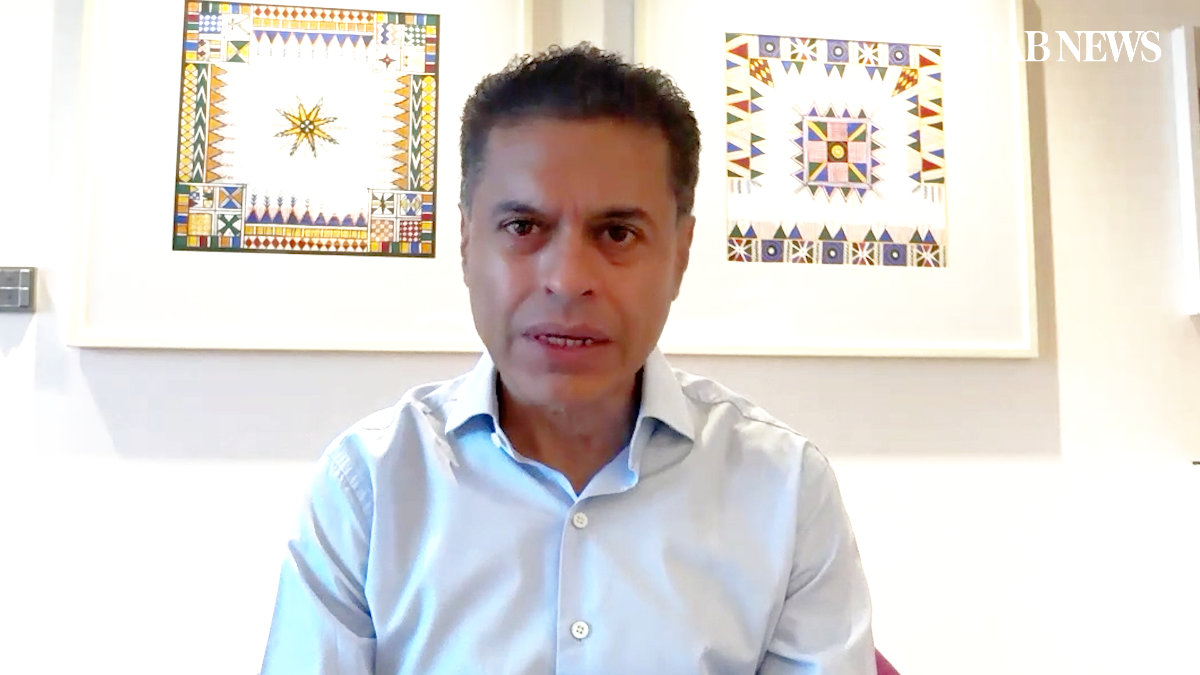
Zakaria told “Frankly Speaking” host Katie Jensen that Israel seems to have decided to take this opportunity and try to do something much more dramatic to turn the tables on this “Axis of Resistance.” (AN photo)
The American political model made it difficult for Washington to take a firmer line on Israel, he told “Frankly Speaking” host Katie Jensen.
“There will be a bit on the margins,” Zakaria said. “I suspect a Democratic administration would be able to restrain them a little more.”
He added: “Even if Congress can pass laws, Israel probably has strong enough support that they could even override a presidential veto in some circumstances.”
By contrast, Zakaria believes the one person who could rein in Israel is Saudi Crown Prince Mohammed bin Salman, because Israel is eager to normalize ties with Saudi Arabia.
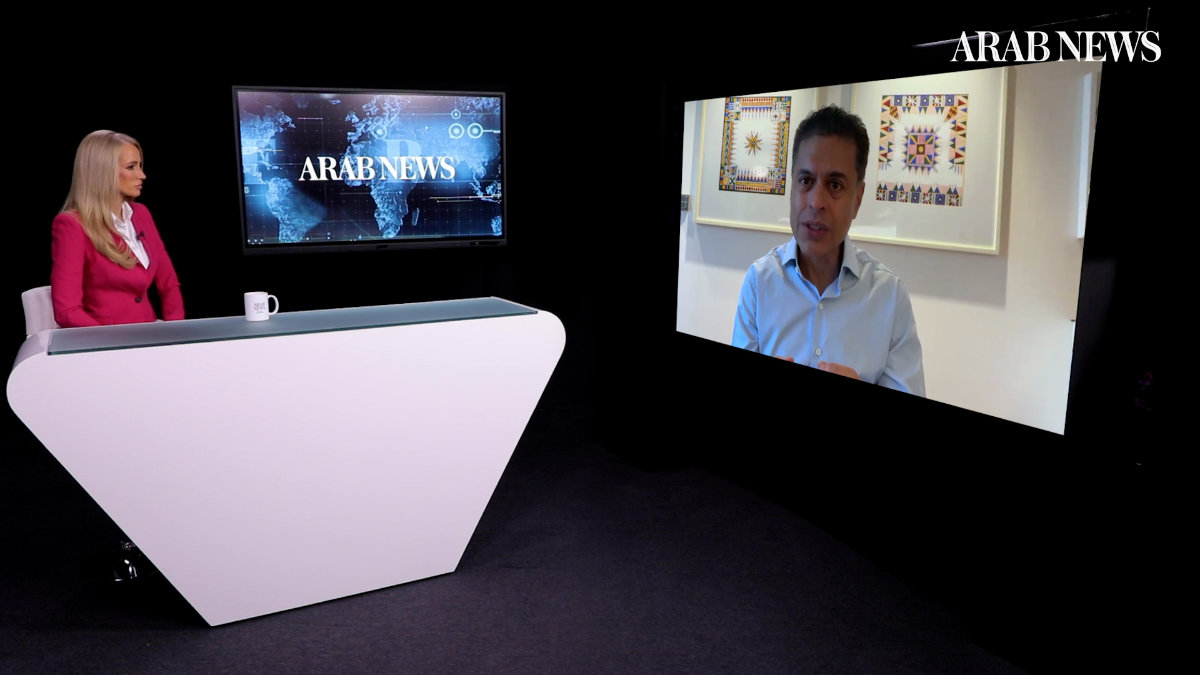
Zakaria told “Frankly Speaking” host Katie Jensen that Israel seems to have decided to take this opportunity and try to do something much more dramatic to turn the tables on this “Axis of Resistance.” (AN photo)
Saudi Arabia has conditioned normalization on Israel offering tangible progress on the question of Palestinian statehood and the Arab Peace Initiative first proposed by Riyadh in 2002.
“Israel wants a normalization of relations with Saudi Arabia,” said Zakaria. “If you look around the Arab world, even if you look at the US, the person with the most leverage in that sense is Mohammed bin Salman, the crown prince of Saudi Arabia.
“In return for normalization, he has the opportunity to ask for something, but it has to be something you could imagine an Israeli government accepting. So that’s going to be a very complicated dance.”
Forced to take a hardline stance by his right-wing coalition, Zakaria says, Israeli Prime Minister Benjamin Netanyahu is in no position to pursue normalization in exchange for implementing the peace plan.
“Right now, my sense is, Bibi Netanyahu is less concerned about Saudi normalization, because he realizes that anything he says that puts him on the path toward granting the Palestinians political rights, statehood, whatever, will be too much for his coalition partners that include a few very, very extreme Israeli nationalists who believe in essentially no Palestinian state, ever,” he said.
“He knows that if he goes even half a step toward that, he loses his government. So maybe that’s why he’s decided I’m going to go forward and deal with Hezbollah in a much more aggressive way because I can’t do the Saudi normalization deal anyway.”
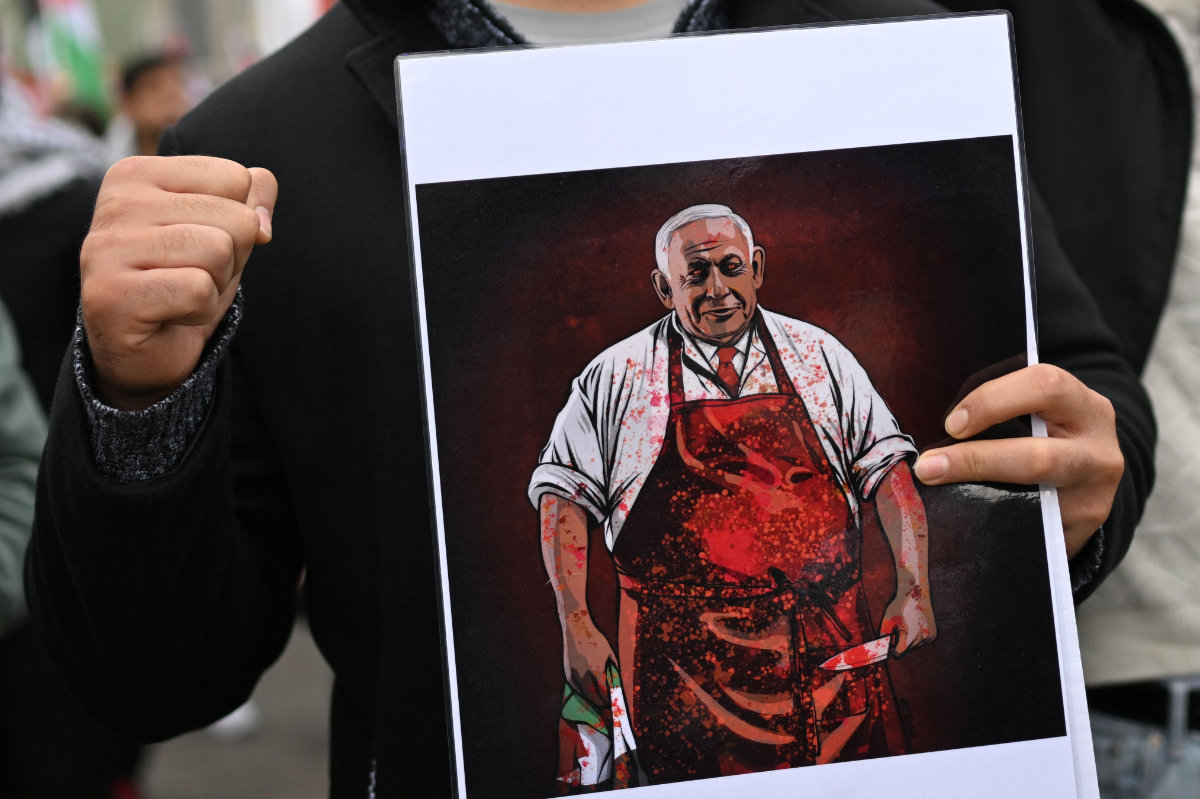
A demonstrator holds a placard depicting Israel's Prime Minister Benjamin Netanyahu during a Pro-Palestinian rally in Warsaw on October 5, 2024. (AFP)
With public opinion in Israel swinging against the two-state solution to the decades-old Israeli-Palestinian conflict — especially since the Hamas-led attack of Oct. 7 — the chances of advancing any peace plan seem more remote than ever.
However, as Zakaria put in the form of a rhetorical question, what alternative is there to the “intolerable situation” that Israel finds itself in?
“Let’s be honest, Israel has changed,” he said. “It is much more right wing now. The Knesset had a vote on the two-state solution. I think only eight members of Israel’s parliament voted in favor of a two-state solution. I think it was 68 who voted against. So you’re in a very difficult place in Israel if you want a two-state solution.
“But what I come back to is, what is the solution that people in Israel have for the problem of the Palestinian people? Ehud Olmert, former Likud prime minister, so a right-wing prime minister, said very eloquently on my television program, look, there’s 6 million Palestinians in Israel who don’t have any political rights. How can Israel as a democracy continue like that?
“At some point, there has to be some resolution to that. And the only resolution, he was arguing, that makes any sense, that is compatible with the idea of Israel as a democracy, would be to give the Palestinians a state.
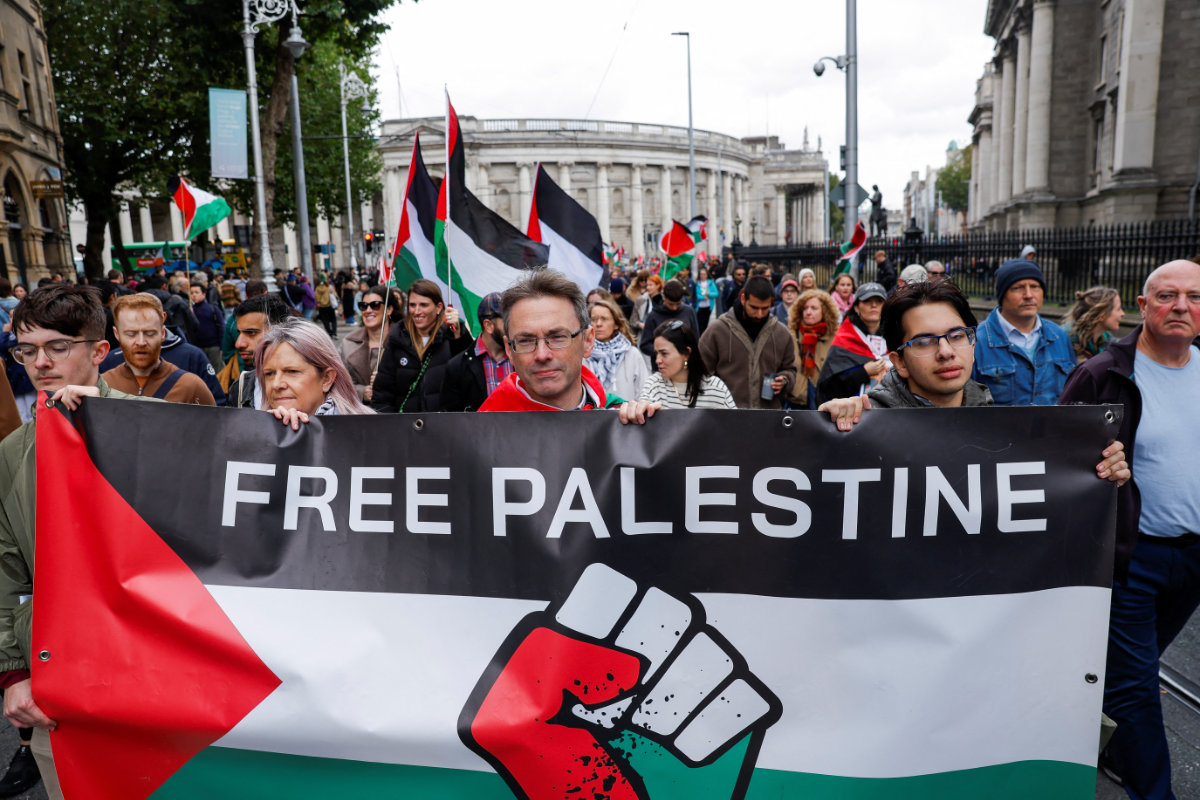
People demonstrate in Dublin, Ireland, on October 5, 2024, in solidarity with Palestinians in Gaza, ahead of the October 7th attack anniversary, amid the Israel-Hamas conflict. (Reuters)
“And when you talk to people who are opponents of the two-state solution, they fudge and obfuscate and meander. They don’t actually ever answer that question centrally because what they are accepting is a completely intolerable situation, which is, you know, two classes of citizens, you know, with the Palestinians not even really being citizens.
“They are citizens of nowhere. They don’t have political rights. And that surely can’t continue unendingly, but it is. We are in the 56th year of that circumstance, that occupation.”
Zakaria said he sympathizes with the Palestinian people, but believes they have been let down by both Hamas in Gaza and the Fatah-led Palestinian Authority in the West Bank.
“I think they’ve been led by a series of leaders who in the case of Hamas really have adopted a kind of terrorist mentality where it’s okay to kill women, children, civilians,” he said.
“On the other side, you have the Palestinian Authority that is so corrupt and ineffective that Abu Mazen, Mahmoud Abbas, cannot hold elections for fear of the fact that of course he will be voted out of office by an enraged Palestinian population.
“In addition to that, they missed many negotiating opportunities along the way. I do think they’ve been badly served.”
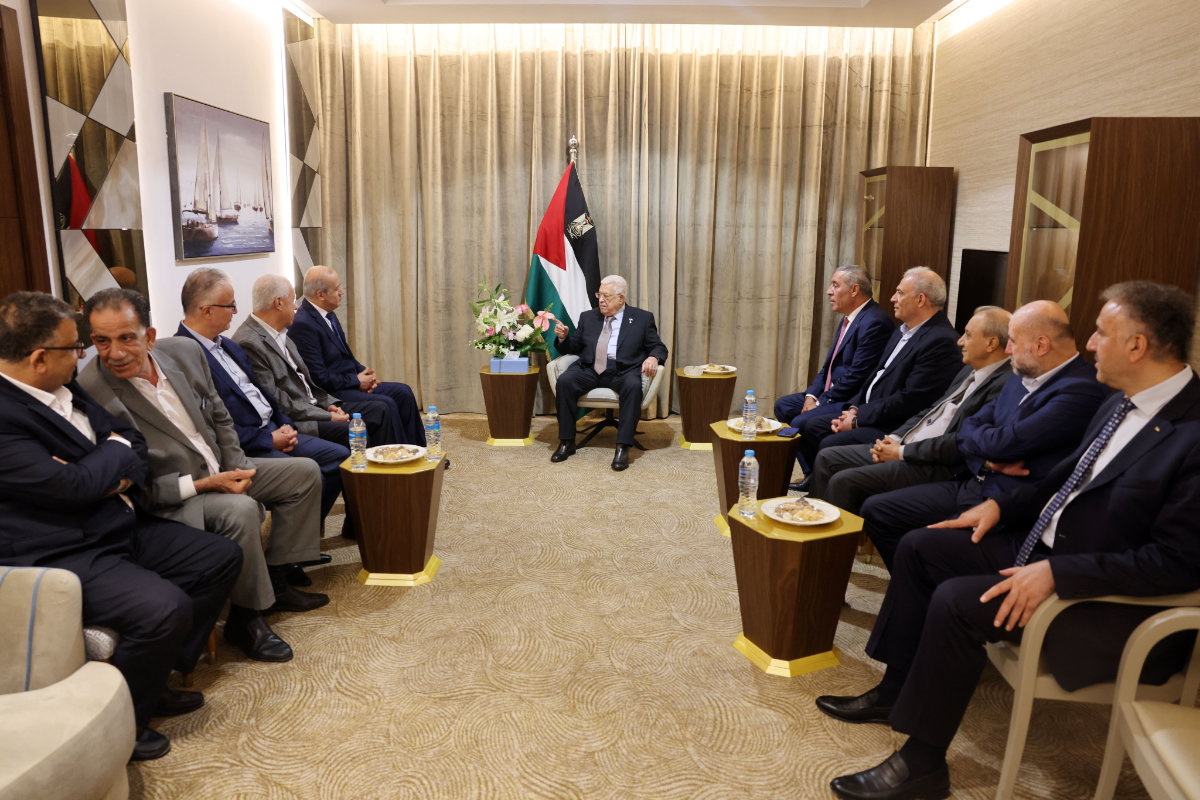
Palestinian President Mahmud Abbas (C) meeting with a delegation of the Popular Front for the Liberation of Palestine (PFLP) ahead of unity talks hosted by Egypt in al-Alamein. (AFP/File)
Following the Oct. 7 Hamas-led attack, Israel launched its retaliatory operation in Gaza. However, in solidarity with its Hamas allies, Lebanon’s Iran-backed Hezbollah began rocketing Israel from the north, opening up a second front.
What began as a relatively contained exchange of fire along the Israel-Lebanon border suddenly escalated in September, with Israel attacking Hezbollah’s communication networks, weapons caches, and its leadership, culminating in the killing of its leader Hassan Nasrallah on Sept. 27.
Iran retaliated for the killing of Nasrallah by launching a massive barrage of missiles at military targets in Israel on Oct. 1. The Iranian attack caused minimal damage, however, and appeared to be designed to send a message of deterrence rather than start an inter-state war.
But what stands out from this escalation over the past month is the surprising ease with which Israel was able to defang Hezbollah and the apparent inability of Iran to muster a meaningful defense or retort.

Lebanon's Hezbollah supporters had been busy burying dead leaders and commanders these past months as Israel continued to take them down one by one. (AFP/File)
“It’s really extraordinary, first, just to note how well Israeli intelligence was able to penetrate Hezbollah,” said Zakaria. “The pagers, the locations of the weapons caches, and of course the locations of the leadership, including Nasrallah.
“What that tells me is that Hezbollah, which was often viewed as this fearsome fighting force, had also become fat, corrupt, an organization that lived off of all kinds of corruption and arms deals and patronage from Iran, and so was more easily penetrated than one might have imagined. Israel really has destroyed a very large part of it.”
Sharing his impressions following his recent interview with Iran’s President Masoud Pezeshkian on CNN, Zakaria suggested that many in the West may have also overestimated Tehran’s capabilities.
“The Iranian president not only essentially said this was up to Hezbollah — and by the way, I don’t see how Hezbollah could really mount a defense; Israel is so much more powerful, its weapons are so much more powerful, and it’s supported by the US — he also implied that Iran did not have the capacity,” said Zakaria.
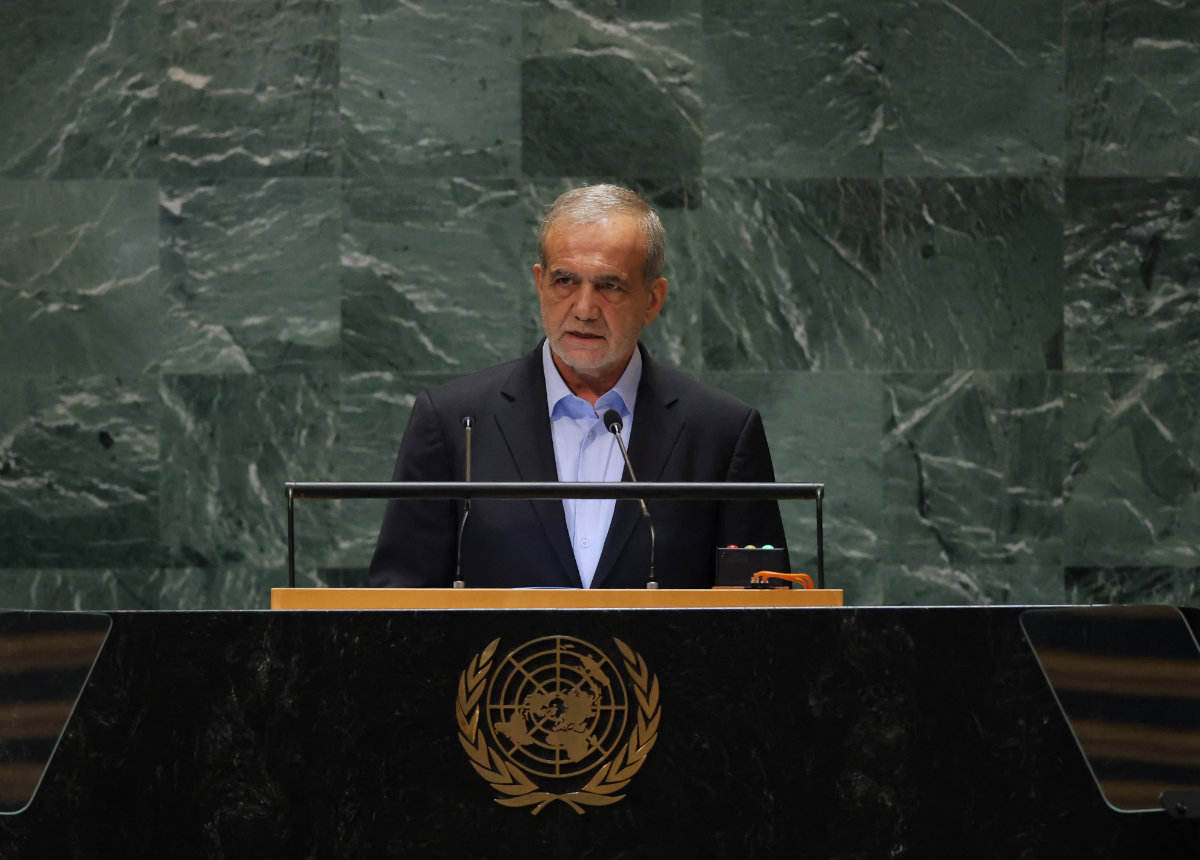
Iranian President Masoud Pezeshkian speaks during the 79th Session of the United Nations General Assembly in New York City on September 24, 2024. (AFP)
“He said, essentially, we should call a meeting of Islamic countries to condemn what Israel is doing. That’s not a particularly lethal response that you’d imagine, and very different from his predecessors.
“I had interviewed his predecessor, President Ebrahim Raisi, only a year ago, I think. And he had a very different, much more militant, much more hardline view, and would never have expressed openly the idea that Hezbollah didn’t actually have that lethal an arsenal. So there’s some shift in Iran that’s interesting.
“You never know how much power the president has but I think that what we are seeing both with Hezbollah and with Iran is that perhaps we have painted them to be 10 feet tall when they were really, you know, more like 5 feet tall.”
Throughout the crisis in Gaza, and now in Lebanon and between Israel and Iran, the Biden administration has been at pains to prevent a slide into all-out regional war, while also maintaining staunch support for Israel’s right to exist and to defend itself.
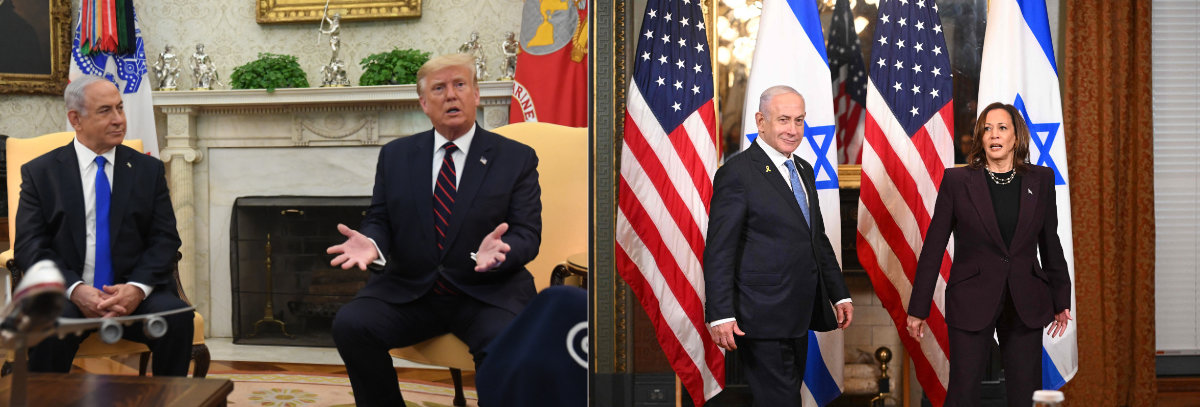
Fareed Zakaria said regardless of who between Donald Trump or Kamala Harris becomes the next US president, US influence on Israel will not have much bearing as regards Israel's conflict with the Palestinians. (AFP/File photos)
With Americans going to the polls in November to decide whether Vice President Harris or former President Trump will form the next administration, can the Middle East expect a meaningful change of course on support for Israel? Zakaria is not so sure.
“It’s going to be very hard for either of them to do it because Bibi Netanyahu knows one country almost as well as he knows Israel, and that is the US,” he said. “And he knows how to play the American political system to his advantage.”
So, who does Zakaria expect to win the election? And does he have a preferred candidate?
“Look, anyone who tells you they know who’s gonna win is, I think, wildly exaggerating their powers of wisdom. It is essentially a statistical tie … so it would be foolhardy for me to make a prediction about who’s gonna win. I try not to approach this with the idea that I’m rooting for a team, but I’ll tell you my central concern as somebody who focuses on international affairs.”
He added: “I’m not that partisan. If Trump came in and did some good things, I'd cheer him on. When he did, I cheered him on. So, I try to approach this from the perspective of somebody who is looking at the issues and not at the horse race and who I should bet on.”


