BEIRUT: A high-level Hezbollah source said on Saturday that contact with Hashem Safieddine, widely touted as potentially the group’s next leader, had been lost following Israeli strikes this week.
Responding to the AFP report, the group said in a statement that there were “no Hezbollah sources and our viewpoint is issued in official statements.” It did not confirm or deny whether contact with Safieddine was lost.
“Contact with Sayyed Safieddine has been lost since the violent strikes on Beirut’s southern suburbs” early on Friday, the official told AFP.
“We don’t know if he was at the targeted site, or who may have been there with him,” he added.
A second source close to Hezbollah also confirmed that communication had been cut off with Safieddine and that his whereabouts were unknown.
Hezbollah “is trying to reach the underground headquarters that were targeted, but every single time Israel starts striking again to impede rescue efforts,” he said.
Safieddine “was with Hezbollah’s head of intelligence,” known as Hajj Murtada, when the strikes took place, he said.
Both sources requested anonymity to discuss sensitive matters.
Early on Friday, a source close to Hezbollah said Israel had conducted 11 consecutive strikes on the group’s south Beirut stronghold, in one of the most powerful raids since Israel intensified its campaign of bombardment last week.
AFP footage showed giant balls of flame and thick smoke rising from the site that was attacked.
Israel’s military said it had hit “targets belonging to Hezbollah’s intelligence headquarters in Beirut.”
The attack came a week after the Israeli military said it killed Hezbollah leader Hassan Nasrallah in air strikes on the group’s headquarters in south Beirut.


Hezbollah source says contact ‘lost’ with top figure Safieddine

https://arab.news/pwhmm
Hezbollah source says contact ‘lost’ with top figure Safieddine

- “Contact with Sayyed Safieddine has been lost since the violent strikes on Beirut’s southern suburbs” early on Friday, the official told AFP
- “We don’t know if he was at the targeted site, or who may have been there with him“


Syria accuses Hezbollah of firing shells into its territory
- “The Syrian Arab Army will not tolerate any aggression targeting Syria,” the army said in a statement to SANA
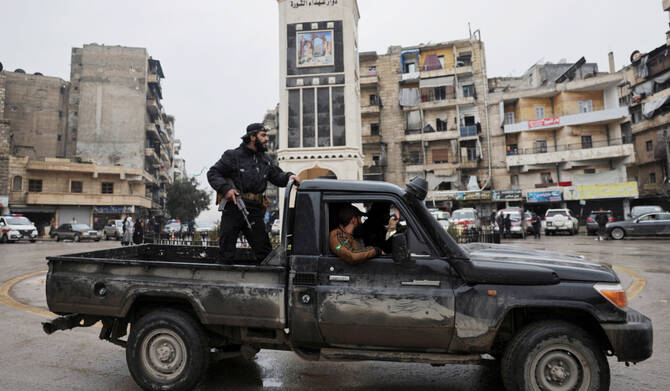
DAMASCUS: Syria said Iran-backed Hezbollah had fired artillery shells into its territory from Lebanon overnight, state media reported on Tuesday, amid the ongoing conflict between Israel and the Lebanese Shia movement.
Syrian army officials said artillery shells fired from Lebanon landed near the town of Serghaya, west of Damascus, the state news agency SANA reported on Tuesday.
The army accused Hezbollah of targeting Syrian army positions, telling the news agency it observed Hezbollah reinforcements at the Syrian-Lebanese border.
“The Syrian Arab Army will not tolerate any aggression targeting Syria,” the army said in a statement to SANA.
Lebanon was drawn into the Middle East war last week when Hezbollah attacked Israel in response to the killing of Iranian supreme leader Ayatollah Ali Khamenei during US-Israeli strikes.
Hezbollah and Israeli forces have clashed in eastern Lebanon in recent days, and Israel has carried out strikes across Lebanon, including on the capital Beirut.
Lebanese President Joseph Aoun accused Hezbollah of working to “collapse” the state, while the head of the group’s parliamentary bloc said it had “no other option... than the option of resistance.”
Hezbollah provided military support to former Syrian president Bashar Assad, who was overthrown in December 2024 by an Islamist coalition hostile to the pro-Iranian Shia movement.
Since then, its supply routes from Syria have been cut off, and Lebanese and Syrian authorities are trying to combat smuggling across the porous border between the two countries.