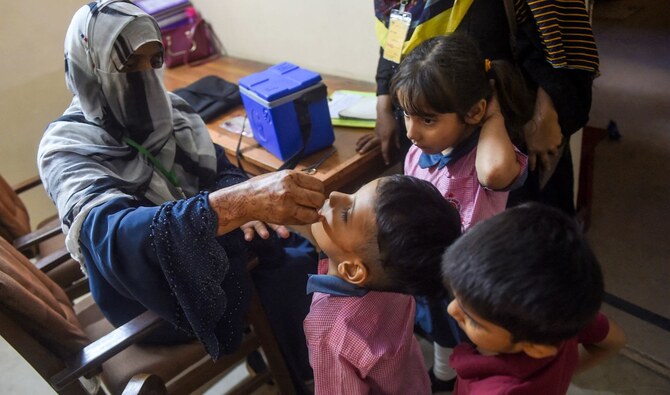
KARACHI: Pakistan’s fight against poliovirus suffered another setback on Tuesday as two new cases were reported in the southern Sindh province, the country’s polio program said, bringing the nationwide tally to 26 this year.
The latest cases, one in the Karachi East district and the other in Sujawal district, underscored the persistent threat posed by the poliovirus in Pakistan. The National Emergency Operations Center for Polio Eradication confirmed that the virus was found in environmental samples in both areas, indicating active circulation within communities.
Prime Minister’s Focal Person for Polio Eradication, Ayesha Raza Farooq, expressed deep concern over the continued threat to Pakistani children, emphasizing the importance of vaccination as the only effective way to protect them against polio, a disease that can cause irreversible paralysis.
“There is no cure for polio. Once a child is paralyzed, it is forever and irreversible,” she said in a statement, urging parents, caretakers, teachers, community elders and neighbors to understand the urgency of the situation and take immediate steps to get all children in their care immediately vaccinated.
“The decisions we take today are extremely critical to protect the future of our children.”
The South Asian country has reported 26 polio cases this year, including 15 from Balochistan, seven from Sindh, two from Khyber Pakhtunkhwa, and one each from Punjab and Islamabad.
Farooq said one child affected by polio means hundreds of children around them could be silent carriers of the virus.
“No child anywhere is safe until all children in Pakistan are repeatedly vaccinated for polio, building a wall of protection so the virus cannot break through,” she explained.
The Pakistan polio program said it was implementing a strategic roadmap to control virus spread and interrupt transmission by mid-2025.
As part of this roadmap, it said a mass vaccination campaign concluded last month that reached 33 million children in 115 districts of the country and a second vaccination drive is being planned from October 28.


![]()

Pakistan’s polio fight stumbles as two new cases surface
Short Url
https://arab.news/rfb7w
Pakistan’s polio fight stumbles as two new cases surface
- The fresh cases in Karachi and Sujawal in the southern Sindh province bring this year’s tally to 26
- Pakistan’s polio program says recent environmental samples show the virus is actively circulating
Latest updates



Recommended


© 2026 SAUDI RESEARCH & PUBLISHING COMPANY, All Rights Reserved And subject to Terms of Use Agreement.