ISLAMABAD: The government in Pakistan’s Punjab province has banned all public gatherings in Bahawalpur, Faisalabad and Mianwali cities, the Punjab home department said on Tuesday, following the announcement of protest rallies by jailed former prime minister Imran Khan’s party.
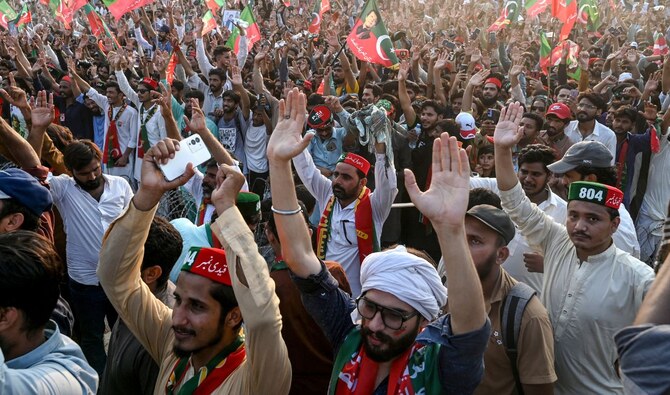
Khan’s Pakistan Tehreek-e-Insaf (PTI) is protesting the government’s proposed constitutional amendments that it says are being used to suppress the freedom of the judiciary, an allegation the government denies. The party has announced rallies in the three Punjab cities on Oct. 2. It also aims to build public pressure on the government for the release of Khan, who has been in jail on a slew of charges from treason to corruption.
In a notification issued on Tuesday, the Punjab home department said that in view of prevailing law and order situation and security threats, any political gathering or assembly could provide a soft target to militants and was likely to cause “threat to public peace and order as well as inconvenience to public at large.”
“Therefore, Government of the Punjab, in exercise of powers vested under Section 144 (6) of the Code of Criminal Procedure, 1898, hereby, prohibits all kinds of political assemblies, gatherings, sits-in, rallies, demonstrations, jalsas, protests & such like other activities in district Bahawalpur with effect from October 02 to 03,” the home department said.
Similar notifications were issued with regard to Faisalabad and Mianwali cities, local media reported. The Section 144 provision allows authorities to prohibit assembly of four or more people.
On Saturday, situation became tense in and around the garrison city of Rawalpindi as police fired tear gas shells to disperse hundreds of Khan supporters ahead of a protest in the city to demand Khan’s release.
The ex-PM has been in jail since August last year on multiple charges including corruption, sedition and terrorism. Khan says the cases against him are politically motivated to keep him and his party away from politics.
After a rally in Islamabad on Sept. 8, a number of PTI legislators were arrested on charges of violating an agreement on the basis of which permission for the rally was given, including abiding by a time limit and supporters sticking to certain routes to reach the designated venue for the rally on Islamabad’s outskirts.
Khan’s party says the challenges in holding rallies are part of an over year-long crackdown it has faced since protesters allegedly linked to the party attacked and damaged government and military installations on May 9, 2023, after the former premier’s brief arrest the same day in a land graft case.
Hundreds of PTI followers and leaders were arrested following the riots and many remain behind bars as they await trial. The military, which says Khan and his party were behind the attacks, has also initiated army court trials of at least 103 people accused of involvement in the violence.
Khan, who has been in jail since last August, was ousted from the PM’s office in 2022 in a parliamentary vote of no confidence after what is widely believed to be a falling out with Pakistan’s powerful military, which denies being involved in politics.


![]()

Punjab bans public gatherings as ex-PM Khan’s party announces rallies in three cities
Short Url
https://arab.news/2ybxr
Punjab bans public gatherings as ex-PM Khan’s party announces rallies in three cities
- Khan’s party is protesting the government’s proposed constitutional amendments that it says will suppress the judiciary’s freedom, an allegation the government denies
- Punjab home department says any political gathering or assembly could provide a soft target to militants in view of prevailing law and order situation and security threats
Latest updates


Recommended


© 2026 SAUDI RESEARCH & PUBLISHING COMPANY, All Rights Reserved And subject to Terms of Use Agreement.