

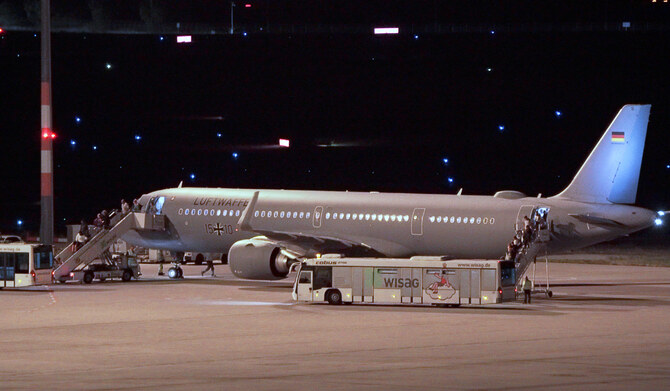

BERLIN: Germany on Monday flew out its Beirut embassy’s non-essential staff, their dependants and some of its citizens in Lebanon with medical conditions, officials said.
About 110 passengers were aboard the German air force A321 plane, including diplomats, other personnel and some citizens considered in a vulnerable condition.
The plane landed late Monday in the capital Berlin, the foreign ministry said.
The foreign and defense ministries earlier announced the special flight “to support the departure of the colleagues and their families” as well as staff of some German partner organizations from strife-torn Lebanon.
“German nationals who are particularly at risk due to medical circumstances are also being taken,” said the statement.
Israel has been bombing targets of the Iran-backed militant group Hezbollah in Beirut and eastern and southern Lebanon, in strikes that have killed hundreds and forced hundreds of thousands more to flee their homes.
The Beirut embassy remained operational to help the estimated 1,800 German citizens in the country.
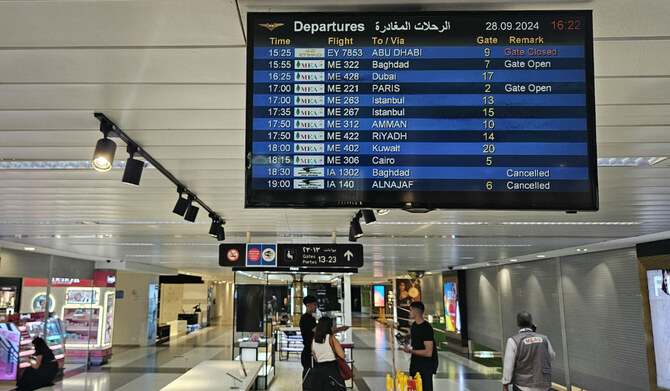
“The embassy continues to support the remaining Germans in Lebanon in their departure via commercial flights and other means,” the statement added.
At the weekend, Berlin raised its alert level for the missions in Beirut, Tel Aviv and Ramallah in the occupied West Bank.
A German government spokesman on Monday said that “we are currently at a stage where we support the departure (of citizens) but we are explicitly not in an evacuation scenario.”
The statement reiterated that “all Germans in Lebanon have been urged to leave the country since October 2023.”
Hezbollah began low-intensity cross-border strikes on Israeli troops a day after its Palestinian ally Hamas staged its unprecedented attack on Israel on October 7, triggering war in the Gaza Strip.
Israel said earlier this month it was shifting its focus from Gaza to securing its northern border with Lebanon, in order to allow Israelis displaced since October to return to their homes.
Hezbollah vowed on Monday to keep fighting Israel and said it was ready to face any ground operation into Lebanon, after its leader was killed in an air strike that dealt the group a seismic blow.


