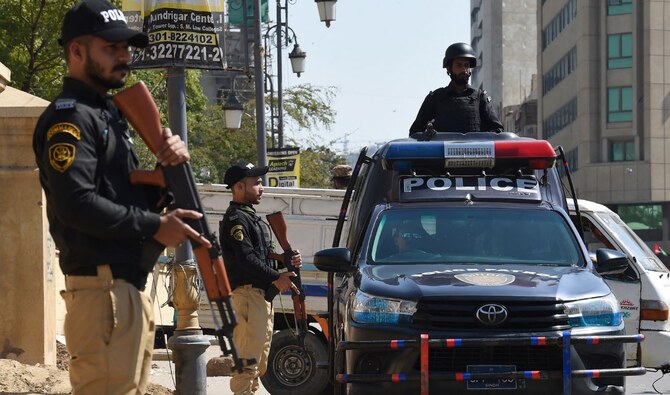

KARACHI: The government in Pakistan’s southern Sindh province on Monday requested the Federal Investigation Agency (FIA) to restrict 24 individuals, including 21 police officers and three clerics, from leaving the country, in a rare move in connection with the blasphemy murder of a doctor this month.
Dr. Shahnawaz Kanbhar, accused of sharing blasphemous content online, was arrested in Sindh’s Umerkot district, but he was shot dead in a purported shootout hours later on Sept. 19. Police said Dr. Kanbhar was killed when they asked two motorcyclists to stop, but one of the bikers opened fire on them. The law enforcers said it was only after the shooting that they learned the slain man was the doctor being sought by them for alleged blasphemy.
Dr. Kanbhar’s family disputed the police account, claiming he was murdered in custody. Hours after Dr. Kanbhar was fatally shot and his body was handed over to his relatives, a mob snatched it from Kanbhar’s father and burned it. The incident sparked rare protests in Sindh, at which people asked for justice for the slain doctor accused of blasphemy, which has rarely happened in Muslim-majority Pakistan. The widespread protests prompted the Sindh government to suspend a number of police and local administration officials.
Last week, the provincial government said the police had “orchestrated” the killing, marking the first time the government accused the law enforcers of doing what the doctor’s family and rights groups have described as an “extrajudicial killing.” Sindh Home Minister Zia-ul-Hassan Lanjar said a government probe concluded that Dr. Kanbhar was killed shortly after he gave himself up to authorities in what was a “fake encounter” by the police.
“I am directed to refer to the captioned subject and to request the intervention of FIA Sindh to prevent the accused nominated in subject FIR [first information report on Dr. Kanbhar’s murder] from leaving Pakistan,” a section officer of the Sindh home department said in a letter to the FIA, requesting the federal agency to put the individuals accused of the murder on the Exit Control List (ECL).
“In the light of above, I am directed to request that immediate measures may be taken to prevent the departure or fleeing of accused persons from the airport and other point of exit from the country.”
The official highlighted that the accused persons, including the Deputy Inspector General of the Police Javed Soonharo Jiskani, were facing “serious charges” pending an investigation.
Accusations of blasphemy — sometimes even just rumors — can spark riots and mob violence in Pakistan. Although killings of blasphemy suspects by mobs are common, extra-judicial killings by police are rare.
Dr. Kanbhar’s killing marks the second such incident this month. On Sept. 12, a police officer in the southwestern Balochistan province killed a blasphemy suspect in custody, highlighting the grave dangers faced by persons accused of blasphemy in Pakistan.
Human rights groups and civil society organizations have urged the Pakistani government to repeal the country’s blasphemy laws, which they argue contribute to discrimination and violence. They have also called for a comprehensive review of law enforcers’ response to blasphemy accusations.