

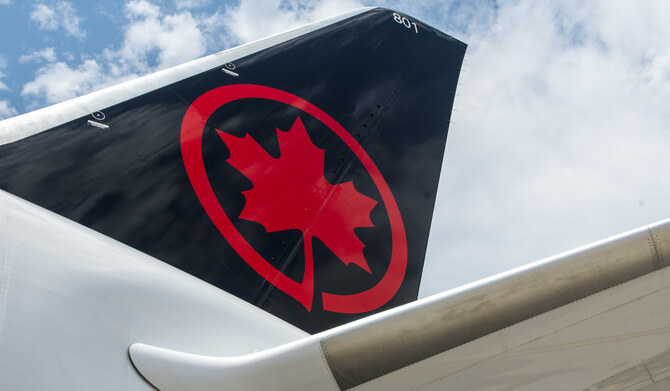
US fines Air Canada over flights over prohibited Iraqi airspace

Air Canada. (Twitter @AirCanada)
Short Url
Updated 28 September 2024
Follow

US fines Air Canada over flights over prohibited Iraqi airspace

  • Air Canada must pay $125,000 of the fine and owes another $125,000 if it violates the order again within a year.

WASHINGTON: The US Department of Transportation said Friday it had fined Air Canada $250,000 for operating flights in 2022 and 2023 in prohibited Iraqi airspace.
The agency had jurisdiction because those flights had United Airlines’ designator code. The violations occurred on numerous flights between the United Arab Emirates and Toronto in airspace that was prohibited by the Federal Aviation Administration to US operators.
Air Canada must pay $125,000 of the fine and owes another $125,000 if it violates the order again within a year. Air Canada stopped codesharing with United on the route in January 2023. Emirates was fined $1.5 million by the Transportation Department in June for operating flights carrying JetBlue Airways’ code over Iraqi airspace.


Bangladeshi politicians hold rallies as campaigning begins for first post-Hasina election

Updated 10 sec ago
Follow

Bangladeshi politicians hold rallies as campaigning begins for first post-Hasina election

  • Feb. 12 polls will decide on proposed political reforms, bring in new leadership
  • Nearly 128m of Bangladesh’s 170m population are eligible to vote

DHAKA: Bangladeshi politicians held election rallies across the country on Friday, as campaigning began for the hugely anticipated polls in February, the first since the 2024 uprising that ousted longtime Prime Minister Sheikh Hasina.

Bangladesh will hold general elections on Feb. 12, and the two main parties contesting it, the Bangladesh Nationalist Party and Bangladesh Jamaat-e-Islami, kicked off campaigning with tens of thousands of supporters on Thursday in the northern city of Sylhet and the capital Dhaka, respectively.

Nearly 128 million of Bangladesh’s 170 million population are eligible to vote in polls that will decide on proposed political reforms and bring in new leadership after prolonged political turmoil that followed Hasina’s ouster, reshaping domestic and regional dynamics.

“We want to build a Bangladesh that is free from corruption, terrorism and extortion. Our dream is to build a Bangladesh where the grassroot-level working class people also can live with their rights, the women can move freely, (and) the youths will get enough employment opportunities,” Jamaat’s spokesperson Ahsanul Mahboob Zubair told Arab News on Friday.

“We are expecting a beautiful and safe Bangladesh following the election next month. We want a free and fair election environment where people would be able to exercise their voting rights without any fear.”

After it was crushed during Hasina’s 15 years in power, Jamaat-e-Islami is leading a 10-party alliance that includes the National Citizen Party, formed by student leaders who spearheaded the uprising.

NCP’s Nahid Islam launched their campaign urging voters to “carry forward the progress of reform.”

Tarique Rahman, BNP chairman and son of the late former Prime Minister Khaleda Zia, is widely seen as a leading contender for prime minister. He has vowed to create jobs for “millions of unemployed youth” and support women’s economic independence.

More than 1,800 candidates are contesting for around 300 seats in the Bangladeshi parliament in the upcoming polls, which the country’s interim leader Muhammad Yunus said will be a benchmark for future votes.

“It will be a festive election. It will set the standard for good elections in the future. Let’s keep our fingers crossed,” Yunus said during a meeting with US Ambassador to Bangladesh Brent Christensen, his office said on Friday.

Yunus, the 85-year-old Nobel Peace Prize laureate who has led Bangladesh’s caretaker government since August 2024, will step down after the polls.

The 2024 mass uprising that forced Hasina to resign from office and flee to India began in early July as peaceful student demonstrations, triggered by the reinstatement of a quota system for the allocation of civil service positions.

Two weeks later, they were met with a communications blackout and a violent crackdown by security forces.

A special tribunal in Dhaka found Hasina guilty of allowing lethal force to be used against the protesters, at least 1,400 people of whom died, according to estimates from the UN’s Human Rights Office.

After a months-long trial, she was sentenced to death in absentia in November for crimes against humanity.

The Yunus-led administration has banned all activities of Hasina’s Awami League, meaning the former ruling party is prohibited from joining the race.

Bangladesh last held elections in January 2024, which saw Hasina return to office for a fourth consecutive term. That vote was boycotted by the country’s main opposition parties, which accused her administration of rigging the polls.

This time around, the start of election campaigns has brought an air of festivity across Bangladesh, as people find themselves brimming with hope for the future.

“Voters couldn’t exercise their voting rights for the last 17 years,” said Iqbal Hasan Mahmud Tuku, a seasoned BNP politician who is running to represent Sirajganj district.

“Naturally, people are very excited about voting in the next election. As the times have changed, people want to see change.”

Omor Fayaz Tamim, an anthropology student in Dhaka, is hoping to see a “sustainable and citizen-friendly” development in Bangladesh after the upcoming election.

“From witnessing systematic alienation from politics to being propelled into the fight for our rights in July, a (new) hope brews within (us) to be a part of a better Bangladesh,” he told Arab News.

This year marks a first for festivities surrounding the election for many Bangladeshis, especially the youth.

“I have never seen the festivities of the Bangladeshi election before because of the dummy elections arranged before. So, it’s definitely something new to our generation … I am optimistic about voting this year,” 24-year-old Ashraful Alam Khan told Arab News.

Malaika Nur, another student in the Bangladeshi capital, is hoping to see the festive energy continue until voting day.

“I hope the next government will restore peace and security for the people,” she said.

“It will ensure democracy and integrity in all sectors. It will make plans that benefit the nation. It will not oppress people who are just demanding rights.”