

Saudi Arabia advances COP16 plans with first meeting at UN General Assembly

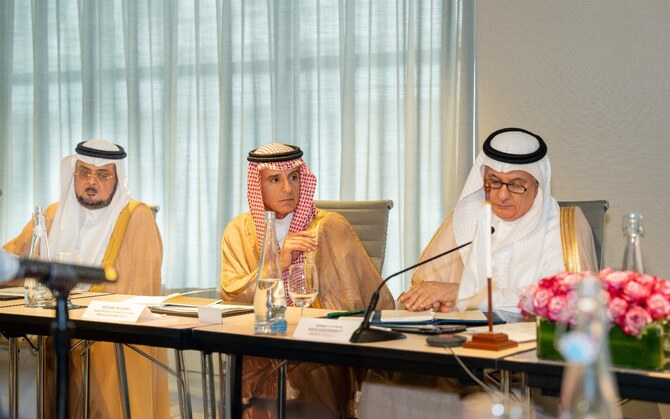
Scheduled for Dec. 2 to 13 at Boulevard Riyadh City, COP16 will feature a green zone aimed at fostering collaboration among public and private stakeholders. Photo/Supplied
Short Url
Updated 26 September 2024
Follow

Saudi Arabia advances COP16 plans with first meeting at UN General Assembly

JEDDAH: Saudi Arabia is ramping up its preparations for the UN Convention to Combat Desertification’s COP16, hosting its first Advisory Council meeting during the UN General Assembly in New York.  

The session was chaired by the Kingdom’s Minister of Environment, Water, and Agriculture Abdulrahman Abdulmohsen Al-Fadley. 

Scheduled for Dec. 2 to 13 at Boulevard Riyadh City, COP16 will feature a green zone aimed at fostering collaboration among public and private stakeholders. The gathering brought together experts and policymakers focused on combating land degradation, drought, and desertification. 

Saudi Arabia has launched several key initiatives, including the Saudi Green and Middle East Green Initiatives, aimed at enhancing the value of natural resources for economic and ecological sustainability.  

Announced by Crown Prince Mohammed bin Salman, these initiatives include plans to cut regional carbon emissions by 60 percent and plant 50 billion trees in what is set to become the world’s largest afforestation project. 

The initiatives also aim to increase protected land coverage to over 30 percent, surpassing the global target of 17 percent, while reducing global carbon emissions by more than 4 percent through renewable energy projects set to account for 50 percent of the Kingdom’s energy mix by 2030.  

During the meeting, council members highlighted the critical role of land in supporting both human and planetary health. They discussed strategies to raise awareness of the severe impacts of land degradation, desertification, and drought.  

Ibrahim Thiaw, executive secretary of the UN Convention to Combat Desertification, provided key insights to council members, including former presidents Tarja Halonen of Finland, Iván Duque Márquez of Colombia, and Carlos Alvarado Quesada of Costa Rica.  

Other notable participants included Chadian environmental activist Hindou Oumarou Ibrahim and Nasser Baker Al-Kahtani, executive director of the Arab Gulf Program for Development. 

Saudi Arabia’s delegation featured Adel Al-Jubeir, minister of state for foreign affairs and climate affairs envoy, and Osama Ibrahim Faqeeha, deputy minister of environment and adviser to the president of UNCCD COP16.  

The Riyadh event will be the first UNCCD COP to feature a green zone, offering a platform for the public, businesses, financial institutions, NGOs, media, and affected communities to collaborate on solutions to land degradation, desertification, and drought. 


Lebanese social entrepreneur Omar Itani recognized by Schwab Foundation

Updated 23 January 2026
Follow

Lebanese social entrepreneur Omar Itani recognized by Schwab Foundation

  • FabricAID co-founder among 21 global recipients recognized for social innovation

DAVOS: Lebanon’s Omar Itani is one of 21 recipients of the Social Entrepreneurs and Innovators of the Year Award by the Schwab Foundation for Social Entrepreneurship.

Itani is the co-founder of social enterprise FabricAID, which aims to “eradicate symptoms of poverty” by collecting and sanitizing secondhand clothing before placing items in stores in “extremely marginalized areas,” he told Arab News on the sidelines of the World Economic Forum in Davos, Switzerland.

With prices ranging from $0.25 to $4, the goal is for people to have a “dignified shopping experience” at affordable prices, he added.

FabricAID operates a network of clothing collection bins across key locations in Lebanon and Jordan, allowing people to donate pre-loved items. The garments are cleaned and sorted before being sold through the organization’s stores, while items that cannot be resold due to damage or heavy wear are repurposed for other uses, including corporate merchandise.

Since its launch, FabricAID has sold more than 1 million items, reached 200,000 beneficiaries and is preparing to expand into the Egyptian market.

Amid uncertainty in the Middle East, Itani advised young entrepreneurs to reframe challenges as opportunities.

“In Lebanon and the Arab world, we complain a lot,” he said. Understandably so, as “there are a lot of issues” in the region, resulting in people feeling frustrated and wanting to move away. But, he added, “a good portion of the challenges” facing the Middle East are “great economic and commercial opportunities.”

Over the past year, social innovators raised a combined $970 million in funding and secured a further $89 million in non-cash contributions, according to the Schwab Foundation’s recent report, “Built to Last: Social Innovation in Transition.”

This is particularly significant in an environment of geopolitical uncertainty and at a time when 82 percent report being affected by shrinking resources, triggering delays in program rollout (70 percent) and disruptions to scaling plans (72 percent).

Francois Bonnici, director of the Schwab Foundation for Social Entrepreneurship and a member of the World Economic Forum’s Executive Committee, said: “The next decade must move the models of social innovation decisively from the margins to the mainstream, transforming not only markets but mindsets.”

Award recipients take part in a structured three-year engagement with the Schwab Foundation, after which they join its global network as lifelong members. The program connects social entrepreneurs with international peers, collaborative initiatives, and capacity-building support aimed at strengthening and scaling their work.