

ADB projects Pakistan’s growth at 2.8%, stresses need for robust economic reform implementation

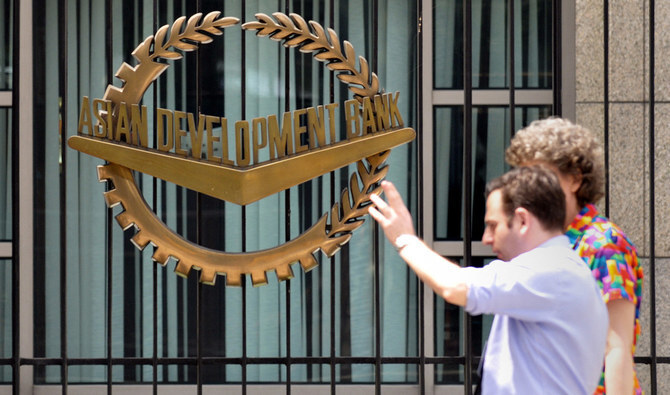
Staff members of the Asian Development Bank step out of the Manila-based lender's headquarters on February 17, 2009. (AFP/File)
Short Url
Updated 25 September 2024
Follow

ADB projects Pakistan’s growth at 2.8%, stresses need for robust economic reform implementation

  • The bank says a well-regulated monetary policy may keep inflation to about 15% in current fiscal year
  • It believes implementation of economic adjustment program is likely to support private investment

ISLAMABAD: The Asian Development Bank (ADB) said on Wednesday Pakistan’s economic growth witnessed a rebound in the last fiscal year to 2.4% and could surge up to 2.8% in the ongoing financial year, though any sustainable improvement was contingent on continued implementation of robust economic reforms.

According to the ADB’s Asian Development Outlook September 2024, an update to its flagship economic publication, Pakistan’s financial recovery was supported by higher domestic consumption from increased agriculture income and workers’ remittances.

It added that adhering to the country’s economic reform program would be critical to strengthening macroeconomic stability and the continued recovery of growth, though the downside risks remained.

“Pakistan’s economic prospects are closely tied to the steadfast and consistent implementation of policy reforms to stabilize the economy and rebuild fiscal and external buffers,” ADB Country Director for Pakistan Yong Ye said in a statement that also mentioned the projected improvement in the country’s gross domestic product.

“It is imperative that Pakistan continues to consolidate public finances, expand social spending and protection, reduce fiscal risks from state-owned enterprises, and improve the business environment to encourage growth led by the private sector,” he continued.

The ADB said the implementation of the economic adjustment program in the ongoing fiscal year was expected to support private investment that needed more favorable macroeconomic conditions, including easier access to foreign exchange, which would also benefit manufacturing and services.

However, it maintained agriculture was projected to remain slow.

The ADB also acknowledged the reduction in headline inflation that it attributed to a decline in food price inflation due to an increase in agricultural production.

It noted that a well-regulated monetary policy could keep inflation to about 15%.


Pakistan PM calls for faster CPEC implementation, pledges security for Chinese workers

Updated 27 February 2026
Follow

Pakistan PM calls for faster CPEC implementation, pledges security for Chinese workers

  • Shehbaz Sharif pushes expanded cooperation in agriculture, IT and mining under CPEC phase two
  • Chinese envoy reaffirms Beijing’s support for Pakistan’s sovereignty and economic development

ISLAMABAD: Prime Minister Shehbaz Sharif on Friday called for speeding up projects under the China-Pakistan Economic Corridor (CPEC) and pledged stronger security guarantees for Chinese workers and investments, during a meeting with China’s ambassador in Islamabad.

Sharif made the remarks as the two countries strive to launch the second phase of CPEC, a multibillion-dollar infrastructure and energy initiative launched in 2015 as part of China’s Belt and Road Initiative (BRI).

CPEC’s first phase focused largely on power generation and transport infrastructure aimed at easing Pakistan’s chronic energy shortages and improving connectivity. The second phase seeks to expand cooperation into industrial development, with an emphasis on special economic zones and export-oriented growth.

“While highlighting the importance of accelerating ongoing CPEC projects, the Prime Minister stressed on the need to enhance cooperation in agriculture and IT and mining & minerals,” said a statement circulated by the PM Office after the meeting.

“He also underscored Pakistan’s resolve to provide a secure and conducive environment for Chinese personnel, investments, and institutions in Pakistan,” it added.

Chinese nationals and projects in Pakistan have faced security threats in the past, including attacks by militant groups targeting infrastructure sites and convoys. Islamabad has repeatedly vowed to tighten security and has deployed special protection units for Chinese workers.

China is Pakistan’s closest ally in the region and a key economic partner, with CPEC widely regarded by Islamabad as central to long-term economic growth.

During the meeting, the prime minister conveyed greetings to Chinese President Xi Jinping and Premier Li Qiang, particularly on the occasion of the Chinese New Year.

China’s Ambassador to Pakistan, Jiang Zaidong, reiterated Beijing’s support for Pakistan’s sovereignty and socioeconomic development, according to the statement. Both sides also exchanged views on regional and international issues and agreed to maintain close coordination.