

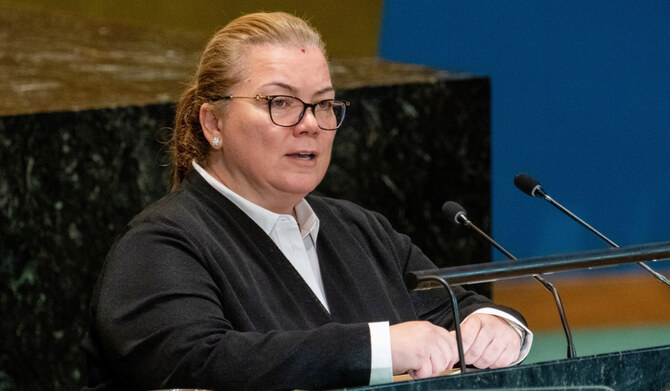

WASHINGTON: Jordan’s minister of planning and international development on Monday urged the international community to take cooperative action to tackle the critical challenges that threaten efforts to achieve the UN’s Sustainable Development Goals.
Zeina Toukan told the Summit of the Future at the UN headquarters in New York that the “clock is ticking” and nations must work together to ensure the goals are achieved by the target date, which is just six years away.
UN member states adopted the 2030 Agenda for Sustainable Development in 2015. It provides a shared blueprint for peace and prosperity for all peoples of the world through the achievement of 17 goals, including an end to poverty, improved public health and education, greater equality, and economic growth.
Toukan said global development will come through cooperation between countries, including the creation of an improved multilateral system through which all nations can achieve and benefit from development. Trust between nations is key to cooperation and the creation of such a system, she added.
To aid growth, the international community must do more to encourage innovation and creativity, Toukan said. She also called for the reform of the international financial system to make it more equitable, rather than one that hinders the economic growth of some nations.
Highlighting the important role of young people in the development of their nations, she said: “Youth deserves a better future: a future of justice, peace and opportunities.”
She added that the participation of young people in the public affairs of their nations, and internationally, is important for the well-being of the entire global system.
The international community must address the challenges of today to create a better tomorrow, Toukan said. She welcomed the adoption of a new “global digital compact,” which is part of the Pact for the Future, as a “milestone” that will help nations to provide better opportunities for their citizens by integrating the latest technology, including artificial intelligence, into their economies. The compact commits governments to upholding international law and human rights online, and taking concrete steps to ensure digital spaces are safe and secure.
Turning to the conflict in Gaza, Toukan denounced “Israel’s barbaric war on the Palestinian people” and called for it to end. She described the resultant crisis in the territory as a “human catastrophe” and a prime example of the plights that affect the most vulnerable peoples around the globe.
She said since the war between Israel and Hamas began on Oct. 7 last year, Israeli forces have killed more than 41,000 people in Gaza, the majority of whom were women and children.
“The vast destruction and forced displacement is a testament to the brutality of this war,” Toukan added. Israel “is creating a lost generation deprived of peace and hope” and facing “lost opportunity,” she said.
The only way forward in efforts to bring peace and stability in the region is the creation of a Palestinian state with East Jerusalem as its capital, Toukan added.
She urged the international community to avoid double standards, and to do more to help end the conflict and ensure adherence by all sides to international laws and UN resolutions.


