



PESHAWAR: A roadside bomb attack on a convoy of foreign diplomats in Pakistan’s northwestern Khyber Pakhtunkhwa province killed at least one policeman and injured three others on Sunday, a senior police officer said, amid a spike in militant violence in the restive region.
The blast targeted the convoy in Swat’s Malam Jabba, a popular tourist resort in northwestern Pakistan, according to Swat District Police Officer (DPO) Dr. Zahidullah Khan and the Pakistani foreign office.
An advance scout police vehicle was hit by the blast, which resulted in the killing of the policeman and injuries to three others. The group of foreign diplomats has returned safely to Islamabad.
Pakistan has seen a rise in militant attacks in recent weeks, with many of them taking place in KP that borders Afghanistan where Islamabad says groups like the outlawed Pakistani Taliban are hiding and from where they daily target police and security forces.
“It was an improvised explosive device (IED) blast targeting police escorting the foreign diplomats who were visiting different scenic spots in Swat, including religious sites,” DPO Khan told Arab News. “All the diplomats remained safe and returned from Malam Jabba valley.”
Pakistan’s foreign office said the foreign diplomats had returned to the Pakistani capital, extending sympathies to the families of the deceased and injured policemen.
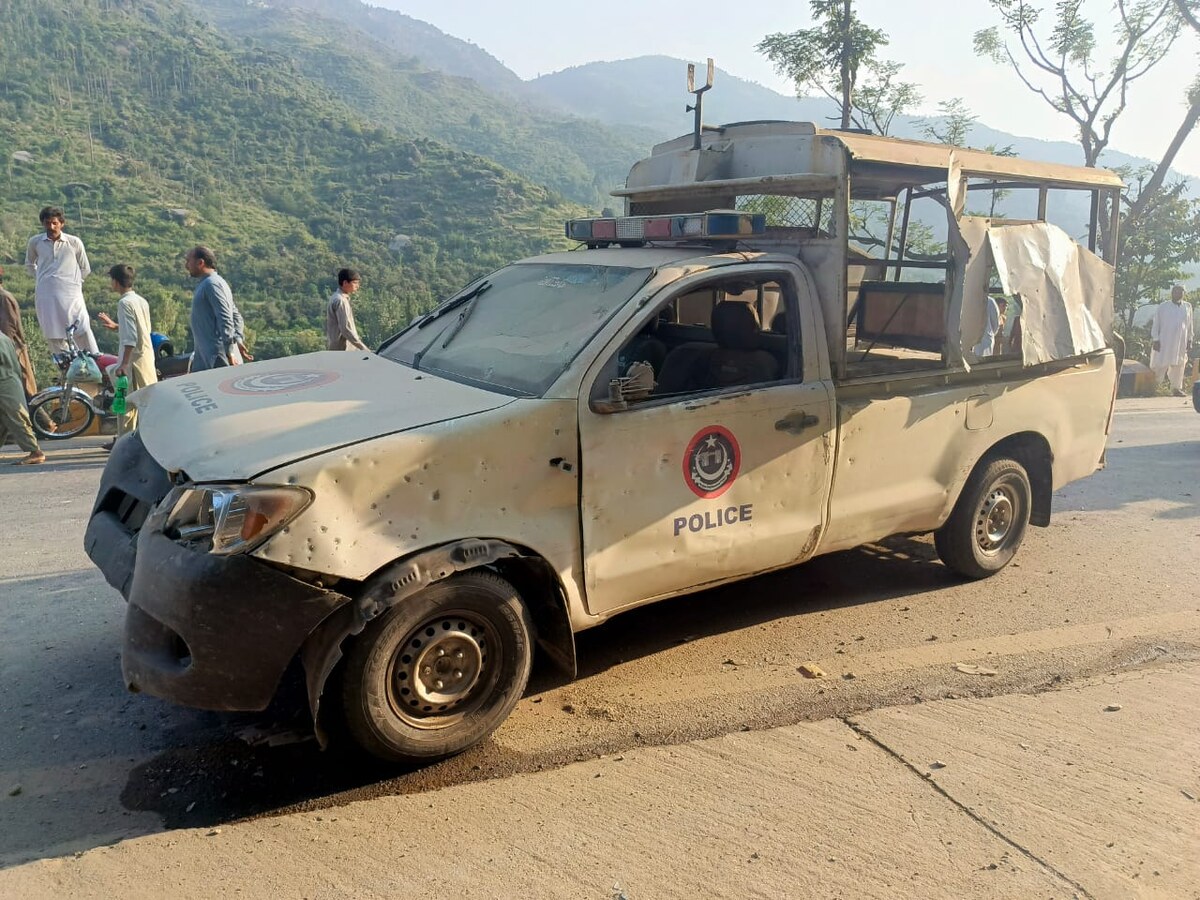
This photo shows a police vehicle, part of a convoy of foreign diplomats visiting Pakistan’s northwest, targeted in a roadside bombing at Malam Jabba in the Swat district of Khyber Pakhtunkhwa province on September 22, 2024. A Pakistan policeman was killed and three others injured after a roadside bomb hit a convoy of foreign diplomats in the northwest, police said on September 22. (Photo courtesy: Swat District administration)
“We honor our law enforcement authorities that remain steadfast in the face of terrorists,” it said in a statement. “Such acts will not deter Pakistan from its commitment toward the fight against terrorism.”
Asked about the countries to which the diplomats belonged, Swat Deputy Commissioner Shehzad Mehboob said it was premature to share all the information at the moment.
“We are in the process of confirming their countries of origin, but mainly they are from Central Asian and European countries,” he told Arab News.
KP Chief Minister Ali Amin Gandapur condemned the attack and expressed sorrow over the killing of a police officer in its wake, according to his office.
“The chief minister has directed senior police officers to investigate the matter and compile a detailed report into the incident,” Gandapur’s office said.
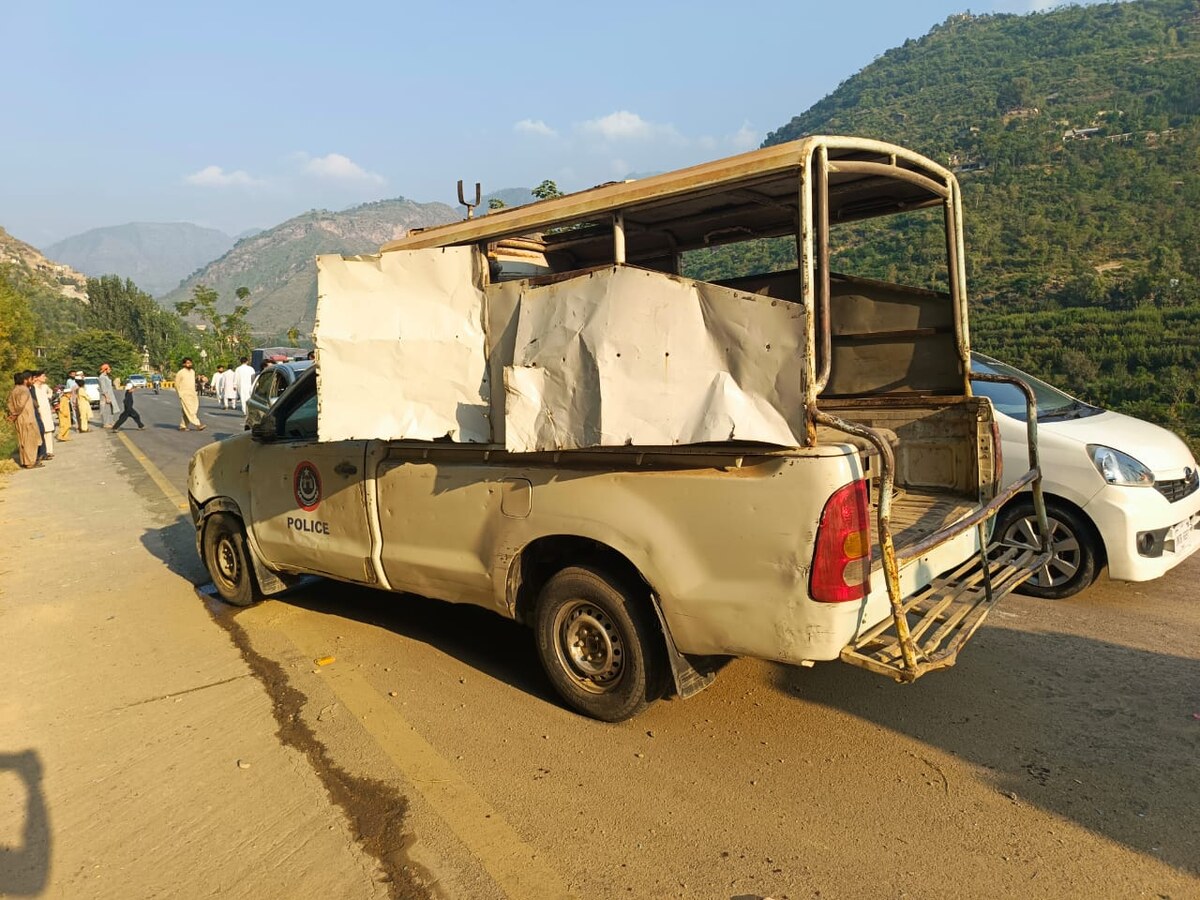
This photo shows a police vehicle, part of a convoy of foreign diplomats visiting Pakistan’s northwest, targeted in a roadside bombing at Malam Jabba in the Swat district of Khyber Pakhtunkhwa province on September 22, 2024. A Pakistan policeman was killed and three others injured after a roadside bomb hit a convoy of foreign diplomats in the northwest, police said on September 22. (Photo courtesy: Swat District administration)
Swat, known for its picturesque landscape and historic religious sites, hosts thousands of local and foreign tourists each year.
In 2007, the Pakistani Taliban seized partial control of the district before being ousted two years later in a major military operation. During this time, the militants had unleashed a reign of terror, killing and beheading politicians, singers, soldiers and opponents. They had banned woman education and destroyed nearly 200 schools for girls.
KP, which borders Afghanistan, has witnessed numerous attacks on police, security forces and anti-polio vaccination teams along with kidnappings of civil and military officials in recent months.
Earlier this week, militants opened fire on a security post in KP’s South Waziristan district and killed at least six Pakistani soldiers, the military said.
No group has claimed responsibility for the attacks, including the one on Sunday, but officials in Islamabad say militants associated with the Pakistani Taliban are primarily responsible for violence in the region. Islamabad has even blamed Kabul’s Afghan Taliban rulers for “facilitating” anti-Pakistan militants, a charge Kabul denies.


