
BEIRUT/JERUSALEM: Israel bombed southern Lebanon on Thursday and said it had thwarted an Iranian-led assassination plot after explosions in booby-trapped radios and pagers in the past two days caused bloody havoc in the ranks of its arch-foe Hezbollah.
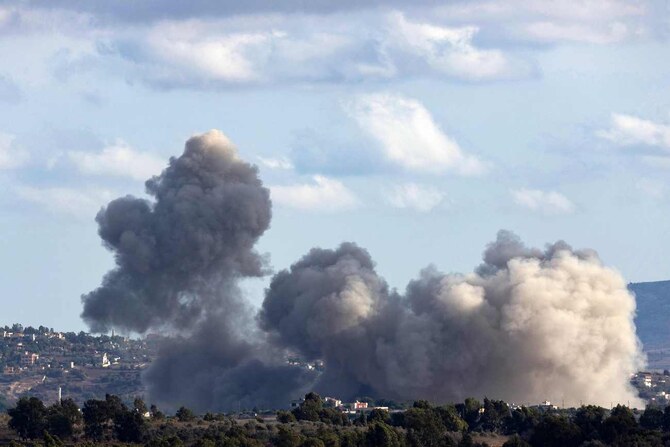
Air strikes hit “hundreds of rocket launcher barrels” ready to be fired toward Israel as well as “approximately 100 launchers and additional terrorist infrastructure sites,” the Israeli army said in a statement.
The attacks on Hezbollah’s communications equipment killed 37 people and wounded around 3,000, raising fears that a full-blown war was imminent. The action also sowed disarray across Lebanon as panicked residents abandoned their mobile phones.
“This isn’t a small matter, it’s war. Who can even secure their phone now? When I heard about what happened yesterday, I left my phone on my motorcycle and walked away,” said Mustafa Sibal on a street in Beirut.
Israel has neither confirmed nor denied being behind the attacks but multiple security sources have said they were carried out by its spy agency Mossad.
The Lebanese army said on Thursday it was blowing up pagers and suspicious telecom devices in controlled blasts in different areas. It called on citizens to report any suspicious devices.
Lebanese authorities banned walkie-talkies and pagers from being taken on flights from Beirut airport until further notice, the National News Agency reported. Such devices were also banned from being shipped by air.
In Beirut on Thursday, a distant roar in the skies could be heard from what state media said was Israeli warplanes breaking the sound barrier — a noise that has become common in recent months.
Hezbollah fired missiles at Israel on the day after the Oct. 7 cross-border attack by the Palestinian militant group Hamas which triggered the Gaza war, and since then constant exchanges of fire have occurred, although neither side has allowed this to escalate into a full-scale war.
Israel said its warplanes struck villages in southern Lebanon overnight, and a security source and Hezbollah’s Al-Manar TV reported airstrikes near the border began again on Thursday just after midday.
Hand-held radios used by Hezbollah detonated on Wednesday across Lebanon’s south.
The previous day, hundreds of pagers — used by Hezbollah to evade mobile phone surveillance — exploded at once, killing 12 people including two children, and injuring more than 2,300.
Lebanese Prime Minister Najib Mikati called on the United Nations Security Council to take a firm stand to stop what he called Israel’s “aggression” and “technological war” against his country.
Israel says its conflict with Hezbollah, like its war in Gaza against Hamas, is part of a wider regional confrontation with Iran, which sponsors both groups as well as armed movements in Syria, Yemen and Iraq.
Assassination plot
Also on Thursday, Israeli security forces said that an Israeli businessman had been arrested last month after attending at least two meetings in Iran where he discussed assassinating Prime Minister Benjamin Netanyahu, the defense minister or the head of the Shin Bet spy agency.
Last week, Shin Bet uncovered what it said was a plot by Hezbollah to assassinate former Defense Minister Moshe Ya’alon.
Israel has been accused of assassinations including a blast in Tehran that killed the leader of Hamas and another in a Beirut suburb that killed a senior Hezbollah commander within hours of each other in July.
Despite the events of the past few days, a spokesperson for the UN peacekeeping mission in southern Lebanon said the situation along the frontier had “not changed much in terms of exchanges of fire between the parties.”
“There was an intensification last week. This week it is more or less the same. There are still exchanges of fire. It is still worrying, still concerning, and the rhetoric is high,” the spokesperson, Andrea Tenenti, said.
Tens of thousands of people have had to flee the Israel-Lebanon border area on both sides since the hostilities began in October.
Shifting focus
The Israeli military said its overnight air strikes hit Hezbollah targets in Chihine, Tayibe, Blida, Meiss El Jabal, Aitaroun and Kfarkela in southern Lebanon, as well as a Hezbollah weapons storage facility in the area of Khiam.
On Wednesday, Israeli Defense Minister Yoav Gallant said the war was moving into a new phase, with more resources and military units being shifted to the northern border.
According to Israeli officials, the forces being deployed there include the 98th Division, an elite formation including commando and paratrooper elements that has been fighting in Gaza.