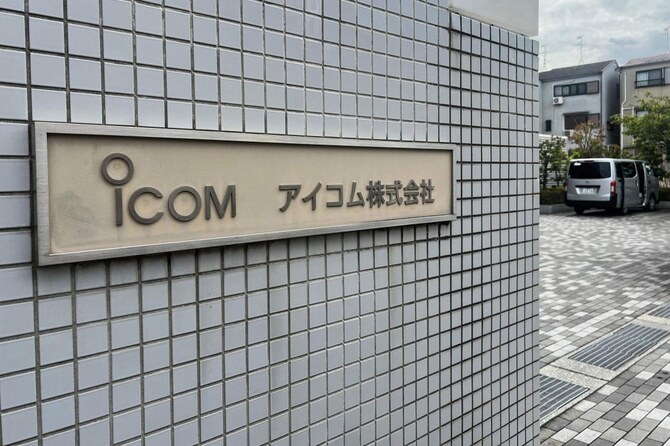
Tokyo: Japanese firm Icom said Thursday that it had stopped producing the model of radios reportedly used in recent blasts in Lebanon around 10 years ago.
“The IC-V82 is a handheld radio that was produced and exported, including to the Middle East, from 2004 to October 2014. It was discontinued about 10 years ago, and since then, it has not been shipped from our company,” Icom said in a statement.
“The production of the batteries needed to operate the main unit has also been discontinued, and a hologram seal to distinguish counterfeit products was not attached, so it is not possible to confirm whether the product shipped from our company,” it said.
It added that products for overseas markets are sold exclusively through its authorized distributors, and that its export program is based on Japanese security trade control regulations.
“All of our radios are manufactured at our production subsidiary, Wakayama Icom Inc., in Wakayama Prefecture, under a strict management system... so no parts other than those specified by our company are used in a product. In addition, all of our radios are manufactured at the same factory, and we do not manufacture them overseas,” the statement said.
In the second wave of device explosions in as many days, 20 people died and more than 450 were wounded on Wednesday in Hezbollah strongholds in Lebanon, officials said.
A source close to Hezbollah said walkie-talkies used by its members blew up in its Beirut stronghold, with state media reporting similar blasts in south and east Lebanon.
They came a day after the simultaneous explosion of hundreds of paging devices used by Hezbollah killed 12 people, including two children, and wounded up to 2,800 others across Lebanon, in an unprecedented attack blamed on Israel.
There was no comment from Israel. The White House warned all sides against “an escalation of any kind.”


Japan firm says no longer makes radio reportedly used in Lebanon blasts
https://arab.news/gvv2r
Japan firm says no longer makes radio reportedly used in Lebanon blasts

- The IC-V82 is a handheld radio produced and exported in Japan from 2004 to October 2014


Paris conference to support Lebanese army postponed amid regional escalation
- Hezbollah holds protests to mourn Khamenei, but avoids calls for retaliation
BEIRUT: A planned international conference in Paris to support the Lebanese Armed Forces has been postponed amid escalating regional tensions following the latest US-Israeli-Iranian confrontation, Lebanese officials confirmed on Sunday.
Arab News has learned that French President Emmanuel Macron is expected to formally notify Lebanese President Joseph Aoun that the conference, originally scheduled for Thursday, cannot proceed because of the rapidly deteriorating security situation in the region, shifting international priorities, and disruptions to air travel affecting participants’ attendance.
France had planned to host the March 5 fundraising conference to mobilize international financial and logistical support for the Lebanese army, which continues to grapple with severe funding shortages during Lebanon’s prolonged economic crisis.
The army has been tasked since August with consolidating weapons under exclusive state control, a mission that has grown complex as operations expand north of the Litani River, a vast and densely populated area requiring significant manpower and equipment.
Lebanon committed to advancing disarmament efforts under the Nov. 2024 ceasefire agreement with Israel, with the army announcing the completion of the first phase in January.
Army commander Gen. Rodolphe Haykal last month briefed the Cabinet that the next phase aims to confiscate illegal weapons, including those belonging to Hezbollah and Palestinian factions, between the Litani and Awali rivers over a period of four to eight months.
Hezbollah mobilizes supporters
Against this backdrop, Hezbollah called for rallies on Sunday to mourn Iran’s Supreme Leader Ali Khamenei, who was killed in Israeli strikes on Iran a day earlier.
Thousands of Hezbollah supporters dressed in black gathered in Beirut’s southern suburbs and in villages across southern Lebanon, waving Iranian and Hezbollah flags. The demonstrations dispersed in less than an hour and were marked by an absence of speeches or overt calls for escalation.
In a statement mourning Khamenei, Hezbollah Secretary-General Sheikh Naim Qassem condemned what he described as “American and Israeli tyrants,” but avoided any direct call for retaliation against Israel.
Security measures were heightened in the capital ahead of the gatherings, with the Lebanese army reinforcing deployments around Beirut’s southern suburbs and along roads leading to predominantly Christian areas to prevent any unrest.
The Supreme Defense Council convened under President Joseph Aoun hours after Iran confirmed Khamenei’s death and following Iranian missile strikes targeting Gulf states hosting US bases.
Aoun expressed “fraternal solidarity” with Arab states and condemned attacks on civilians and infrastructure. He reaffirmed Lebanon’s official position that the decision of war and peace rests solely with the Lebanese state and its constitutional institutions — a stance reflected in both his presidential oath and the government’s ministerial statement.
Prime Minister Nawaf Salam stressed the need to safeguard Lebanon’s internal stability, urging that the interests of the Lebanese people take precedence and calling for strict control of the security situation in the south and east.
In a precautionary measure, the Lebanese army also announced the suspension of all drone photography permits nationwide effective March 1 until further notice.
Despite mounting regional tensions, Lebanese officials have repeatedly emphasized their determination to prevent the country from being drawn into a broader confrontation.


