

Pakistani IT experts call for joint AI ventures with Saudi firms in smart cities, healthcare

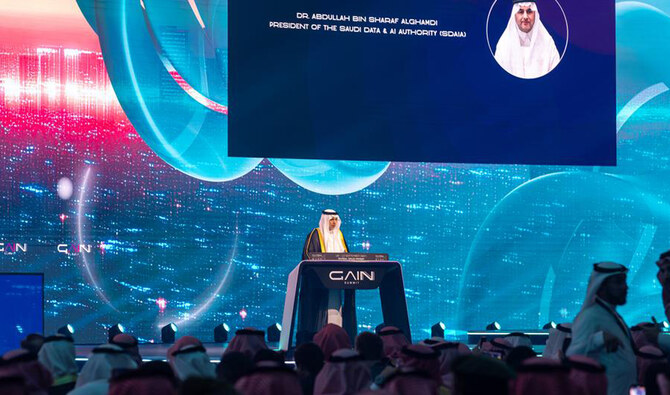
Dr. Abdullah bin Sharaf Alghamdi, president of the Saudi Data and AI Authority, speaks during the opening session of Global AI Summit in Riyadh on September 10, 2024. (Photo courtesy: China Xinhua News)
Short Url
Updated 16 September 2024
Follow

Pakistani IT experts call for joint AI ventures with Saudi firms in smart cities, healthcare

  • The Pakistani IT experts participated in the Global AI Summit in Riyadh this week, which covered key topics in AI
  • Pakistan has vast untapped talent pool, while Saudi Arabia has access to global enterprises and funds, they note

ISLAMABAD: Pakistani information technology (IT) professionals, who participated in the Global Artificial Intelligence (AI) summit in Riyadh this week, have urged local IT firms to seize opportunities in Saudi Arabia through joint ventures, highlighting a significant potential in smart city projects and the AI-driven healthcare sector in the Kingdom.
The third edition of the summit, which took place in Riyadh on September 10-12, covered important topics in the field of AI, including innovation and industry trends, to shape a brighter future and cultivate an enabling environment for technology experts.
Four distinguished Pakistani IT experts participated as thought leaders in this year’s summit, according to the Pakistani mission in Riyadh. It came at a time when Pakistan is making efforts to boost its exports, particularly in the field of IT, and attract foreign investment to cut its reliance on foreign debt to support its $350 billion economy.
“Pakistani companies have strong potential to collaborate through joint ventures in Saudi Arabia, particularly in AI-driven sectors like smart city projects and healthcare,” Tariq Khan, vice president of AI practice at Pakistan’s Visionet and Systems Group who contributed to a session, namely “Transforming Healthcare: AI’s Role in Strengthening Supply Chains,” at the summit, told Arab News over the phone from Riyadh.
“With expertise in electronics, Internet of things (IoT) and AI, Pakistan can contribute to the growing need for automation, especially as Saudi Arabia transitions its healthcare system to insurance-based models, which require extensive AI-powered documentation.”
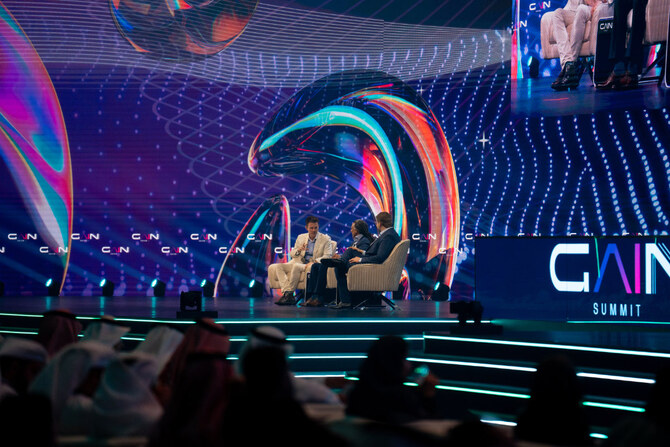


Participants attend the Global AI Summit in Riyadh on September 12, 2024. (AN Photo by Abdulrahman Bin Shalhoub)

After participating in the summit, Khan said, he gained valuable insights into the real potential of AI in the Saudi market and identified opportunities for his organization, which uses AI for diagnostic planning, discovering new biomarkers and drug discovery in the US pharmaceutical industry.
He said his experience was “excellent” as the event was well-organized with a diverse audience, and a focus on addressing various business types and concerns related to AI.
“There were discussions on responsible AI, the role of humans in AI systems, and human-AI interaction,” Khan added.
Additionally, he said, specialized talks at the summit addressed the transformation of healthcare through AI, the importance of health equity and how regulatory bodies could facilitate smooth integration of AI in different countries.
Khan emphasized that Saudi Arabia had a “lot of potential” as the government was investing a lot in AI.
“They are making different bodies to influence AI development, foreign companies and government bodies are also encouraged to work on joint AI initiatives,” he said, adding the Kingdom would be one of the world’s leading AI and technology hubs in the near future.
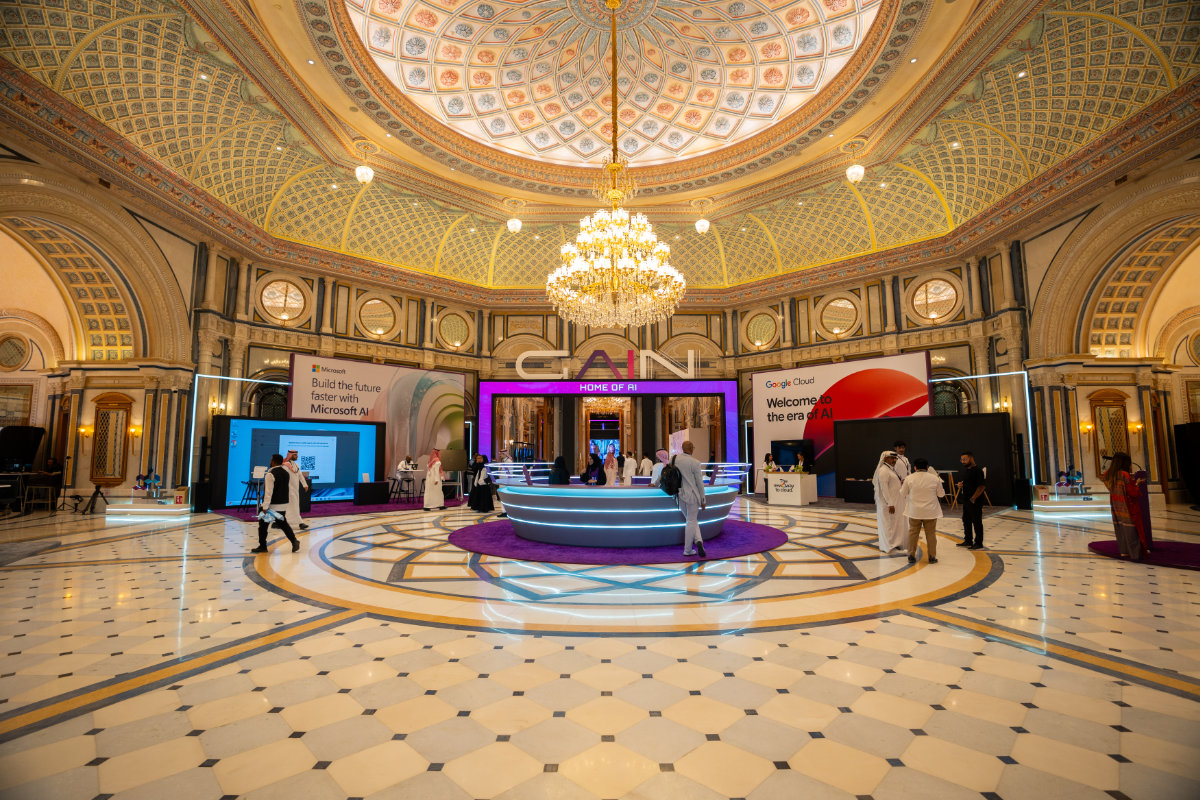


Participants attend the Global AI Summit in Riyadh on September 12, 2024. (AN Photo by Abdulrahman Bin Shalhoub)

Muhammad Haziq, chief executive officer of Pakistani IT solutions provider Grayphite, shared his thoughts in a session, titled “Delivering on the Innovation Promise of Startups.”
He said the summit had given them a chance to represent Pakistan, enhance collaboration between regional businesses and find potential growth opportunities in a new market.
“The potential of Saudi Arabia in AI, especially the way they are investing in this area, is amazing and they have set a global stage for discussion on AI,” Haziq told Arab News.
Both brotherly Muslim countries have a “huge common ground,” according to Haziq. Pakistan has a vast untapped tech talent pool, while Saudi Arabia has access to a lot of global enterprises and funds.
“Collaboration between the two countries, both at private and public levels, can foster the growth mindset among them,” he said.
The Pakistani embassy in Riyadh said the summit brought together visionary experts, academics, corporate leaders and policymakers from around the world to collaboratively shape the future of AI for the benefit of humanity.
“This event provided an excellent opportunity for networking and further strengthening collaborations between Pakistan and the international AI community,” it added.



Visitors attend the Global AI Summit in Riyadh on September 12, 2024. (AN Photo by Abdulrahman Bin Shalhoub)


Dozens killed as security forces repulse separatist attacks in Pakistan’s Balochistan

Updated 4 sec ago
Follow

Dozens killed as security forces repulse separatist attacks in Pakistan’s Balochistan

  • The attacks unfolded early Saturday when outlawed Baloch Liberation Army members attacked several cities in the restive region
  • Security official says 37 militants, 10 security personnel killed in skirmishes that revived memories of similar attack in 2024

QUETTA/ISLAMABAD: Dozens of militants and security personnel and policemen were killed as Pakistani security forces repulsed coordinated attacks by separatist militants in the southwestern Balochistan province, officials said on Saturday, in the latest incident of violence in the insurgency-hit region.

Separatist militants, affiliated with the Balochistan Liberation Army (BLA), launched “coordinated” attacks in several cities of Balochistan early Saturday, according to a senior police official, who requested anonymity.

The attacks in the provincial capital of Quetta began at around 6am with a powerful explosion, followed by intense gunfire that lasted for two hours along with multiple explosions. Residents of Dalbandin and Nuhski said they heard explosions and gunfire, while similar attacks were launched in Mastung, Gwadar, Pasni and Turbat.

A security official said Pakistani forces had repulsed the attacks and killed 37 “Indian-backed militants,” who were in continuous contact with “their handlers in Afghanistan.” Islamabad has frequently blamed such attacks on India and Afghanistan, an allegation consistently denied by Kabul and New Delhi.

“The terrorists of Fitna Al-Hindustan (Indian-backed Baloch separatist groups) launched coordinated attacks this morning at more than 12 locations, including Quetta, Noshki, Dalbandin, Pasni, and Gwadar,” the security official said.

“In these attacks, 37 terrorists have been eliminated. Throughout the operation, the terrorists were reportedly in continuous contact with their handlers in Afghanistan. Ten security personnel were martyred while few others were injured.”

Security personnel shift an injured man at a hospital in Quetta on January 31, 2026, following an attack by Baloch separatists. Ethnic Baloch separatists launched "coordinated" attacks across Pakistan's Balochistan province on January 31, killing at least four policemen, officials said, the latest violence in insurgency-hit southwest region. (AFP)

A senior official at the Civil Hospital in Quetta told Arab News they had received 15 bodies, including nine policemen.

“Eight injured with bullet wounds were brought to the hospital,” said the official, who spoke on condition of anonymity. “Five of them were later shifted to the Combined Military Hospital (CMH) Quetta.”

Balochistan, which borders Iran and Afghanistan, is the site of a decades-long insurgency waged by Baloch separatist groups who often attack security forces and foreigners, and kidnap government officials.

Shahid Rind, the Balochistan chief minister’s aide for media and political affairs, said police and paramilitary Frontier Corps (FC) had foiled the attacks and were chasing the assailants.

“After the killing of more than 70 terrorists at different places in Balochistan in the last two days, terrorists have attempted to attack at a few places in Balochistan, which have been foiled by timely action by the police and FC,” he said on X.

“At present, the pursuit of the fleeing terrorists is underway. More details will be revealed very soon.”

Family members mourn the death of a relative killed in an attack by Baloch separatists, at a hospital in Quetta on January 31, 2026. Ethnic Baloch separatists launched "coordinated" attacks across Pakistan's Balochistan province on January 31, killing at least four policemen, officials said, the latest violence in insurgency-hit southwest region. (AFP)

In a statement issued on Saturday, BLA said the group had launched ‘Operation Herof 2.0,’ which included a series of attacks in multiple cities of Balochistan.

Saturday’s attacks follow coordinated attacks carried out by the group in Aug. 2024 in various districts of Balochistan which killed dozens of people.

The separatists accuse the central government of stealing the region’s resources to fund development elsewhere in the country. The Pakistani government denies the allegations and says it is working for the uplift of local communities in Balochistan.

Pakistan Railways suspended train service from Balochistan to other parts of the country for a day, following Saturday’s attacks.

“Quetta-Peshawar bound Jaffar Express, and Quetta-Chaman passenger trains have been canceled due to the prevailing security situation in Balochistan,” Muhammad Kashif, the railways controller in Quetta division, told Arab News.