


JEDDAH: Saudi budget airline flynas has made a significant foray into the sports sector with its latest move: a sponsorship deal with Al-Hilal Club Co.
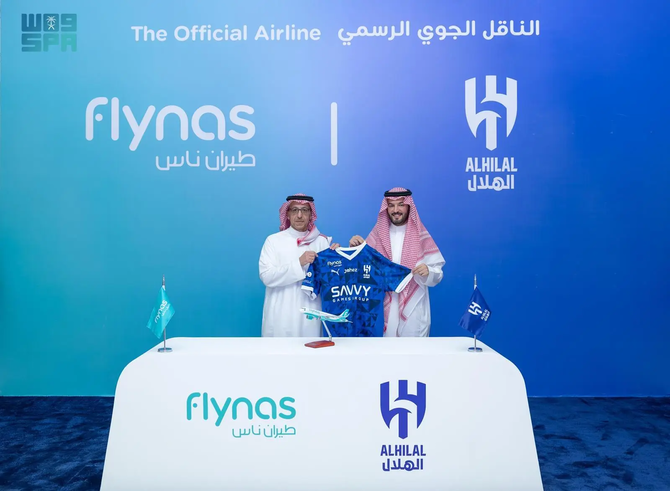
This agreement, marking flynas’ debut in sports sponsorship, designates the airline as the official air carrier for the prestigious football club.
The partnership, which extends over four seasons through the 2027-2028 period, includes a range of high-profile elements.
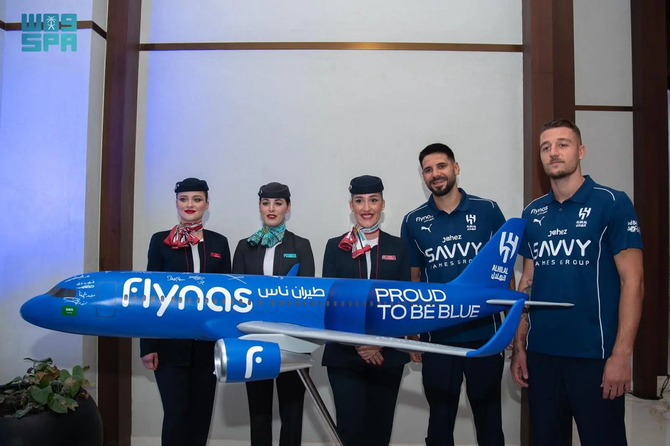
In a show of commitment, flynas will dedicate an aircraft emblazoned with Al-Hilal’s logo, ensuring that the team’s branding is visible in the skies. Additionally, the airline’s logo will feature prominently on the players’ jerseys, cementing its role as an official partner. Beyond these visual endorsements, flynas will gain a suite of commercial rights both on and off the field.
This sponsorship aligns with Saudi Vision 2030, an initiative aimed at using the sports sector to drive economic growth and tourism. Through this partnership, flynas is not only elevating its brand presence but also supporting the broader objectives of national development.
Bander Al-Mohanna, CEO of flynas, said that Al-Hilal Club’s impressive achievements both locally and globally align perfectly with the airline’s growth and expansion strategy.
He highlighted that Saudi Arabia has become a prominent global destination for sports, championships, and competitions. Al-Mohanna noted that this sponsorship reflects flynas’ commitment to enhancing the sports industry and contributing to the country’s economic growth and tourism sector.
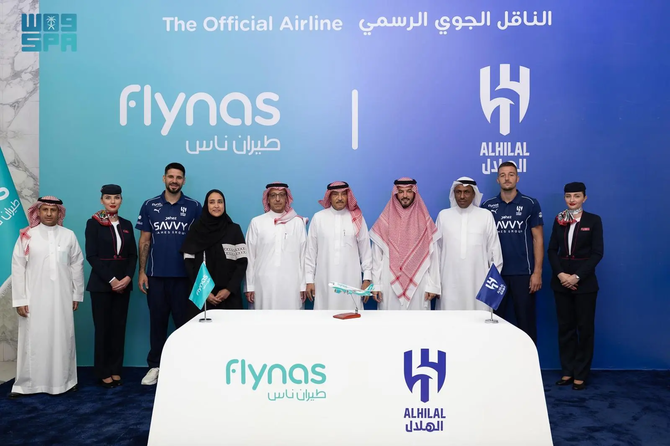
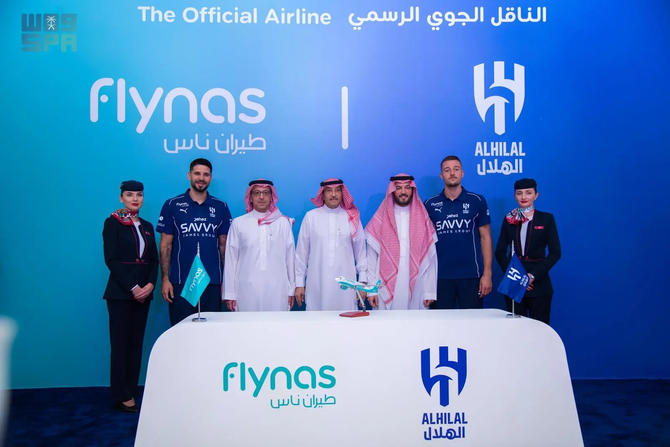
The agreement was formalized at the Kingdom Arena in Riyadh, the home stadium of Al-Hilal, where Al-Mohanna and Fahad bin Saad bin Nafel, chairman of Al-Hilal Club Co., signed the contract. The ceremony was attended by Ayed Al-Jeaid, chairman of flynas, and other senior executives from both organizations, as reported by the Saudi Press Agency.
Al-Mohanna emphasized that this partnership underscores flynas’ dedication to improving the sports sector while providing extensive services and products that cater to the aspirations of their guests. This strategic move not only boosts flynas' brand visibility but also aligns with Saudi Vision 2030, which aims to use the sports sector as a catalyst for economic and tourism growth.
Al-Hilal Club chairman expressed his excitement about securing the exclusive partnership with flynas, describing it as a major milestone and one of the most significant collaborations recently achieved by Al-Hilal.
Bin Nafel said that this partnership represents a successful integration of the economic and sports sectors, which will play a crucial role in advancing the goals of Vision 2030.
He also mentioned that the collaboration would see the integration of the club’s Blue Store and flynas’ Smile membership programs, providing enhanced benefits for both the club’s fans and the airline’s customers.
flynas, which serves over 70 domestic and international destinations with more than 1,500 weekly flights, has carried over 80 million passengers since its inception in 2007. The airline recently signed a deal to purchase 160 Airbus aircraft, increasing its total orders to 280 planes. This agreement, finalized in July at the UK’s Farnborough International Airshow, includes 30 wide-body A330neo aircraft and 130 narrow-body A320 family aircraft, as announced by the carrier.
As part of its growth plan under the slogan “We connect the world to the Kingdom,” flynas aims to expand its network to 165 domestic and international destinations, aligning with the objectives of Vision 2030.
Founded in 1957, Al-Hilal is a prominent multi-sport club with its football team boasting 70 trophies from domestic, regional, and continental competitions, including eight AFC titles. In 2023, the team earned the silver medal at the FIFA Club World Cup, following a 3-5 defeat to Real Madrid.




