- Mohammad Qassem Al-Shaer, “a field commander” in the group’s elite Radwan Force, “was targeted in an Israeli strike on a motorcycle in the Bekaa” Valley
- 10 civilians wounded in Israeli raids across south Lebanon, Western Bekaa
BEIRUT: An Israeli strike on Tuesday in eastern Lebanon killed a Hezbollah commander, with the group retaliating by firing rockets at Israeli army targets.
Mohammed Qassem Al-Shaer, 47, was targeted as he rode a motorcycle on the Saghbine road in Western Bekaa.
A civilian car passed at the time of the drone strike, leading to one death and two injuries from the attack, according to the Ministry of Health.
Al-Chaer, aged 47, was from Sohmor, Western Bekaa.
Israeli raids also targeted cities and villages that until now had fallen outside the conflict zone, with southern Lebanon facing intense attacks since the morning.
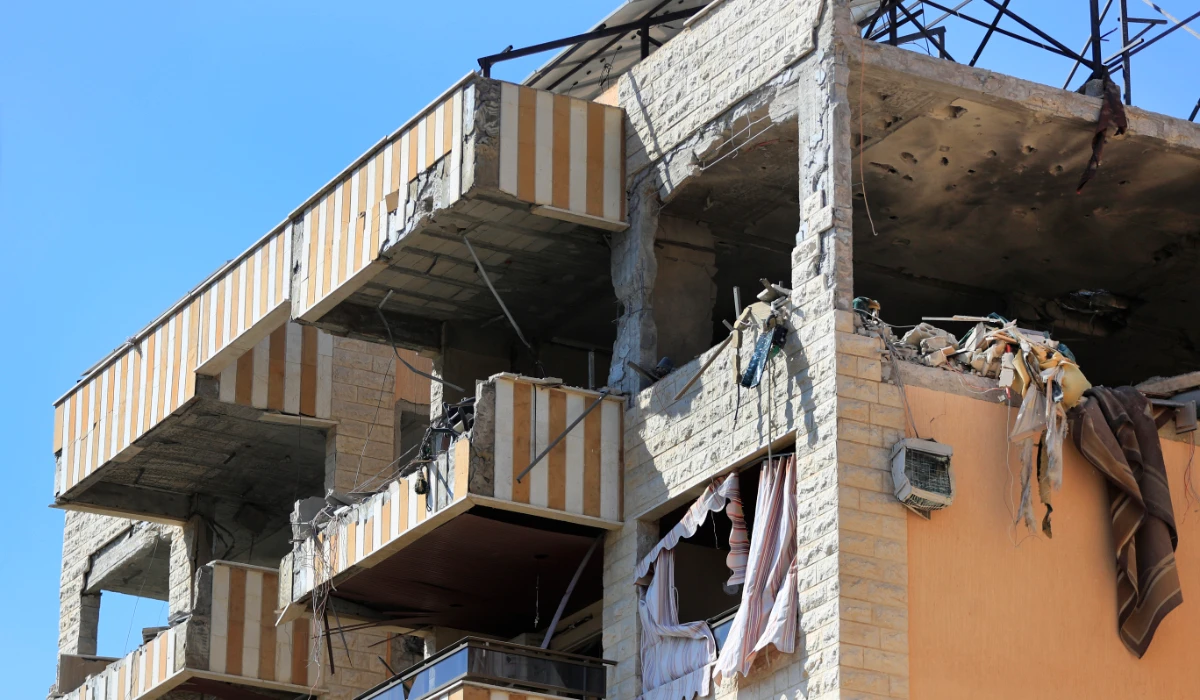
A military drone targeted one of five floors of a building in Nabatieh with more than four missiles, injuring eight civilians, according to the Lebanese Ministry of Health.
The identity of the injured and those targeted is still unknown.
An Israeli military drone later raided an area between Jouaiyya, Wadi Jilou and Mahrouna, targeting it with three missiles and igniting a massive fire.
A drone also targeted the center of Houla’s square.
An Israeli missile struck Khiam in the morning — but failed to detonate — following an Israeli raid at midnight on Monday.
The Israeli army is targeting border villages daily, usually at night, destroying roads and empty residential neighborhoods.
A security source told Arab News that Israel “seeks to form a fire belt in the border region to slow down Hezbollah’s combat movement.”
The source added: “Israel’s hostilities reached 15 km deep into Lebanese territory, targeting villages like Srifa, Froun, Ghandouriyeh and Wadi Al-Houjeir, and focusing its attacks on forest areas and valleys.”
Israel also targeted Lebanese Civil Defense fire brigades, as well as fire services associated with Hezbollah and its ally, the Amal Movement.
The head of Hezbollah’s parliamentary bloc, MP Mohammed Raad, said that the party opened a support front in Lebanon “in solidarity with Gaza and its people as a preemptive measure to protect Lebanon from Israeli aggression on its land, its sovereignty and its people.”
He added: “The sacrifices and losses we have endured in this regard are far less than the costs we would have faced if the enemy had achieved its goals in Gaza.”
Raad said that Israel had “reached a point where it can penetrate Gaza and destroy it, but it cannot achieve its objectives, establish its presence, or set up the alternative situation it seeks.”
Israel is “aimlessly circling and deteriorating internally at the security, economic, financial and displacement levels,” Raad said.
He highlighted the “burden of exceptional expenses” on Israel’s economy and the “ugly image that has rendered it a pariah entity worldwide.”
Raad said that Israel was now “operating in lost time, perhaps extending to the US elections and their scheduled date.
“This is why we see it moving from northern Gaza to the south, then turning to the West Bank to ignite a fruitless battle, and then threatening to expand northward toward southern Lebanon,” he added.
“However, it cannot meet its commitment to returning all northern residents to their homes.”
At about 2 a.m., Israeli raids hit the town of Aita Al-Shaab in the central sector, causing material damage to property and infrastructure, particularly to electricity and water networks.
The Israeli army also launched flares at night over border villages adjacent to the Blue Line.
Reconnaissance and drone flights continued throughout the night until morning over the towns of Naqoura, Yarine, Jebbayn, Dhayra, Aita Al-Shaab, Beit Lif and Rmeish.
On Tuesday, Hezbollah’s military media also released a video showing footage of its fighters targeting settlements and army bases in northern Israel.