



PESHAWAR: For Nazar ul Islam, a Pakistani octogenarian academic who grew up in the country’s conservative northwest, acquiring education was not merely a personal pursuit, but a gateway to empowerment and self-reliance for his children, especially daughters.
In an era when the idea of education was a rare privilege in Pakistan’s northwestern Karak district, Haq stood as a beacon of progressive thinking by sending his first-born daughter, Nighat Parveen, to school in the 1970s.
Although he never formally attended college, the 82-year-old pursued private studies, ultimately earning postgraduate degrees in Arabic, Urdu literature, and Islamic studies, before educating all of his 13 daughters and four sons.
“Fewer men attended school during his time, and the notion of women pursuing education was virtually unheard of,” he told Arab News this week. “Yet, despite societal constraints, I made a pioneering decision to send my daughter [Parveen] to school against the societal norms.”
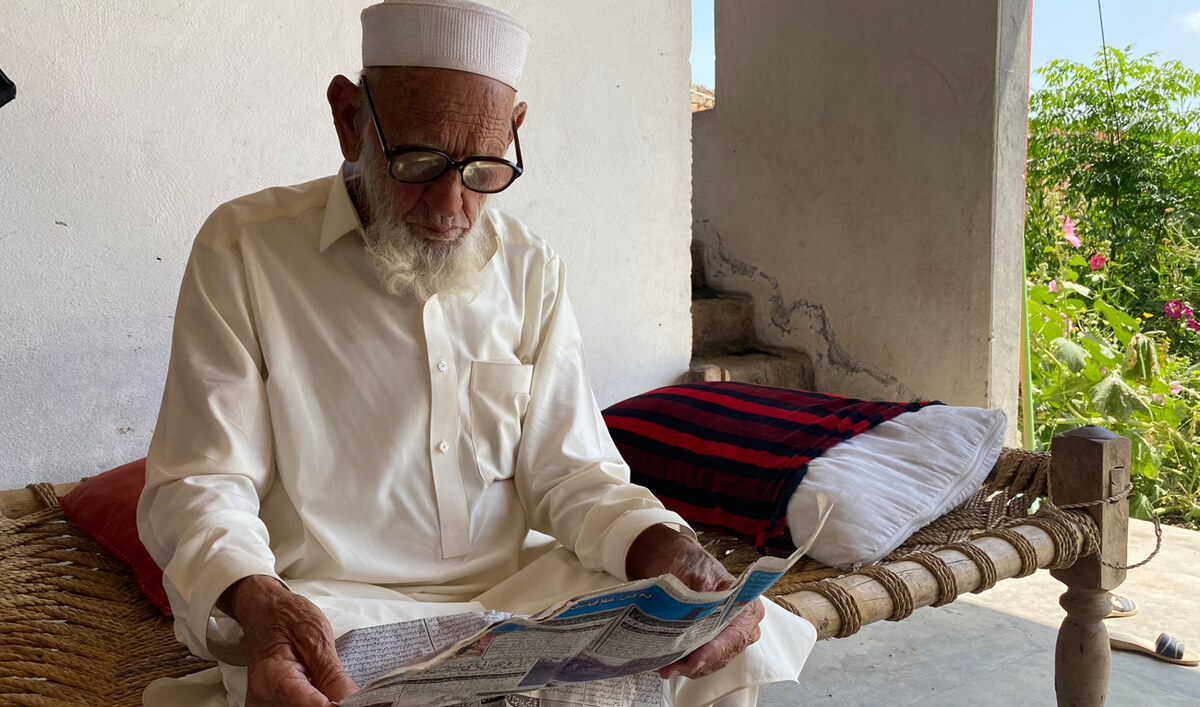
In this photo, taken on September 5, 2024, Pakistani academic Nazar ul Islam, 82, reads a newspaper in his village in Karak district, Khyber Pakhtunkhwa, during an interview with Arab News. Haq defies social norms and educates 13 daughters to master’s level in conservative northwest. (AN Photo)
Haq said his groundbreaking choice initially seemed promising and his daughters’ early education proceeded smoothly but as they grew older, the murmurs of dissent within his family became louder.
Relatives questioned his wisdom for educating his girls and the resistance escalated to threats of disownment, but Haq said he remained resolute and his daughter achieved prominent positions in both her 8th and 10th grade exams, outshining many in their area. Her academic success reinforced Haq’s belief in his decision.
“That was a big relief, I would say one of my happiest moments,” Haq said, recalling how his extended family members had distanced themselves from him for sending his daughter to high school.
Parveen, who passed her matriculation exam in 1986, told Arab News that initially, she did not grasp the vitality of education and only saw herself fulfilling her father’s mission on a path fraught with obstacles.
“I would often find myself as the only girl in a classroom full of boys. Sitting in a corner, isolated from my peers, I faced the weight of societal scrutiny and the discomfort of being an ‘outsider’,” she said.
“The psychological toll of being the only girl in a boys’ class was immense, but I remained steadfast in the pursuit of education.”
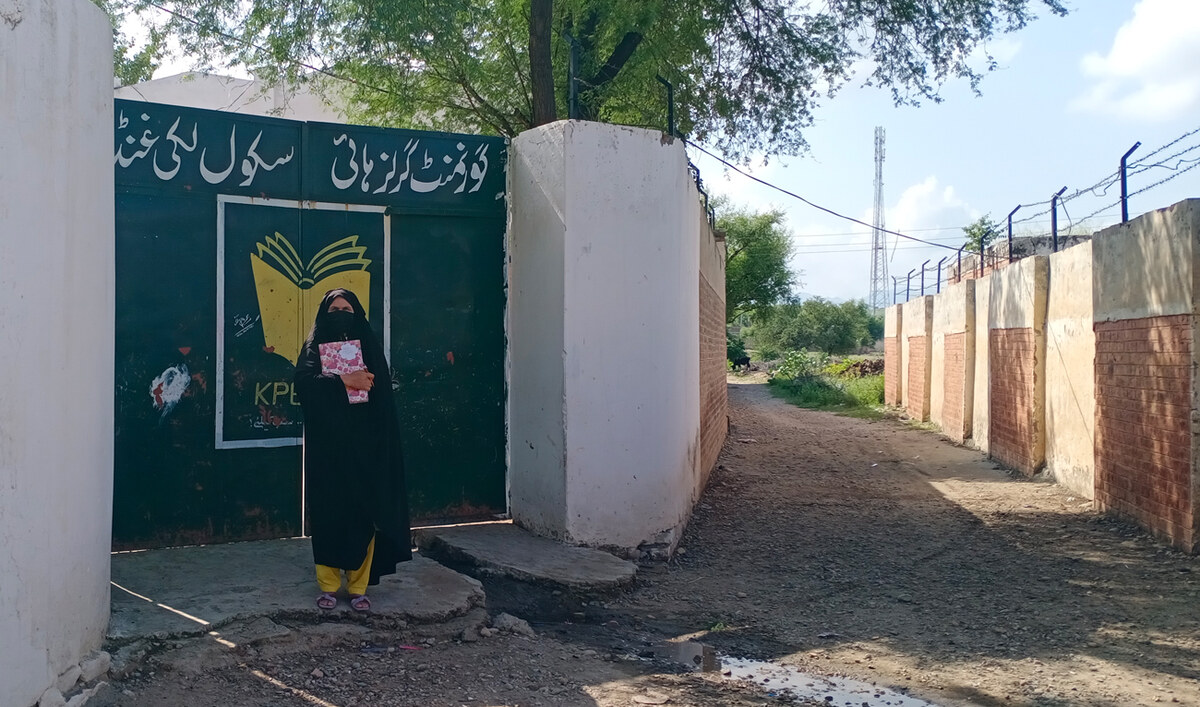
In this photo, taken on September 5, 2024, Nighat Parveen, daughter of Pakistani academic Nazar ul Islam, gestures outside a government school in her village in Karak district, Khyber Pakhtunkhwa, during an interview with Arab News. Haq, 82, defies social norms and educates 13 daughters to master’s level in conservative northwest. (AN Photo)
Parveen today stands as a testament to the power of perseverance and the importance of education as she serves as the principal of Government Girls’ High School in Karak, shaping the minds of future generations.
She set the bar high for all 16 of her siblings — 12 sisters and four brothers — who now have master’s degrees in disciplines as varied as English Literature, Political Science, History, Botany, Zoology, and Physics. All of Haq’s daughters are currently serving as government teachers.
Haq sees education as a gateway to empowerment and self-reliance for women, contrary to the perception in rural communities that believe investing in daughters’ education would benefit the “other household” to which they are wedded off.
“Education equips women with knowledge and confidence to contribute actively to their family’s economic affairs, eliminating the need to depend on others for financial support,” he said.

In this photo, taken on September 5, 2024, Pakistani academic Nazar ul Islam, 82, gestures for a photograph with his son in his village in Karak district, Khyber Pakhtunkhwa, during an interview with Arab News. Haq defies social norms and educates 13 daughters to master’s level in conservative northwest. (AN Photo)
Haq’s wife, Jahan Bano, did not have a formal education, but her journey alongside her husband reflects a profound transformation. Her ability to converse in English and engage in discussions about politics demonstrates her intellectual growth and confidence in expressing herself.
Both Haq and Bano feel proud that their perspective about women education, which was once widely disapproved by the society, has been embraced by those very critics.
“At this later stage of life, when I watch young girls in school uniforms going to school, college, and university from my balcony, I feel a strange sense of happiness,” Haq added.


