IMF highlights Saudi Arabia’s economic gains and Vision 2030 progress in latest review

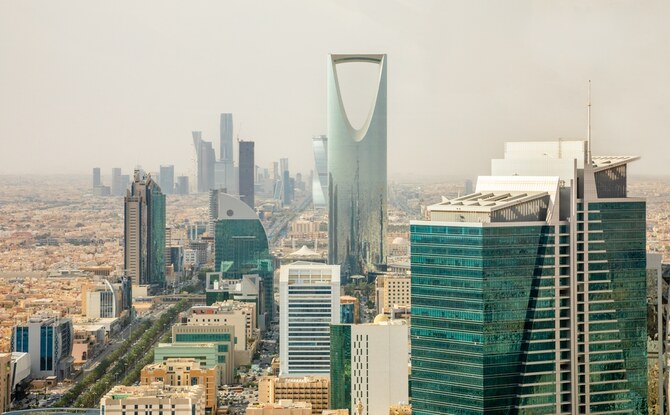
Saudi Arabia’s economic evolution continued to progress effectively, with modernization and diversification efforts advancing as planned. Shutterstock
Short Url
Updated 04 September 2024
Follow

IMF highlights Saudi Arabia’s economic gains and Vision 2030 progress in latest review

  • Non-oil sector demonstrated robust growth of 3.8%
  • Inflation in the country has decelerated significantly, dropping from a peak of 3.4% in January 2023 to 1.6% in May

RIYADH: The International Monetary Fund executive board has finalized its 2024 review of Saudi Arabia, recognizing the country’s major progress in its economic transformation through Vision 2030.

The consultation, held on July 31, focused on evaluating the Kingdom’s developments and policies, as well as the nation’s fiscal and monetary outlook.

According to the IMF, Saudi Arabia’s economic evolution continued to progress effectively, with modernization and diversification efforts advancing as planned. 

Despite a 0.8 percent contraction in the overall gross domestic product in 2023 due to oil production cuts, the non-oil sector demonstrated robust growth of 3.8 percent, fueled mainly by private consumption and investment. 

The unemployment rate in the Kingdom has hit historic lows, particularly with female labor force participation surpassing the 30 percent target set for 2030.

Inflation in the country has decelerated significantly, dropping from a peak of 3.4 percent in January 2023 to 1.6 percent in May, aided by an appreciating nominal effective exchange rate. 

However, rent prices have surged by about 10 percent, driven by the influx of expatriate workers and significant redevelopment projects in Riyadh and Jeddah. Wholesale prices have also edged up, reflecting increased input costs and rising wages for skilled workers.

The current account surplus narrowed to 3.2 percent of GDP in 2023, primarily due to lower oil exports and strong growth in investment-related imports. 

However, this was partially offset by a record surplus in the services balance, including a significant 38 percent increase in net tourism income. 

Saudi Arabia’s reserves remain ample, covering 15.8 months of imports by the end of 2023.

The banking sector in the Kingdom is on a solid footing, with stress tests indicating that banks and non-financial corporates are resilient even under severe adverse scenarios. 

While bank credit growth has moderated, it surpasses deposit maturation, particularly in the corporate sector. However, increased interlinkages between financial institutions and the sovereign could amplify systemic shocks, especially in response to fluctuations in oil prices.

The IMF projected the non-oil growth to reach 4.4 percent in the medium term, driven by stronger domestic demand as project implementation under Vision 2030 picks up. 

The phase-out of oil production cuts is expected to boost overall growth to 4.7 percent in 2025, with inflation remaining contained. The current account is anticipated to shift to a deficit, reflecting declining oil prices and continued strong investment-related imports.

The IMF emphasized the importance of maintaining fiscal prudence, safeguarding financial stability, and continuing structural reforms to support sustainable and inclusive growth in Saudi Arabia. 

The recalibration of investment spending under Vision 2030 was praised for mitigating overheating risks. 

The IMF also recommended further fiscal adjustments, including efforts to mobilize non-oil revenue and contain the wage bill to maintain strong buffers and meet intergenerational needs.

The organization commended Saudi Arabia’s commitment to achieving net zero emissions by 2060 and highlighted the progress in renewable energy and power efficiency. However, it said that additional efforts are needed to support these targets fully.



Kuwait to boost Islamic finance with sukuk regulation

Updated 05 February 2026
Follow

Kuwait to boost Islamic finance with sukuk regulation

  • The move supports sustainable financing and is part of Kuwait’s efforts to diversify its oil-dependent economy

RIYADH: Kuwait is planning to introduce legislation to regulate the issuance of sukuk, or Islamic bonds, both domestically and internationally, as part of efforts to support more sustainable financing for the oil-rich Gulf nation, Prime Minister Sheikh Ahmad Abdullah Al-Ahmad Al-Sabah said on Wednesday.

Speaking at the World Governments Summit in Dubai, Al-Sabah highlighted that Kuwait is exploring a variety of debt instruments to diversify its economy. The country has been implementing fiscal reforms aimed at stimulating growth and controlling its budget deficit amid persistently low oil prices. Hydrocarbons continue to dominate Kuwait’s revenue stream, accounting for nearly 90 percent of government income in 2024.

The Gulf Cooperation Council’s debt capital market is projected to exceed $1.25 trillion by 2026, driven by project funding and government initiatives, representing a 13.6 percent expansion, according to Fitch Ratings.

The region is expected to remain one of the largest sources of US dollar-denominated debt and sukuk issuance among emerging markets. Fitch also noted that cross-sector economic diversification, refinancing needs, and deficit funding are key factors behind this growth.

“We are about to approve the first legislation regulating issuance of government sukuk locally and internationally, in accordance with Islamic laws,” Al-Sabah said.

“This enables us to deal with financial challenges flexibly and responsibly, and to plan for medium and long-term finances.”

Kuwait returned to global debt markets last year with strong results, raising $11.25 billion through a three-part bond sale — the country’s first US dollar issuance since 2017 — drawing substantial investor demand. In March, a new public debt law raised the borrowing ceiling to 30 billion dinars ($98 billion) from 10 billion dinars, enabling longer-term borrowing.

The Gulf’s debt capital markets, which totaled $1.1 trillion at the end of the third quarter of 2025, have evolved from primarily sovereign funding tools into increasingly sophisticated instruments serving governments, banks, and corporates alike. As diversification efforts accelerate and refinancing cycles intensify, regional issuers have become regular participants in global debt markets, reinforcing the GCC’s role in emerging-market capital flows.

In 2025, GCC countries accounted for 35 percent of all emerging-market US dollar debt issuance, excluding China, with growth in US dollar sukuk issuance notably outpacing conventional bonds. The region’s total outstanding debt capital markets grew more than 14 percent year on year, reaching $1.1 trillion.