

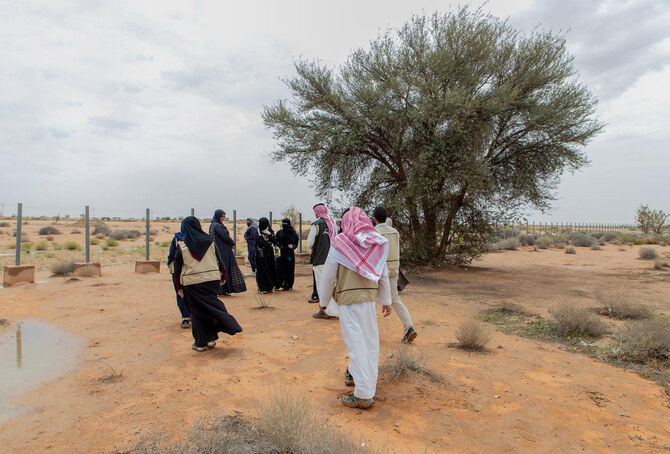
Saudi reserves ban hunting to protect wildlife

The authority works to maintain ecological balance, preserve biodiversity, and mitigate the negative impacts of poaching. (SPA)
Short Url
Updated 02 September 2024
Follow

Saudi reserves ban hunting to protect wildlife

  • The authority oversees the Imam Abdulaziz bin Mohammed and King Khalid royal reserves

RIYADH: The Imam Abdulaziz bin Mohammed Royal Reserve Development Authority has banned hunting as a part of ongoing efforts to safeguard the Kingdom’s environment and wildlife, particularly species facing extinction.

The authority oversees the Imam Abdulaziz bin Mohammed and King Khalid royal reserves, where the ban comes into force.

The authority works to maintain ecological balance, preserve biodiversity, and mitigate the negative impacts of poaching, the Saudi Press Agency reported on Monday.

By forbidding hunting, the reserves can ensure that wildlife can prosper within the protected areas.

The authority will take legal action against violators to protect the Kingdom’s natural resources, the SPA reported.

Monitoring teams will intensify field patrols, utilizing advanced technology in cooperation with other authorities.

Since the beginning of 2024, the authority’s teams have recorded 290 environmental violations in the two reserves. These cases have been taken up under environmental legislation.


Saudi project clears 2,676 explosive devices in Yemen

Updated 22 February 2026
Follow

Saudi project clears 2,676 explosive devices in Yemen

  • Ousama Al-Gosaibi, Project Masam’s managing director, said the initiative had cleared a total of 544,187 mines since it began in 2018

RIYADH: Members of Saudi Arabia’s Project Masam removed 2,108 explosive devices from various regions of Yemen last week.

The total included 2,484 unexploded ordnances, 149 anti-tank mines, 17 anti-personnel mines and 26 improvised explosive devices, according to a recent report.

The explosives were planted indiscriminately and posed a threat to civilians, including children, women and the elderly.

The demining operations took place in Marib, Aden, Jouf, Shabwa, Taiz, Hodeidah, Lahij, Sanaa, Al-Bayda, Al-Dhale and Saada.

Ousama Al-Gosaibi, Project Masam’s managing director, said the initiative had cleared a total of 544,187 mines since it began in 2018.

Teams are tasked with clearing villages, roads and schools to facilitate the safe movement of civilians and delivery of humanitarian aid.

The project trains local demining engineers, provides them with modern equipment, and offers support to Yemenis injured by the devices.